
Explainer: What Has Happened to The Gambia’s TRRC Victims?
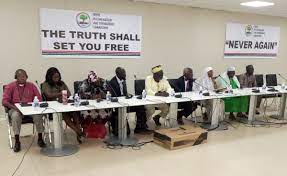
With the appointment of a special prosecutor for the tribunal, the prospect of justice is closer than ever. But as the process moves forward, how are victims being compensated, and what happens to those who have died without seeing justice?
For years, victims of human rights violations under Yahya Jammeh’s 22-year rule waited for an opportunity to tell their stories. The Truth, Reconciliation and Reparations Commission (TRRC) eventually gave them that platform.
After more than two years of hearings, victims and witnesses recounted killings, torture, unlawful detention, enforced disappearances and other abuses committed during Jammeh’s rule.
The TRRC identified 1,009 victims eligible for reparations and made 265 recommendations covering reparations, accountability, institutional reform and reconciliation. But when the Commission concluded its work, another question emerged:
What happens to the victims after the truth has been told?
In this explainer, Malagen looks at what has happened to the victims since the TRRC concluded its work, the status of reparations and the government’s progress in implementing the Commission’s recommendations.
From truth to reparations
Part of the answer lies with the Gambia Reparations Commission, established under the Victims Reparations Act 2023 to provide redress to victims of human rights violations. The Commission confirmed to Malagen that 112 victims have so far received compensation in full; 91 men and 21 women.
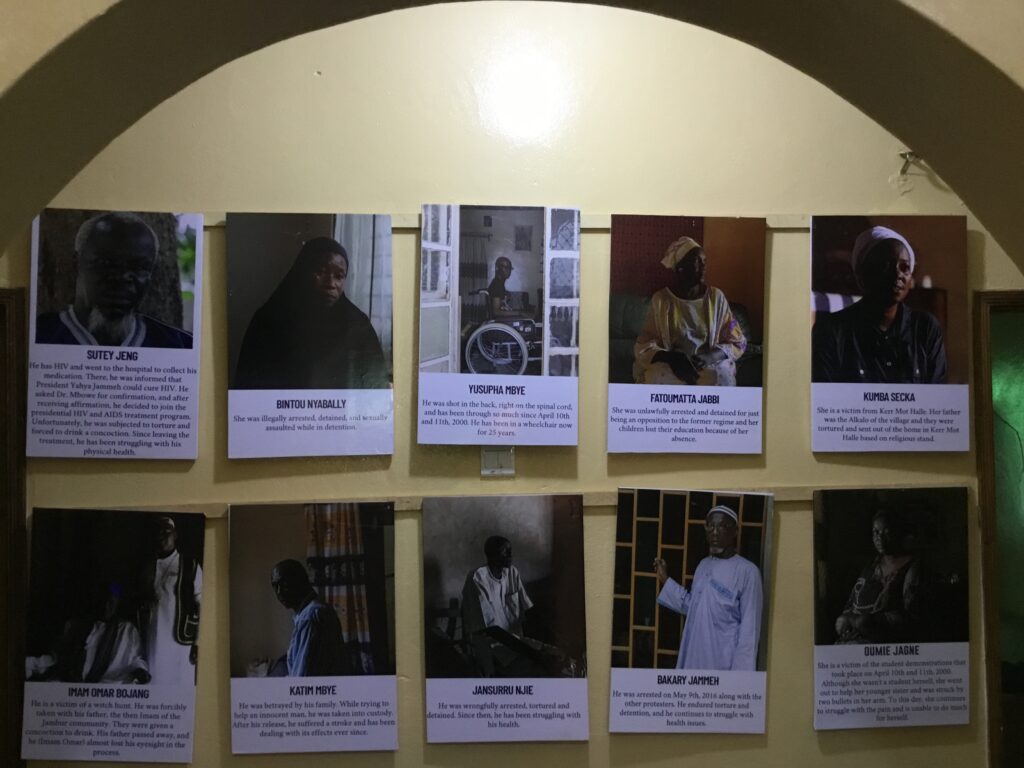
Photographs of victims of abuses under the Jammeh regime hang on a wall at the Victims’ Centre.
It has disbursed GMD24.8 million in compensation, with about 200 people currently approved for payment.Payments are being made chronologically, beginning with victims from 1994 and moving forward year by year. The current payment period covers victims from 1994 to 2001.
“The Commission is making compensation payments in chronological order starting from 1994 moving up on an annual basis,” the Commission said
The compensation programme covers victims of violations including unlawful deaths, torture, unlawful detention, and inhumane, cruel or degrading treatment.
But reparations go beyond compensation.
The Commission says it has provided rehabilitation to approximately 100 victims, including medical treatment, medication, mental health and psychosocial support, with more than GMD700,000 spent on rehabilitation so far.
23 victims are currently receiving rehabilitation care.
So far, 950 victims and claimants have registered with the Commission.
The figure is not necessarily final. The Commission is still accepting statements from people who did not testify before the TRRC but are now coming forward. This means the number of people eventually eligible for reparations could increase.
What happens when victims die before compensation?
For some victims, the wait for reparations has ended because they died before receiving them.
Among those who died after suffering abuses under Jammeh was Femi Peters, a prominent opposition figure who was arrested and imprisoned in 2009 after organising a pro-democracy rally calling for electoral reforms. He was released in 2010 but died in 2018, a year before the TRRC began its hearings.
Also among those who died were Solo Sandeng, a UDP activist who died in custody in 2016 after being arrested during a peaceful protest, and Sukai Dahaba, who suffered abuses under the Jammeh regime and died before she could see justice.
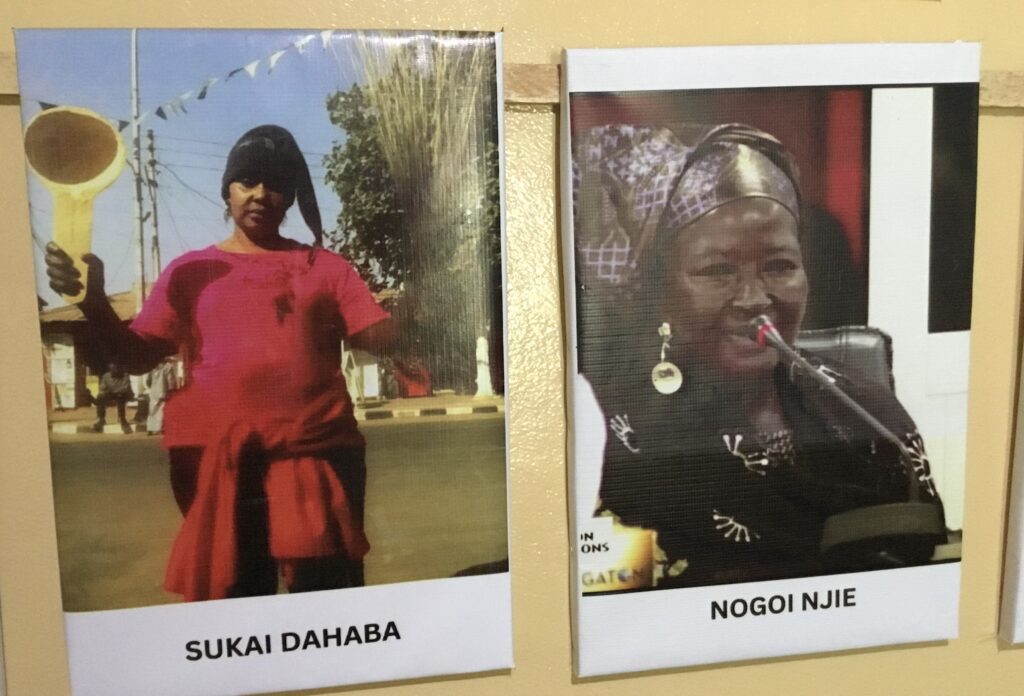
Nogoi Njie, who was arrested, tortured and imprisoned after attending a peaceful protest in 2016, died in 2023, after the TRRC had concluded its public hearings.
Their deaths are part of a wider concern among victims’ families. The Gambia Center for Victims of Human Rights Violations has said more than a dozen Jammeh-era victims have died while waiting for justice.
But death does not automatically extinguish a victim’s right to monetary reparations.
Under the Victims Reparations Act 2023, where a recognised victim is deceased or forcibly disappeared, the monetary reparation may be paid to the victim’s survivor or another person designated in accordance with the deceased person’s estate.
For families, however, compensation after a victim’s death cannot undo the years spent waiting for recognition, redress and accountability. It also highlights one of the challenges of transitional justice: the longer the process takes, the more victims may die without seeing its outcome.
Beyond reparations
The TRRC did not see compensation as a substitute for accountability.
Its recommendations called for reparations, institutional reforms, accountability for those responsible for serious violations and measures to prevent similar abuses from happening again
The government accepted 263 of the TRRC’s 265 recommendations, setting out its response through a White Paper and subsequent implementation plans.
This created two closely linked tracks of transitional justice.
Reparations seek to address the harm suffered by victims through measures such as compensation and rehabilitation.Accountability seeks to establish responsibility for serious violations and, where appropriate, prosecute those responsible.
For victims, one does not necessarily replace the other. A compensation payment can provide financial and other forms of redress, but it does not answer the question of who was responsible for the abuses.
That is where the accountability process comes in.
The push for accountability
The proposed Special Tribunal for The Gambia is intended to prosecute people accused of responsibility for serious international crimes and human rights violations committed during the Jammeh era.
The wider accountability framework also includes a Special Prosecutor’s Office and a Special Criminal Division of the High Court.
The appointment of a Special Prosecutor is another step towards putting the accountability mechanism into operation, but prosecutions will still have to follow due process and meet the required legal standards.
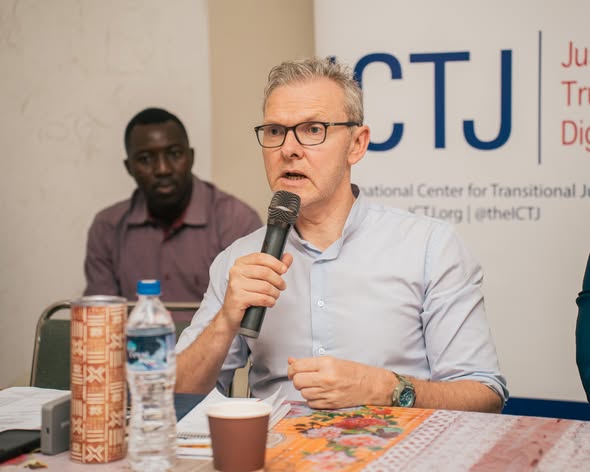
Marthin Hackett, the Special Prosecutor appointed to lead prosecutions before the tribunal, which is expected to begin its work soon.
The distinction between the different mechanisms is important:
Reparations address the harm suffered by victims.
Prosecutions address criminal responsibility.Institutional reforms seek to prevent similar abuses from happening again. Together, they form different parts of The Gambia’s broader transitional justice process.
What remains unfinished?
The Gambia has moved from documenting the abuses of the past to confronting their consequences. The TRRC created an official record of human rights violations under Yahya Jammeh’s rule and identified victims eligible for reparations. The Reparations Commission is now translating some of those findings into compensation and rehabilitation.
But five years after the TRRC began its work, the process remains incomplete.
- 112 victims have received full compensation.
- GMD24.8 million has been disbursed.
- About 200 people are currently approved for compensation.
- 23 victims are receiving rehabilitation care.
- 950 victims and claimants have registered with the Commission.
New claimants continue to come forward, while some victims have died before receiving reparations or seeing accountability processes completed.
The Commission says it remains committed to providing “transformative reparations” to victims of human rights violations and continues to invite victims to register.
Ultimately, the success of The Gambia’s transitional justice process will not be measured only by how many victims receive compensation. It will also depend on whether victims receive meaningful rehabilitation, whether those responsible for serious violations face credible and fair accountability processes, and whether the reforms recommended by the TRRC help prevent such abuses from happening again.
The TRRC may have completed its work. But for victims, the journey from truth to reparations, accountability and reform is still unfolding
Five years later, Malagen examines which of the TRRC’s recommendations have been implemented, drawing on findings from the National Human Rights Commission (NHRC), the body mandated to monitor their implementation.
How victims can register
The Reparations Commission is still accepting statements from victims and claimants.
It can be contacted on 7200044 or 3434688, by email at info@reparationsgm.com, or in person at its offices in Kotu, at the Logix Petrol Station along the OIC Highway.
