
Explainer: How Are Presidential Candidates Nominated and Approved in The Gambia?
As of now, The Gambia has 22 registered political parties ahead of the December elections, with numbers still evolving. If you’re interested in forming a party or simply want to understand the system, here’s everything you need to know about how to register a political party, the requirements, eligibility criteria, and other key considerations.
As The Gambia’s presidential election approaches, candidates do not simply appear on the ballot by default. Long before voters head to the polls, anyone seeking the presidency must pass through a legally defined nomination and approval process overseen by the Independent Electoral Commission (IEC).
This process is rooted in the Constitution and the Elections Act and is designed to ensure that only individuals who meet the required legal, constitutional, and ethical standards are allowed to contest for the country’s highest office.
Beyond setting basic qualifications, the system also aims to promote fairness, transparency, and public confidence in the electoral process by applying the same rules to all aspirants, whether party-backed or independent.
This explainer breaks down how the process works in practice, from who is eligible to run, how political parties are registered, how nominations are scrutinized, and what happens before a candidate’s name finally appears on the ballot.
Who Can Become a Presidential Candidate?
To qualify as a presidential candidate in The Gambia, an individual must first satisfy a set of constitutional and legal requirements intended to ensure that aspirants are eligible, accountable, and broadly acceptable to the electorate. This includes:
- Have completed senior secondary school education or its equivalent
- Is a resident in The Gambia for at least five years immediately preceding the election
- Be eligible to register as a voter under the Constitution and the Elections Act
- Being nominated by no fewer than 5,000 registered voters,
- With at least 200 nominators drawn from each administrative area of the country( Banjul, Kanifing, Brikama, Mansakonko, Janjanbureh, Kuntaur, Basse)
- Submit a sworn declaration of assets
- Present a valid tax clearance certificate
- Pay a nomination deposit of D1,000,000 (as amended)
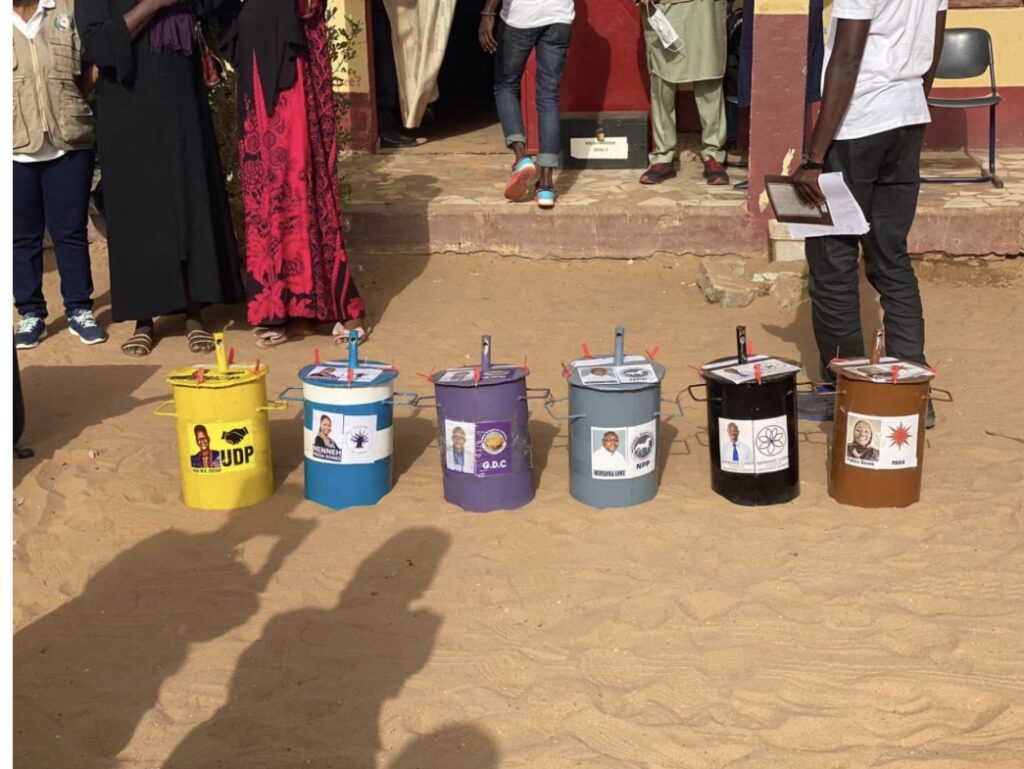
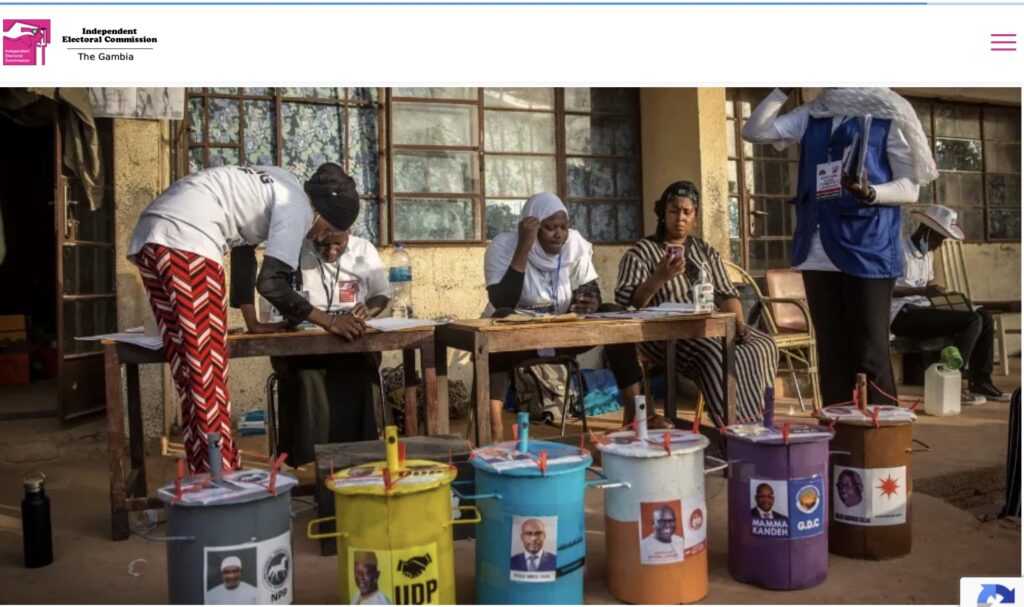
- Provide a representative symbol, colour, and photographs for the ballot
A presidential candidate could be refunded his or her deposit where the nomination is rejected, or in the case of withdrawal of nomination within the stipulated time or where there was no contested election. Still, even if there was an election, a candidate could get a refund if he or she obtained at least 40% of the valid votes cast.
Independent candidates are also permitted to contest presidential elections, as long as they meet the same constitutional, legal, and endorsement requirements applied to party-backed aspirants. In practice, this means that running without a party label does not lower the threshold for eligibility or public support.
In addition, the IEC requires all candidates and political parties to formally commit to its Code of Conduct on Elections and Ethics. Candidates must also submit a manifesto that reflects respect for peaceful participation, tolerance, and national cohesion. These obligations are meant to guide conduct throughout the campaign period and reduce the risk of incitement or divisive politics.
Taken together, these safeguards underscore a core democratic principle: the presidency is a public trust that must be earned through lawful, transparent, and responsible participation not a personal entitlement.
Criteria for Registering a Political Party in The Gambia
Political organisations seeking to sponsor candidates must register with the Independent Electoral Commission (IEC) in accordance with Section 105 of the Elections Act.
To qualify for registration, applicants must meet the following criteria:
- Application process
Obtain the prescribed registration form from the Office of the IEC Chairman in Kanifing.
- Demonstration of national support
Submit a declaration endorsed by at least 10,000 registered voters.
Ensure that at least 1,000 endorsers come from each of the seven administrative areas.
This requirement is intended to guarantee national reach and prevent narrow regional or sectional political formations.
- Payment of registration fee
Pay a non-refundable registration fee of TwoMillion Dalasi (2,000,000) at the time of submission. - Submission of a party constitution
Provide a constitution that reflects democratic principles.
Outline clear leadership structures and internal accountability mechanisms. - National character of the party
The party must exist primarily to participate in elections.
Its internal organisation must conform to democratic norms.
It must not be formed along ethnic, religious, regional, or sectional lines.
Its name, emblem, colour, motto, or symbol must not carry divisive or exclusionary connotations.
These safeguards are intended to protect political pluralism while preserving national unity. - Organisational requirements
All party executives must be resident in The Gambia.
The party must maintain a functional secretariat in each administrative region. - Financial accountability
Commit in writing to submitting annual audited accounts to the IEC. - Internal democracy
The party constitution must require the holding of a national congress at least once every two years, ensuring leadership renewal and member participation.
How Candidates Are Nominated
There are two main routes through which a person can be nominated as a presidential candidate in The Gambia.
Political Party Nomination:
Political parties play a central role in selecting candidates to represent them. They do this through internal processes, such as party congresses, primaries, or other mechanisms outlined in their constitutions. Once a candidate is chosen, the party submits the full nomination package to the Independent Electoral Commission (IEC). This submission signifies the party’s formal endorsement of the candidate and its commitment to ensure that the candidate adheres to electoral laws and the IEC’s code of ethics throughout the campaign period.
Independent Candidacy:
Individuals who are not affiliated with any registered political party may also contest as independent candidates. To do so, they must meet all the legal and constitutional eligibility requirements and demonstrate sufficient nationwide support, typically through endorsements from registered voters across the country. This pathway allows qualified individuals to participate in the election without being tied to a party, while still ensuring that they have broad-based backing from the electorate.
Submission and Scrutiny of Nomination Documents
All candidates party-backed or independent must submit their nomination documents within the IEC’s designated nomination period. These documents include:
- proof of eligibility,
- endorsements
- asset declarations
- tax clearance
- nomination fees,
- and ballot materials.
Failure to meet any requirement can result in disqualification. In previous elections, several aspirants were rejected due to insufficient signatures, improper documentation, or failure to meet residency or endorsement thresholds.
The Role of the Independent Electoral Commission
Once nomination papers are submitted, the Independent Electoral Commission steps in as the neutral referee of the process. Its role is to independently review each submission and ensure that every aspirant meets the constitutional and legal requirements to contest. This includes verifying candidates’ eligibility, checking the authenticity of voter endorsements and signatures, and confirming that all requirements have been applied consistently across the board.
As part of this scrutiny, the IEC also ensures that party-backed and independent candidates are treated equally, without favour or discrimination. After completing its review, the Commission publishes a provisional list indicating which candidates have been approved and which have been rejected, along with the basis for those decisions an important step for transparency and public accountability.
After the provisional list is released, the law allows time for objections and legal challenges. Rejected candidates may seek redress through the courts, where final decisions are based on legal interpretation—not political influence.
Conclusion:
After all objections and legal challenges have been addressed, the Independent Electoral Commission publishes the final list of approved presidential candidates. Only candidates on this list are cleared to appear on the ballot and campaign under the country’s election laws. This step formally closes the nomination phase and signals the start of the official campaign period.
Beyond procedure, the nomination and approval process serves a deeper purpose. It safeguards the integrity of elections by ensuring that all candidates are treated fairly and held to the same legal standards.
By filtering out ineligible or unserious aspirants, the system helps prevent abuse and reinforces public confidence in electoral institutions. When applied transparently and consistently, this process strengthens the credibility of elections and supports peaceful, legitimate democratic outcomes.
