
Explainer: How a Police Patrol in Mandinary Turned into Tragedy
His death comes amid a string of violent clashes between security forces and civilians despite the government’s post-2017 “Never Again” promise and stalled security sector reforms.
Hundreds of residents of Mandinary in The Gambia’s West Coast Region have poured onto the streets to demand justice for 27-year-old Omar Badjie. Omar, a construction worker and the breadwinner of his family, died under disputed circumstances after an encounter with police on a routine patrol. His death has reignited public anger over what many see as a culture of impunity within the country’s security forces.
What Happened?
On Friday, 26 September 2025, officers from the Mandinary Police Post were conducting what they called “visibility patrols” when they encountered a group of young men suspected of smoking prohibited substances.
According to an official police statement, the youths fled upon seeing the patrol. Police claim that 27-year-old Omar Badjie collapsed while running and was first taken to Banjulinding Health Centre before being transferred to Kanifing General Hospital, where he was pronounced dead.
However, Omar’s uncle who was in the ambulance disputed the police account, saying his nephew died on the way to the hospital, not after arrival.
An eyewitness who was with Omar gave Malagen a still more troubling version of events. He alleges that officers arrested Omar, took him away, and beat him until he lost consciousness. Images obtained by Malagen appear to show Omar being dragged, contradicting the police’s claim that he simply “fell during the chase.”
What Prompted the Protest?
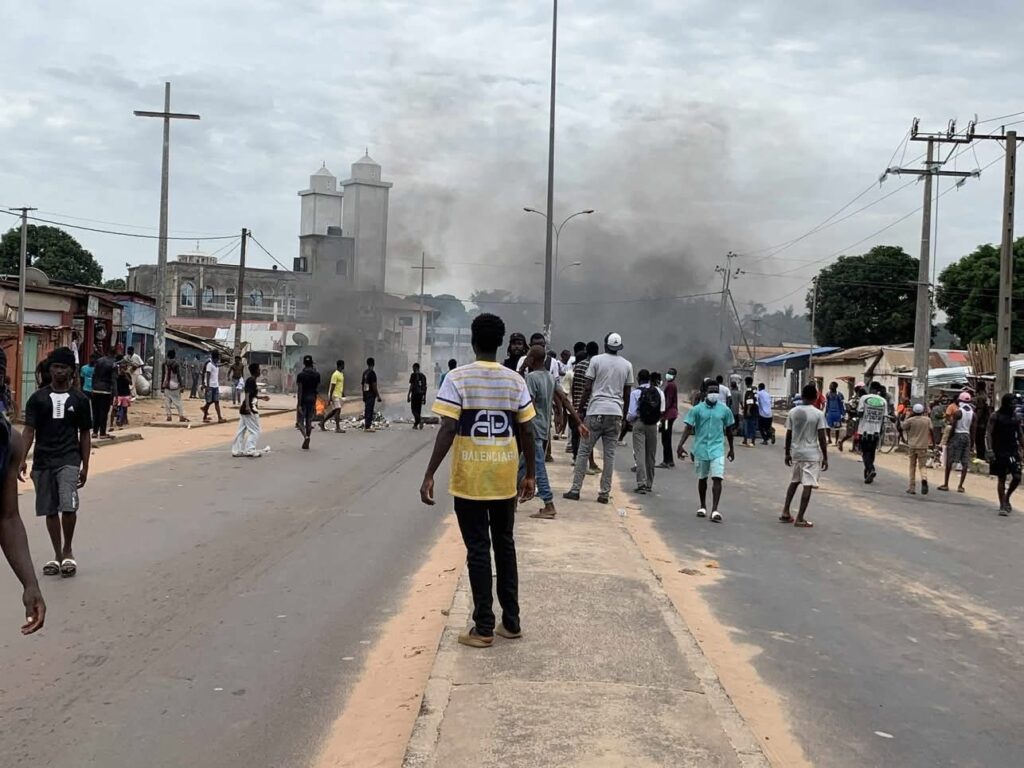
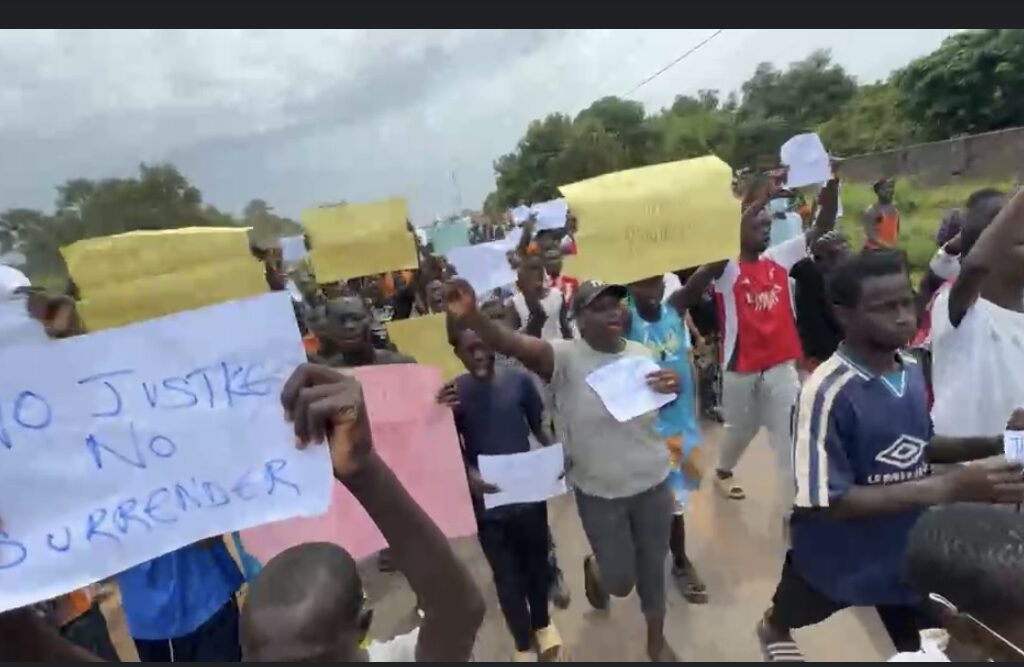
On 27 September 2025, hundreds of Mandinary residents marched not only to protest Omar’s death but also the arrest of more than 18 young men from the village after the Mandinary Police Post was vandalised. All those arrested have since been released, but the incident has deepened mistrust between the community and law enforcement.
Adding to the anger, a video has emerged online showing the Youth Adviser to the President stating that the government ordered the release of Mandinary youths, a revelation that has intensified calls for transparency and accountability.
Who Was Omar Badjie?
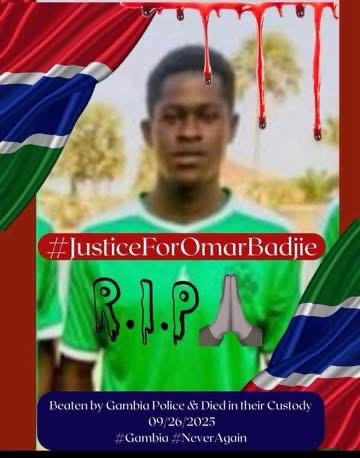
Family and neighbours describe Omar as a hardworking, soft-spoken young man who supported his household through odd jobs. He worked on construction sites, cleared farmland, and weeded gardens and anything that could help provide for his family. His death has left his dependents devastated and the community outraged.
Police Brutality: A Persistent Pattern
This tragedy is not an isolated case. Gambians are still haunted by a history of violent crackdowns under previous governments. Before 2017, high-profile cases included the April 2000 student demonstrations, when security forces killed at least 14 students and injured dozens more, and the April 2016 crackdown on a peaceful opposition protest, which led to the death in custody of UDP activist Solo Sandeng.
When the Barrow administration came to power in 2017, many believed the “Never Again” slogan popularised during the Truth, Reconciliation and Reparations Commission (TRRC) hearings would mark the end of such abuses. But incidents of police brutality have continued under the new administration.
- Faraba Banta, 2018: Police opened fire on protesters opposing sand mining, killing three and injuring several others.
- Jabang, 2025: Earlier this month, clashes between police and youths led to injuries, teargassing of homes, and 36 arrests.
The Mandinary incident now joins this troubling record, raising fresh questions about whether promised reforms have delivered meaningful change.
Security Sector Reform: A Broken Promise?
In the aftermath of the 2017 transition, the government launched an ambitious Security Sector Reform (SSR) program meant to professionalise the security services and align them with democratic norms. It promised retraining, community-based policing, human-rights-oriented operations, and independent and civilian oversight. A recent Malagen report has indicated that over D7.2 billion was spent so far on SSR.
Nine years on, progress has stalled. Oversight mechanisms remain weak, accountability for misconduct is rare, and operational practices still resemble those of the old regime. For many Gambians, the Mandinary case is a painful reminder that the “Never Again” pledge is yet to be fulfilled.
