
Who Is Edi M. O. Faal? The Gambia’s New Chief Justice
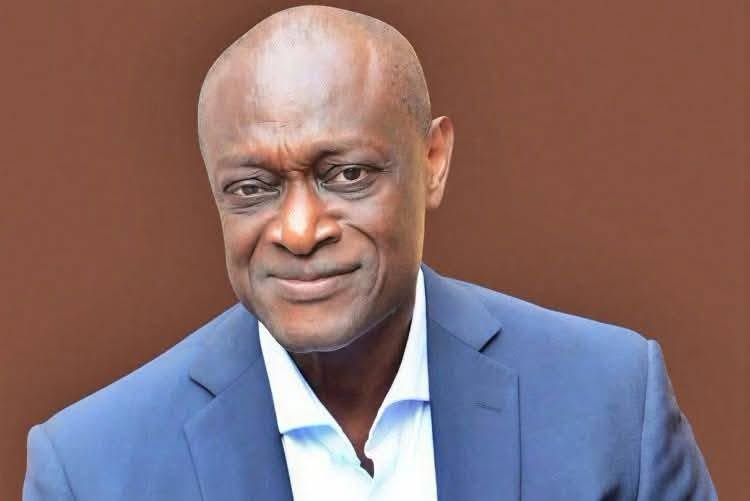
From a courtroom career spanning continents to the highest seat in The Gambia’s Judiciary, Edi M. O. Faal’s appointment marks one of the most closely watched judicial transitions in recent years. But beyond the ceremony lies a bigger question: what does his leadership mean for the future of the country’s justice system?
The Gambia begins a new chapter in its Judiciary today with the swearing-in of Edi M. O. Faal as the country’s new Chief Justice, succeeding Hassan B. Jallow, whose retirement brings to a close more than five decades of distinguished public service at both the national and international levels.
A Gambian-American lawyer with nearly four decades of experience in litigation, arbitration and mediation, Mr Faal has built a legal career spanning The Gambia, the United States, and international practice. He has handled complex civil and criminal litigation, commercial disputes, and international arbitration, establishing himself as a veteran trial lawyer.
His appointment has drawn significant public interest because of his extensive legal career and international experience. It has also generated constitutional debate after the Gambia Bar Association (GBA) questioned whether he satisfies the qualification requirements for appointment as Chief Justice under Section 139(2) of the 1997 Constitution.
The GBA has emphasised that its position does not reflect any doubts about Mr Faal’s competence, integrity or distinguished legal career. Rather, it concerns whether the constitutional requirements for appointment to the office of Chief Justice have been fulfilled.
As Mr. Faal assumes leadership of the Judiciary, this explainer examines his background, legal career and qualifications, the legacy of outgoing Chief Justice Hassan B. Jallow, and the constitutional questions that have accompanied his appointment.
Who is Edi M. O. Faal?
Edi M. O. Faal is a Gambian-American lawyer with 39 years of experience in litigation, arbitration and mediation.
According to his curriculum vitae, Mr Faal has practised law in multiple jurisdictions, including The Gambia, the United States, and England and Wales.
He is qualified as:
- Attorney and Counselor of the Supreme Court of the United States;
- Attorney and Counselor of the Supreme Court of California;
- Member of the Bar of England and Wales;
- Barrister and Solicitor of the Supreme Court of The Gambia; and
- Fellow of the Chartered Institute of Arbitrators, London.
His legal career has largely been built in the United States, where he worked as a trial lawyer representing both claimants and defendants in complex disputes.
Education and professional journey
Mr Faal holds a Master of Laws (LLM) in International Dispute Resolution from University College London (UCL), University of London.
He also earned a Barrister-at-Law qualification from the Honourable Society of Middle Temple in London, a Juris Doctor degree from Western State University in California, and a Bachelor of Science degree from Florida International University.
Beyond legal practice, Mr Faal has experience in academia and the media. He served as an Adjunct Professor at the University of Southern California, where he taught Conflict of Laws, and has worked as a legal commentator for CNN, NBC News and the Los Angeles Times.
Decades in the courtroom
Throughout his career, Mr Faal has handled a wide range of legal matters, including investor-state disputes, commercial litigation, government liability claims, financial disputes, employment matters, civil rights cases and criminal defence.
His experience includes representing an African country before the International Centre for Settlement of Investment Disputes (ICSID) in a dispute involving mineral licensing rights.
As a trial lawyer, he has handled thousands of civil and criminal cases involving financial crimes, insurance fraud, bank fraud, wrongful death claims, professional negligence and business disputes.
One of his best-known cases was representing a lead defendant in criminal trials arising from the 1992 Los Angeles riots, a case that brought him national recognition in the United States.
Recognition and awards
Mr Faal has received several professional honours, including:
- Lawyer of the Year – Langston Bar Association, California (1994);
- President’s Award – Los Angeles Criminal Courts Bar;
- Legal Champions Award – Ohio Bar Association;
- Recognition Award – Arizona Bar Association; and
- Super Lawyer recognition by Los Angeles Magazine from 2007 to 2021.
A new era for the Judiciary
Mr Faal takes office following the retirement of Chief Justice Hassan B. Jallow, whose public service career spans more than five decades.
Before leading The Gambia’s Judiciary, Mr Jallow served as Attorney General and Minister of Justice, Prosecutor of the International Criminal Tribunal for Rwanda, and Prosecutor of the Special Court for Sierra Leone.
As Chief Justice, he oversaw the Judiciary during a period of institutional rebuilding and judicial reform following years of political instability.
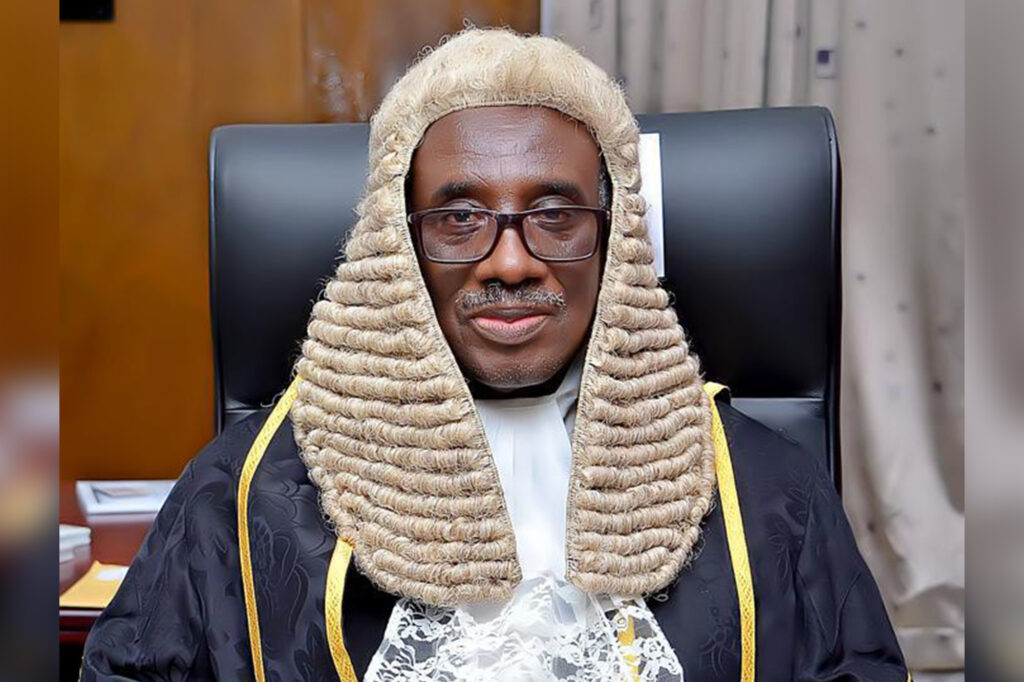
His retirement marks one of the most significant leadership transitions in The Gambia’s justice system in recent years.
The constitutional debate
The debate centres on Section 139 of the 1997 Constitution, which sets out the qualifications required for appointment as a Supreme Court judge and, by extension, Chief Justice.
Section 139(2) provides two possible routes. A person must either:
- have served as a judge of the Court of Appeal, or a court with similar jurisdiction in a common law country, for at least five years; or
- have practised as a legal practitioner before a court of unlimited civil and criminal jurisdiction in a common law country for at least twelve years.
The Gambia Bar Association has argued that Mr Faal does not satisfy these constitutional requirements.
In a statement issued on 9 July 2026 following an emergency general meeting, the GBA said its members unanimously resolved that Mr Faal does not meet the qualifications prescribed by Section 139(2).
However, the Association stressed that its position should not be interpreted as questioning his competence, integrity or distinguished legal career. “The sole issue of concern was whether the constitutional requirements for Mr Faal’s appointment to the Office of Chief Justice have been met,” the Association said.
It added that it had formally communicated its position to the President, the Judicial Service Commission, and the Attorney General and Minister of Justice.
What is the legal question?
The dispute is not about whether Mr Faal possesses extensive legal experience.
His CV documents decades of courtroom advocacy, international arbitration and legal practice across multiple jurisdictions.
Rather, the central issue is whether that experience satisfies the specific constitutional threshold under Section 139(2).
Mr Faal’s CV does not indicate that he previously served as a judge of an appellate court. The debate therefore focuses on whether his legal practice qualifies as practising before a court with unlimited civil and criminal jurisdiction in a common law country for the constitutionally required period.
The interpretation of these constitutional provisions ultimately rests with the appropriate legal and constitutional institutions.
Why this transition matters
The appointment of a Chief Justice is about more than selecting the administrative head of the Judiciary. The office is central to safeguarding judicial independence, interpreting the Constitution, and maintaining public confidence in the rule of law.
As Chief Justice, Mr Faal will oversee a Supreme Court that continues to hear constitutional disputes, electoral petitions, human rights cases and other matters of national importance.
Among the cases attracting public attention is the constitutional litigation surrounding The Gambia’s ban on female genital mutilation (FGM), although it remains for the courts to determine which matters come before them and which judges will hear individual cases.
Mr Faal assumes office at a time when the Judiciary continues to play an increasingly important role in resolving complex constitutional questions and strengthening public confidence in the justice system.
His appointment therefore represents not only a change in leadership but also a significant moment in the continuing evolution of The Gambia’s Judiciary.
