
Explainer: Why the Diaspora Cannot Vote in The Gambia

Despite constitutional guarantees, Gambians living abroad cannot vote due to constituency-based registration rules. In 2025, Parliament rejected a clause enabling diaspora voting, and practical mechanisms remain unimplemented even though diaspora remittances make up over 30% of GDP. The debate over overseas enfranchisement continues.
The 1997 Constitution of The Gambia guarantees the right to vote for every citizen aged 18 and above. Yet, Gambians living in the diaspora often referred to as the country’s “eighth region” still cannot participate in national elections. In this explainer, Malagen breaks down why diaspora voting remains blocked and what factors contribute to the ongoing debate.
What the Law Says
The right to political participation has been guaranteed by the Constitution under Section 26:
“Every citizen of The Gambia of full age and capacity shall have the right, without unreasonable restrictions—
(a) to take part in the conduct of public affairs, directly or through freely chosen representatives;
(b) to vote and stand for elections at genuine periodic elections for public office, which elections shall be by universal and equal suffrage and be held by secret ballot;
(c) to have access, on general terms of equality, to public service in The Gambia.
In terms of election, Section 39(1) of the 1997 Constitution states:
“Every citizen of The Gambia of full age and capacity shall have the right to vote and stand for election at elections for public office.”
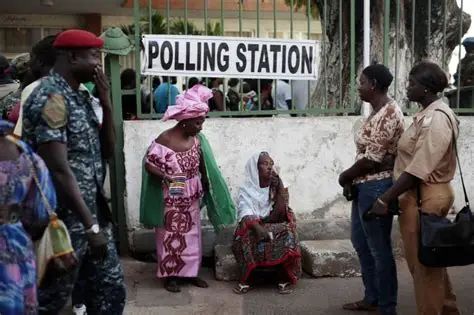
In plain language, this means voting is a fundamental right for every Gambian citizen of legal age.
The recently enacted Elections Act provides under Section 13 the qualifications for registration as a voter. One of the requirements is under subsection (c), is that the person must be resident or be born in a constituency
Why Constituencies Matter
Elections in The Gambia are organised around geographically defined constituencies. The diaspora is not officially recognised as a constituency. In 2015, the number of constituencies increased from 48 to 53 following a boundary re-demarcation to accommodate population changes. While the diaspora is often called the “eighth region,” it was not demarcated within this constituency structure, leaving Gambians abroad without a legal registration pathway.
One of the challenges about diaspora voting some NAMs have advanced is that until there is demarcation of the diaspora, it will be difficult, if not impossible to register them to vote. The fact though is that neither the Constitution nor the Elections Act suggested much less make it mandatory that the diaspora has to be first demarcated into constituencies in order for Gambians abroad to vote.
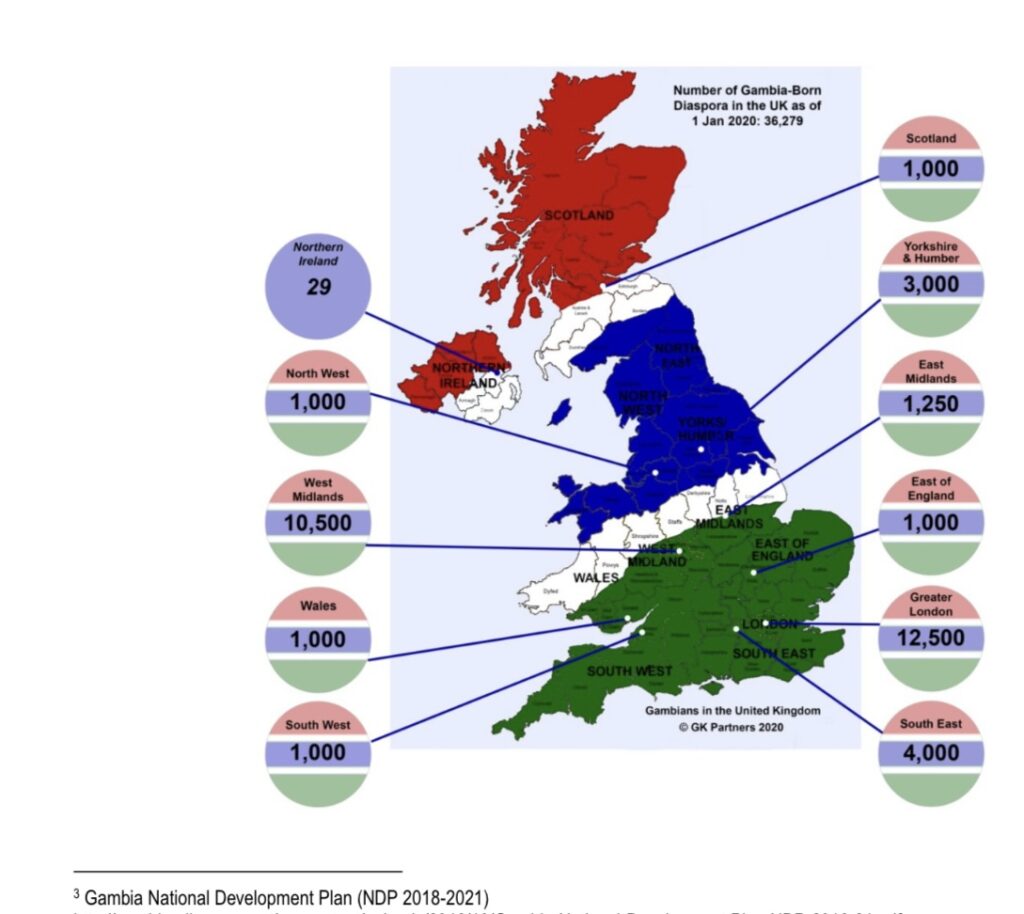
Notwithstanding, in May 2021 the MSDG Project produced a briefing paper for the National Assembly on diaspora voting. The body, led by Prof. Gibril Faal created 5 diaspora electoral constituencies based on the population distribution of Gambians in foreign countries and regions. In the Elections Bill 2020, Clause 14 provided for the registration of Gambians in the diaspora.
National Assembly Votes Down Diaspora Voting Clause
In early 2025, the National Assembly voted against Clause 14 of the Elections Bill, 2021, which would have allowed Gambians abroad to register and vote. The vote was 25 against and 14 in favour, with most opposition coming from the ruling National People’s Party (NPP) and its allies.
Lawmakers cited constitutional and logistical concerns. They argued that because the diaspora is not a recognised constituency, the Independent Electoral Commission (IEC) cannot legally register overseas voters. Some, including the Attorney General, maintained that implementing diaspora voting would require constitutional amendments or a registration system that applies to all overseas Gambians, not just some countries. Opposition lawmakers and civil society groups dispute this, insisting the Constitution guarantees the right to vote based on citizenship, not residence.
Justice Minister Dawda Jallow advised that the decision should be left to the IEC, stating:
“If the IEC thinks there is a need for a general registration, it will do it.”

The IEC’s website notes that under Section 11 of the Elections Act, it has a mandate to maintain a voter register abroad, but practical mechanisms are still being explored. In the meantime, Gambians abroad are advised to return to their home constituencies to register and vote during national elections.
The Elections Act does not explicitly ban diaspora voting but makes registration and polling entirely within The Gambia, leaving overseas citizens without a legal pathway to participate from abroad.
Gambians Living Abroad
The Ministry of Foreign Affairs identifies the diaspora as the “eighth region,” yet they lack voting rights or representation in the legislature. Estimates suggest more than 150,000 Gambians live abroad, mainly in the US, UK, Spain, and Italy. Their contributions are substantial:
The Central Bank of The Gambia reported that in 2024, diaspora remittances reached US $775.6 million, accounting for approximately 31.5% of the country’s GDP, supporting households, education, healthcare, and private investment.
Legal Challenges
Legal efforts to secure diaspora voting have moved beyond Parliament. In January 2021, the Supreme Court ruled that Gambians abroad have a constitutional right to register and vote. More recently, a group of diaspora activists filed a High Court petition to compel the IEC and Attorney General to implement that ruling. Civil society groups have criticised the National Assembly’s removal of diaspora provisions from the Elections Bill as unconstitutional.
What Other African Countries Can Teach The Gambia
Across Africa, several countries have found ways to include citizens living abroad in national elections. Senegal, for example, allows voting through polling stations at its embassies and consulates, while Nigeria operates a limited overseas voting system with early registration at diplomatic missions.
Ghana and South Africa permit diaspora voting in presidential elections, using embassies and special registration centers to verify identities. These examples show that overseas voting is feasible with proper legal frameworks, clear registration procedures, and logistical planning.
For The Gambia, similar approaches such as establishing embassy-based polling stations or starting diaspora voting with presidential elections could provide a structured path to enabling Gambians abroad to exercise their constitutional right to vote.
Why This Debate is not Going Away
Diaspora voting in The Gambia sits at the intersection of constitutional rights, legislative action, and electoral administration, making it a persistent point of discussion in national politics.
Despite court rulings affirming Gambians abroad having the right to vote and ongoing advocacy by civil society, practical mechanisms for registration and voting remain unimplemented. At the end of the day, everything just boils down to political will. Observers have noted that if the President, NAMs and political parties truly want to make diaspora voting a reality, it will happen without delay.
As the country continues to strengthen its democratic institutions, diaspora enfranchisement is likely to resurface in future reforms, legislative debates, and constitutional amendments.
