
Explainer: What Does The Gambia’s LDC Chairmanship Mean?
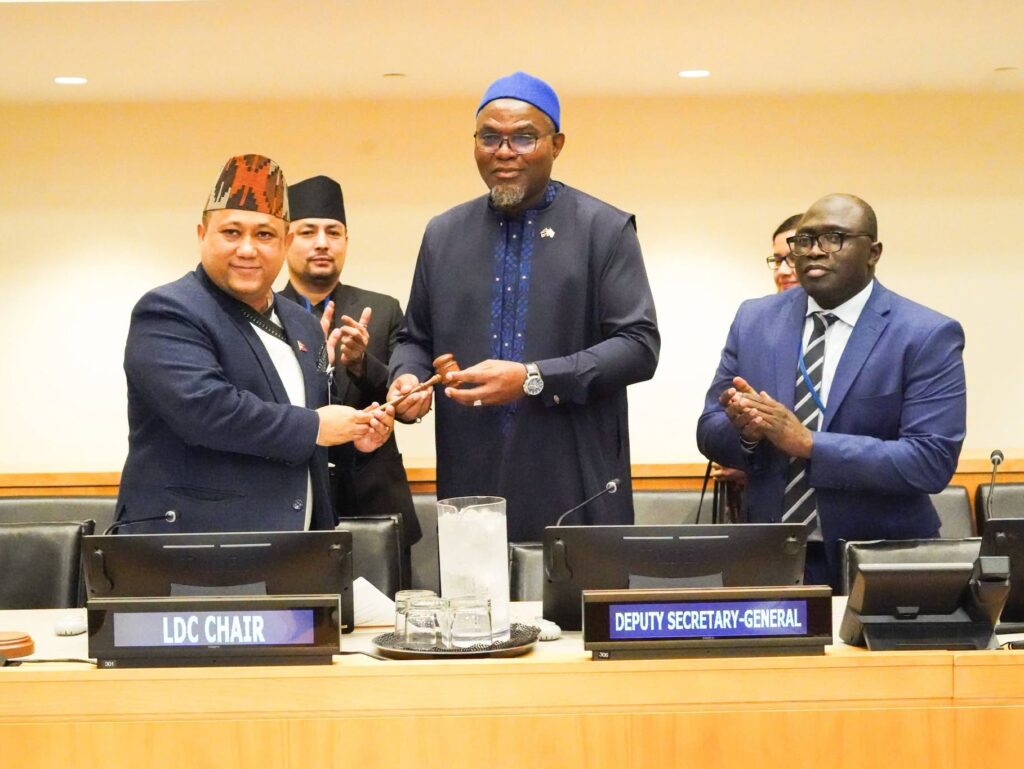
The Gambia assumes the leadership of the LDC Group at a particularly consequential point. Its three-year mandate will coincide with the midpoint of the Doha Programme of Action, the UN’s 10-year framework for supporting the world’s least developed countries.
The Gambia has taken on a new diplomatic responsibility at the United Nations, assuming the chairmanship of the Global Coordination Bureau of the Group of Least Developed Countries (LDCs) for a three-year term. The country was elected by consensus on September 2, 2026, and formally took over from Nepal on September 25 during the LDC Ministerial Meeting, held on the margins of the 81st United Nations General Assembly in New York.
The chairmanship will be led by Lamin B. Dibba, Ambassador and Permanent Representative of The Gambia to the United Nations, with support from Binta Jeng, Counsellor and Second Committee Expert at The Gambia’s Permanent Mission.But what exactly is an LDC? What does chairing the group involve? And, with The Gambia itself still classified as an LDC, what could the three-year mandate mean for the country and the wider group?
First, what does LDC mean?
LDC stands for Least Developed Countries.
It is a formal United Nations category for countries facing severe structural barriers to sustainable development. The classification is based on three broad criteria:
- Income – measured through gross national income per capita;
- Human assets – including health and education indicators; and
- Economic and environmental vulnerability – a country’s exposure to economic and environmental shocks.
The category was created in 1971. The Gambia has been an LDC since 1975.
There are currently 44 LDCs across Africa, Asia, the Pacific and the Caribbean. Collectively, they account for more than a billion people but a relatively small share of global GDP and international trade.
So when The Gambia assumes the LDC chairmanship, it is not simply taking charge of a group of “poor countries”. It is assuming a formal diplomatic role within a UN-recognised negotiating bloc.
What exactly is The Gambia chairing?
The Gambia is not becoming the leader or government of the 44 LDCs. Rather, it is chairing the Global Coordination Bureau, the mechanism through which the group coordinates its positions and represents its collective interests in international forums.
Through the Bureau, LDCs work to develop common positions on issues including:
- climate change and climate finance;
- debt and development financing;
- international trade and market access;
- technology and innovation;
- food security;
- investment and productive capacity; and
- sustainable graduation from LDC status.
The Chair helps coordinate these positions and represents the group’s agreed priorities in major multilateral processes. The role therefore gives The Gambia a prominent diplomatic voice, but it does not give the country authority over the other 43 members.
Why does this matter?
Many of the challenges facing LDCs are shaped by decisions made at international institutions such as the UN, World Trade Organization, UNCTAD, World Bank and other multilateral bodies.These include access to finance, international trade rules, climate funding, technology and debt relief.
Individually, an LDC may have limited negotiating influence. Collectively, the 44 countries can present a stronger case.The chairmanship puts The Gambia at the centre of that coordination.
A major part of the chairmanship will be the Doha Programme of Action (DPoA) 2022–2031, the international framework for supporting LDC development during the current decade.
Its priorities include:
- Investing in people through education, health and skills;
- Expanding science, technology and innovation;
- Transforming economies and increasing productive capacity;
- Improving trade and regional integration;
- Building climate resilience; and
- Supporting countries to graduate sustainably from LDC status.
The programme also includes initiatives such as an online university, a food-stockholding mechanism, an investment support centre and mechanisms to strengthen resilience and support countries preparing for graduation.
Why 2027 will be important
The timing of The Gambia’s chairmanship is significant.
The Midterm Review of the Doha Programme of Action is scheduled for March 25–27, 2027, in Doha, Qatar. The review will assess progress since the programme was adopted, identify obstacles and determine what needs to happen during the second half of the programme through 2031.
The Gambia will therefore be chairing the group as it prepares for one of the most important assessments of the decade. Issues likely to dominate discussions include:
- affordable development financing;
- debt sustainability;
- climate finance;
- trade and market access;
- technology transfer;
- food security; and
- support for sustainable graduation.
Where does The Gambia stand?
There is an important irony here: The Gambia is advocating for the sustainable graduation of LDCs while remaining an LDC itself.
According to the UN’s 2024 assessment, The Gambia recorded:
| Indicator | The Gambia | Graduation threshold |
| GNI per capita | $750 | $1,306 or above |
| Human Assets Index | 69.0 | 66 or above |
| Economic & Environmental Vulnerability Index | 45.5 | 32 or below |
The Gambia’s human-assets score was above the relevant threshold, but its income remained below the threshold and its economic and environmental vulnerability remained considerably higher than the graduation benchmark.
A country must meet the required criteria across successive UN reviews before graduation can take place.
What can the chairmanship deliver for The Gambia?
The chairmanship itself does not automatically bring new money to The Gambia, nor does it give the country special control over LDC resources.
Its value is largely diplomatic.
The Gambia can use the position to highlight issues affecting itself and other LDCs, build consensus among members and push international institutions to deliver on existing commitments.
But it will also have to balance its national interests with its responsibility to represent the collective priorities of the group. There is no automatic benefit to households simply because The Gambia holds the chair.
Any benefits would come indirectly if the LDC Group succeeds in securing better access to development finance, climate funding, trade opportunities, technology or other forms of international support and if those resources are effectively implemented at national level.
That distinction is important.
Diplomatic influence does not automatically translate into development at home.
There is a long chain between an agreement reached at the UN and an improvement in someone’s income, access to electricity, education, food security or resilience to climate shocks.
