
Explainer: Understanding the U.S. Partial Visa Ban on The Gambia

Starting January 2026, key U.S. visas for Gambians student, work, tourism, exchange face restrictions. Already in the U.S.? You’re safe. Planning to go? Here’s what you need to know.
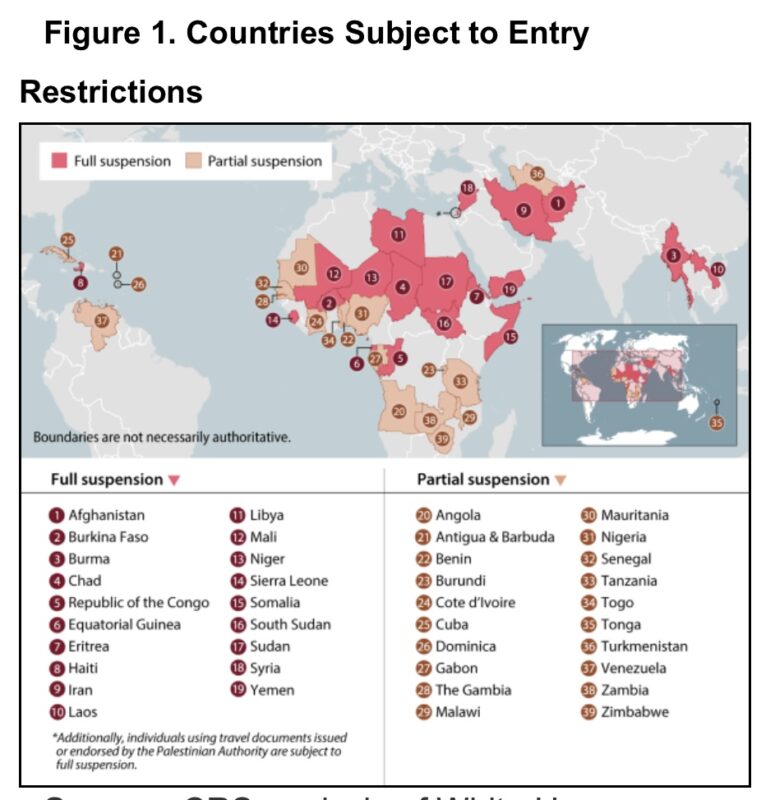
Starting January 1, 2026, the United States will implement expanded travel and visa restrictions affecting multiple countries, including The Gambia. While these measures are often referred to as a “travel ban,” the reality is more nuanced: this is a partial visa suspension, meaning that only certain visa categories are impacted, rather than a complete ban on all Gambians seeking to enter the U.S.
The restrictions differ depending on the nationality of the traveler and the type of visa being applied for. For Gambians, the partial suspension affects some of the most common visa types for tourism, business, study, and exchange programs, while leaving other categories and existing visa holders largely unaffected.
In other words, not every Gambian will be barred from traveling to the U.S., but new applications in certain categories may face significant limitations.
This explainer aims to provide clarity on what the policy entails for Gambians: which visa categories are affected, how the restrictions are applied, who is exempt, and what steps prospective travelers should take to navigate the changes.
It also examines the reasons behind the U.S. decision, including historical overstay rates and compliance issues, helping Gambians understand the practical implications for study, work, or travel plans.
By breaking down the rules, exemptions, and potential challenges, this explainer seeks to equip Gambians with the knowledge needed to plan ahead and make informed decisions in light of the new restrictions.
Why The Gambia Was Included
According to the U.S. Department of Homeland Security’s (DHS) overstay report, Gambians have historically recorded relatively high visa overstay rates, which has contributed to the partial visa suspension. The report highlights the following:
- B-1/B-2 visas (business and tourism): Overstay rate of 12.7%. This means that roughly 13 out of every 100 Gambians who entered the United States on a business or tourist visa remained in the country beyond the period authorized.
- F, M, and J visas (students and exchange visitors): Overstay rate of 38.79%, translating to nearly 39 out of every 100 Gambians in these categories staying past their permitted time.
U.S. authorities have also expressed long-standing concerns about The Gambia’s reluctance to accept back its nationals who are ordered to leave the United States. This combination of high overstay rates and difficulties in ensuring compliance with removal orders has been a key factor in the decision to impose partial travel restrictions on Gambians.
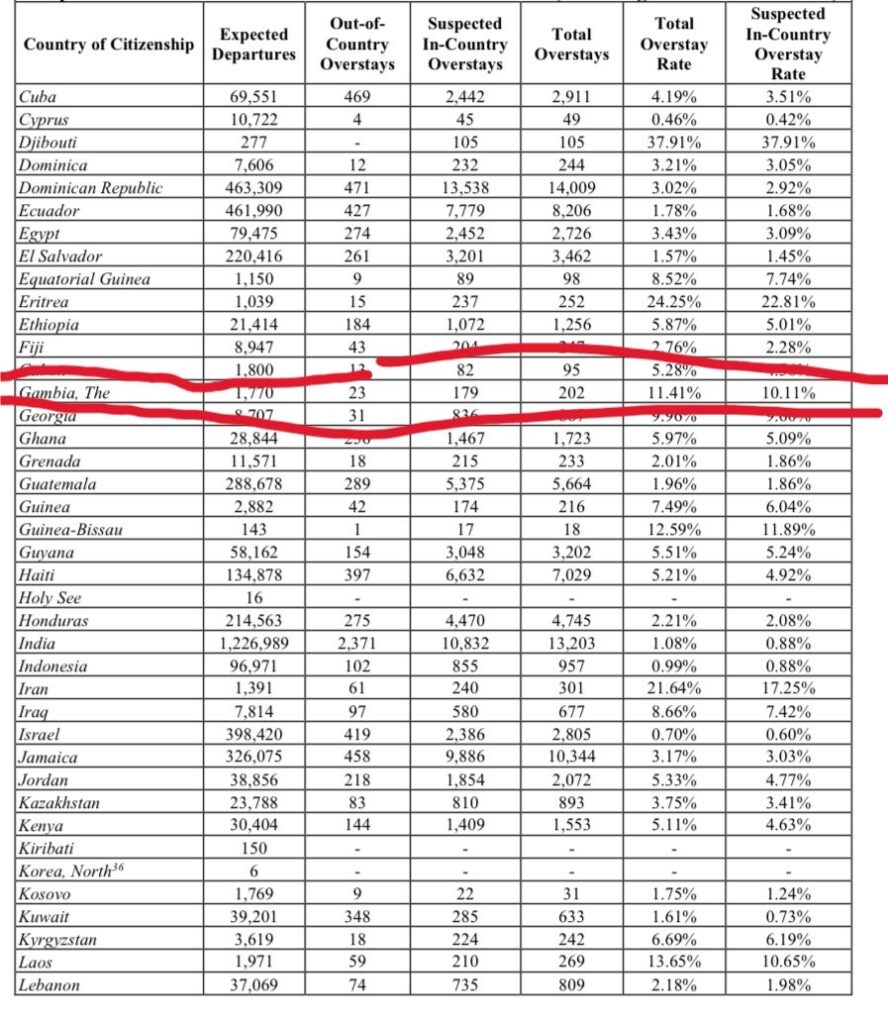
These statistics illustrate why the U.S. government considers additional measures necessary to ensure compliance with immigration laws and maintain the integrity of visa programs. For Gambians planning to travel to the U.S., understanding these figures is crucial, as they directly inform which visa categories are affected and the risks associated with overstaying.
What the Ban Means for Gambians
A partial visa ban does not completely prevent Gambians from entering the United States. Instead, it targets specific visa categories, temporarily suspending their issuance while leaving room for certain exceptions. This means that while travel and immigration opportunities are more restricted, the door is not entirely closed. Individuals who already hold valid visas, or who qualify for exemptions, may still enter the U.S. under particular circumstances.
For The Gambia, the United States has suspended the issuance of the following visas:
- Immigrant visas – These are visas that allow Gambians to move to the U.S. permanently, commonly known as green cards. With this suspension, Gambians seeking permanent residency will face significant restrictions.
- Non-immigrant visas – These are temporary visas issued for specific purposes such as tourism, education, work, or exchange programs. The categories affected include:
- B-1 / B-2: Business and tourism visas, which allow Gambians to travel to the U.S. for short-term professional engagements, family visits, or leisure.
- F visas: Academic student visas for Gambians pursuing undergraduate or graduate studies at U.S. universities.
- M visas: Vocational and technical student visas, covering those enrolled in non-academic programs like trade schools or technical courses.
- J visas: Exchange visitor visas, which include students, researchers, interns, and other participants in cultural and educational exchange programs.
- B-1 / B-2: Business and tourism visas, which allow Gambians to travel to the U.S. for short-term professional engagements, family visits, or leisure.
This partial suspension is designed to address concerns around visa overstays and compliance with U.S. immigration regulations, rather than to block all travel from The Gambia. While it limits access to these commonly used visa types, it does not automatically revoke existing visas or affect Gambians already lawfully resident in the U.S.
In addition to suspending specific visa categories, U.S. consular officers have been directed to reduce the validity period of other non-immigrant visas issued to Gambians, wherever allowed by law.
This means that even Gambians holding visas not directly affected by the partial ban may see their travel authorization shortened, requiring them to renew or reapply sooner than expected. The measure is intended to ensure tighter oversight of all Gambian travelers and to encourage compliance with U.S. immigration rules, particularly for visas that could otherwise be used for extended stays.
Who Is Not Affected
Not all Gambians are impacted by the partial visa ban. Those who already hold valid status in the United States are generally unaffected, meaning students, workers, and residents can continue their activities without disruption.
Green Card holders, i.e., permanent residents retain their rights to live, work, and travel in the U.S. without restriction.
Diplomats and official travelers conducting government or international work are also exempt, ensuring that essential official duties can continue.
Dual citizens traveling on a passport from a country not on the restricted list are not subject to the ban, allowing them to maintain their mobility.
Additionally, individuals who are granted national-interest exemptions, for example, professionals or researchers whose work serves a broader public purpose can still enter the U.S. despite the partial suspension.
These exemptions demonstrate that the ban is targeted rather than absolute, aiming to restrict new visa issuance for certain Gambians while maintaining continuity for those already in the U.S. or engaged in essential activities. However, anyone planning travel after January 1, 2026 should carefully review their status and exemptions to avoid complications.
Existing visas are not automatically cancelled, but travel after January 1, 2026 carries risks.
What Gambians Should Do
For Gambians planning to travel to the United States, understanding the new partial visa ban and its implications is essential. Here are key steps to take:
Review your current visa validity: Check the type, expiration date, and conditions of your U.S. visa before making any travel plans. Ensuring that your visa is still valid for your intended purpose of travel can prevent complications at entry.
Follow guidance from the U.S. Embassy in Banjul: The embassy is the primary source for updated rules, application procedures, and exemptions. Regularly consulting their announcements will help travelers navigate the restrictions effectively. The US Embassy is active on social media for easy checking.
Seek legal advice for individual cases: Immigration lawyers or accredited legal aid organizations can provide tailored advice, particularly for students, workers, or travelers affected by the partial suspension. They can clarify eligibility for exemptions, appeal options, and documentation requirements.
Consider alternative study or travel destinations: For those whose U.S. travel may now be restricted, exploring other countries for education, work, or business opportunities can be a practical solution. This proactive approach helps avoid delays or disruptions caused by the ban.
Conclusion
By taking these steps, Gambians can better navigate the changes, protect their travel plans, and ensure compliance with U.S. immigration policies while minimizing uncertainty and risk.
The partial visa ban represents a major shift in U.S. immigration enforcement for Gambians. While it does not affect those already residing in the United States, it introduces new hurdles for anyone planning future travel, particularly students seeking education, families visiting relatives, and small-business owners conducting business trips.
Understanding the rules and preparing in advance has become essential.
