
Explainer: The Gambia v Myanmar: What to know ahead of Thursday’s ICJ judgment on alleged genocide
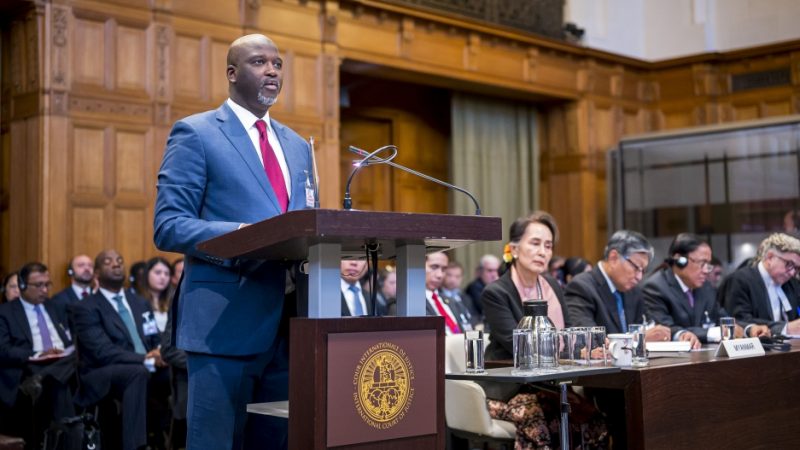
The Gambia’s landmark case against Myanmar over atrocities committed against the Rohingya Muslim minority is approaching a major milestone, with the International Court of Justice expected to deliver its judgment on November 19, 2026. Here is what the case is about, why The Gambia brought it and what the ruling could mean for international justice.
The Gambia has taken on a significant role in one of the world’s most consequential international human rights cases.
In November 2019, The Gambia filed a case against Myanmar at the International Court of Justice (ICJ), accusing the Asian country of violating the Convention on the Prevention and Punishment of the Crime of Genocide through its treatment of the Rohingya, a predominantly Muslim ethnic minority.
The case followed a brutal military crackdown in Myanmar’s Rakhine State in 2017, which forced more than 700,000 Rohingya to flee across the border into neighbouring Bangladesh. Nearly seven years after the case was filed, the ICJ is scheduled to deliver its judgment on November 19, 2026, in The Hague, Netherlands.
The ruling could become a landmark moment for international accountability, particularly in determining whether Myanmar bears state responsibility for violating the Genocide Convention.
But what exactly is the case about, why did The Gambia take Myanmar to court, and what could happen after the judgment?
What is the International Court of Justice?
The International Court of Justice (ICJ) is the principal judicial organ of the United Nations. Established in 1945, it is based in The Hague, Netherlands.
Its primary responsibility is to settle legal disputes between countries in accordance with international law. It also provides advisory opinions on legal questions referred to it by authorised United Nations bodies and agencies.
Unlike the International Criminal Court (ICC), which prosecutes individuals accused of committing serious international crimes, the ICJ deals with legal disputes between states.
This distinction is important in The Gambia’s case against Myanmar.
The ICJ is not being asked to determine the individual criminal responsibility of Myanmar’s military leaders. Rather, it is being asked to determine whether Myanmar, as a state, violated its obligations under the Genocide Convention.
What happened to the Rohingya in Myanmar?
The Rohingya are a predominantly Muslim ethnic minority who have lived for generations in Myanmar, particularly in Rakhine State. For decades, they have faced discrimination, restrictions on movement, limited access to education and healthcare, and denial of citizenship.
Myanmar authorities have largely denied the Rohingya recognition as one of the country’s ethnic groups, leaving many stateless. The situation deteriorated dramatically in August 2017, when Myanmar’s military launched what it described as clearance operations in northern Rakhine State.
The military campaign followed attacks by the Arakan Rohingya Salvation Army (ARSA), an armed group, against security posts. However, the military operations were accompanied by widespread reports of killings, sexual violence, torture and the destruction of Rohingya villages.
More than 700,000 Rohingya fled to Bangladesh, joining hundreds of thousands who had previously escaped persecution and violence. Investigations by United Nations bodies and human rights organisations documented widespread atrocities, including allegations of mass killings, rape, forced displacement and the burning of entire communities.
The United Nations Independent International Fact-Finding Mission on Myanmar concluded in 2018 that there were reasonable grounds to investigate senior military officials for genocide, crimes against humanity and war crimes.
It is against this background that The Gambia initiated proceedings at the ICJ.
Why did The Gambia take Myanmar to the ICJ?
In November 2019, The Gambia filed an application against Myanmar, alleging that the country’s actions against the Rohingya violated the Genocide Convention. The case was brought with the backing of the Organisation of Islamic Cooperation (OIC), which supported The Gambia’s initiative.
The Gambia argued that the atrocities committed against the Rohingya were not isolated incidents but formed part of a broader campaign intended to destroy the ethnic group, in whole or in part. An important aspect of the case is that The Gambia was not directly affected by the alleged atrocities and had no territorial or national connection to the Rohingya victims.
However, The Gambia argued that its obligations as a party to the Genocide Convention gave it the legal right to bring the matter before the court. The ICJ subsequently upheld this position, recognising that any state party to the convention can invoke another state’s responsibility for alleged breaches of obligations owed to all parties under the treaty.
This made the case particularly significant because it demonstrated that countries do not necessarily have to be directly affected by alleged genocide to seek accountability through the convention. The Gambia became the first country without a direct connection to the alleged crimes to bring such a case before the ICJ.
What is the Genocide Convention?
The Convention on the Prevention and Punishment of the Crime of Genocide is an international treaty adopted by the United Nations General Assembly on December 9, 1948, following the atrocities of the Second World War and the Holocaust. It entered into force in 1951 and establishes an international legal obligation on states to prevent and punish genocide.
Under Article II of the convention, genocide refers to specific acts committed with the intention of destroying, in whole or in part, a national, ethnic, racial or religious group.
The convention identifies five categories of acts that can constitute genocide:
- Killing members of a group: Deliberately causing the deaths of people because they belong to a protected group.
- Causing serious bodily or mental harm: Inflicting severe physical or psychological suffering on members of the group.
- Deliberately creating destructive living conditions: Imposing conditions calculated to bring about the group’s physical destruction, in whole or in part.
- Preventing births: Introducing measures intended to prevent reproduction within the group.
- Forcibly transferring children: Moving children from one protected group to another with the intention of destroying the original group.
However, committing one or more of these acts does not automatically establish genocide. A central requirement is proof of specific intent, commonly referred to as genocidal intent. This means demonstrating that the perpetrators intended to destroy the protected group, in whole or in part, as such.
Establishing this intention is among the most challenging aspects of genocide cases.
What is The Gambia asking the ICJ to decide?
The Gambia has asked the court to determine whether Myanmar violated several obligations under the Genocide Convention. These include allegations that Myanmar committed genocide against the Rohingya, conspired to commit genocide, failed to prevent genocide and failed to investigate and punish those responsible.
The Gambia is also seeking measures that would require Myanmar to stop any continuing violations, prosecute those suspected of genocide and prevent the repetition of such acts. Beyond determining responsibility, The Gambia has sought reparations for the Rohingya.
These include:
- Facilitating the safe and dignified return of Rohingya refugees to their homes.
- Returning or replacing property destroyed or taken during the military operations.
- Reuniting separated families.
- Providing physical and psychological rehabilitation to survivors.
- Investigating the whereabouts of missing people and helping recover and identify victims’ remains.
- Protecting the Rohingya from discrimination, persecution and restrictions on movement.
- Recognising their right to identify as Rohingya and restoring access to employment and livelihoods.
The Gambia has also requested guarantees that Myanmar will not repeat the alleged violations.
What has Myanmar said in its defence?
Myanmar has rejected The Gambia’s allegations of genocide. During the proceedings, it argued that its 2016 and 2017 military operations were legitimate counterterrorism operations launched in response to attacks by the Arakan Rohingya Salvation Army (ARSA). Myanmar maintains that its security forces were responding to threats posed by armed militants and individuals who supported them.
It has also disputed the allegation of genocidal intent, arguing that The Gambia has not provided sufficient evidence to demonstrate that the military intended to destroy the Rohingya as an ethnic group. Myanmar further challenged the reliability of evidence submitted by The Gambia, including reports produced by United Nations investigative bodies and human rights organisations. The court’s judgment will assess the competing legal arguments and evidence presented by both countries.
What happens if the ICJ finds Myanmar responsible?
An ICJ judgment is legally binding on the countries involved in the case. If the court finds that Myanmar violated the Genocide Convention, it could establish the country’s international legal responsibility and determine what obligations arise from those violations. Depending on its findings, the court could address the need to cease violations, provide assurances against repetition and make reparations for the harm caused.
However, an ICJ ruling does not automatically result in the arrest or imprisonment of individual military officials. The court does not have its own police force or criminal prosecution mechanism. Under Article 94 of the United Nations Charter, if a country fails to comply with an ICJ judgment, the other party can approach the UN Security Council, which may make recommendations or decide on measures to give effect to the ruling.
The Security Council’s response is not automatic, and enforcement can be complicated by political considerations. The United Nations General Assembly and individual countries can also exert diplomatic and political pressure to encourage compliance.
Is the ICJ case the same as the ICC investigation?
No. Although both institutions deal with international crimes, they have different mandates. The International Court of Justice deals with disputes between states, while the International Criminal Court investigates and prosecutes individuals accused of crimes such as genocide, war crimes and crimes against humanity. The ICC has been investigating certain crimes committed against the Rohingya since November 2019.
Its jurisdiction includes the alleged forced deportation of more than 740,000 Rohingya from Myanmar into Bangladesh in 2017, because the crime involved conduct completed on the territory of Bangladesh, which is an ICC member state.
In November 2024, the ICC prosecutor requested an arrest warrant against Myanmar’s former military commander-in-chief, Min Aung Hlaing, over alleged crimes against humanity of deportation and persecution.
At the time of the November 2026 HRW explainer, ICC judges had not publicly announced a decision on that request. Separately, a court in Argentina issued arrest warrants in February 2025 against 25 people, including Min Aung Hlaing, in connection with a universal jurisdiction case concerning alleged crimes against the Rohingya.
These proceedings are separate from The Gambia’s case at the ICJ.
Why is The Gambia’s case important for international justice?
The case carries significance beyond the immediate dispute between The Gambia and Myanmar.
First, it demonstrates how a country without a direct connection to alleged atrocities can use international law to pursue accountability. The Gambia’s action challenged the idea that only countries directly affected by genocide can seek legal intervention.
Second, it reinforces the principle that the prevention and punishment of genocide is an international responsibility, rather than an issue that concerns only the country where the alleged crimes occur.
Third, the case has drawn international attention to the plight of the Rohingya, whose experiences of persecution and displacement have continued despite years of international condemnation.
It also raises important questions about the effectiveness of international institutions in ensuring that countries comply with their legal obligations.
For The Gambia, the case represents a significant contribution to international human rights advocacy and the pursuit of justice for a vulnerable population thousands of kilometres away.
Ultimately, the November 19 judgment will be an important test of the international legal system’s ability to hold states accountable for alleged genocide and uphold the rights of people facing persecution.
