Explainer: Inside The Gambia’s 2026 Election Race:

Currently, the Independent Electoral Commission has approved 22 political parties for registration, while more than three additional political movements are still awaiting approval. These pending applications could still influence the country’s political dynamics, especially as the election period draws closer and alliances continue to take shape
It’s only eight months away from the 2026 presidential election, a vote that will determine who takes charge of the country’s leadership for the next term. As the countdown continues, political activity is steadily gaining momentum. New political movements are seeking official recognition, established parties are reassessing their positions, and familiar figures are re-entering the political space as independent candidates or through emerging alliances.
Against this backdrop, this explainer takes a closer look at how the political field is currently structured. It examines the parties that have already been formally registered by the Independent Electoral Commission, those still awaiting approval, and the shifting coalition arrangements that have evolved since the 2021 presidential election.
It also outlines the key milestones in the electoral calendar that will shape the months leading up to election day.
REGISTERED POLITICAL PARTIES
According to the Independent Electoral Commission (IEC), there are currently 22 registered political parties:
- Gambia People’s Advancement Party (GPAP)
- Alliance of Progressive Citizens (APC)
- Democratic Party (DP)
- People’s Alliance Party (PAP)
- National Unity Party (NUP)
- Gambia Alliance for National Unity (GANU)
- Alliance for Democracy and Development (ADD)
- Gambia For All Party (GFA)
- Gambia Democratic Congress (GDC)
- Gambia Action Party (GAP)
- Citizens’ Alliance (CA)
- Alliance for National Reorientation and Development (ANRD)
- All Peoples Party (APP) / Sobeyaa
- Gambia Party for Democracy and Progress (GPDP)
- Gambia Moral Congress (GMC)
- People’s Progressive Party (PPP)
- National Convention Party (NCP)
- National Reconciliation Party (NRP)
- People’s Democratic Organisation for Independence and Socialism (PDOIS)
- Alliance for Patriotic Reorientation and Construction (APRC)
- United Democratic Party (UDP)
- National People’s Party (NPP)
But not all parties are active
Although all 22 parties are officially registered with the Independent Electoral Commission, their level of activity varies significantly. In practice, several have become politically dormant, others have been weakened by internal divisions, and some no longer participate meaningfully in national-level contests.
Since the 2021 election, the political landscape has also shifted in ways that have reshaped party relevance. Some parties have effectively merged into larger political blocs, while others have fragmented into competing factions or gradually repositioned themselves through new alliances and realignments. As a result, formal registration does not always reflect current political strength or electoral influence.
PARTIES AWAITING IEC APPROVAL
Several new political movements are currently under review by the IEC and are not yet officially registered.
These include:
- Golden Era Party(GEP) – led by Saikou Sawo and Nenneh Cheyyassin Secka
- Unite Movement for Change (UMC) – led by Talib Ahmed Bensouda
- Economic Liberation Movement (ELM) – led by Momodou Bah
- Alliance of Progressive Citizens (APC) – led by Lamin Sima
Their participation in the 2026 election depends on IEC approval after due verification.
The Barrow-led coalition in 2021
President Adama Barrow’s National People’s Party (NPP) did not contest the 2021 election alone. It relied on a broad alliance that included:
- National Reconciliation Party (NRP) – Hamat Bah
- Citizens’ Alliance (CA) – Dr Ismaila Ceesay
- Gambia Moral Congress (GMC) – Mai Ahmed Fatty
- Gambia Party for Democracy and Progress (GPDP) – Henry Gomez
- Alliance for Patriotic Reorientation and Construction (APRC) – Fabakary Tombong Jatta
- People’s Progressive Party (PPP) – Kebba Jallow
- Independent candidate support bloc – including Momodou Bah
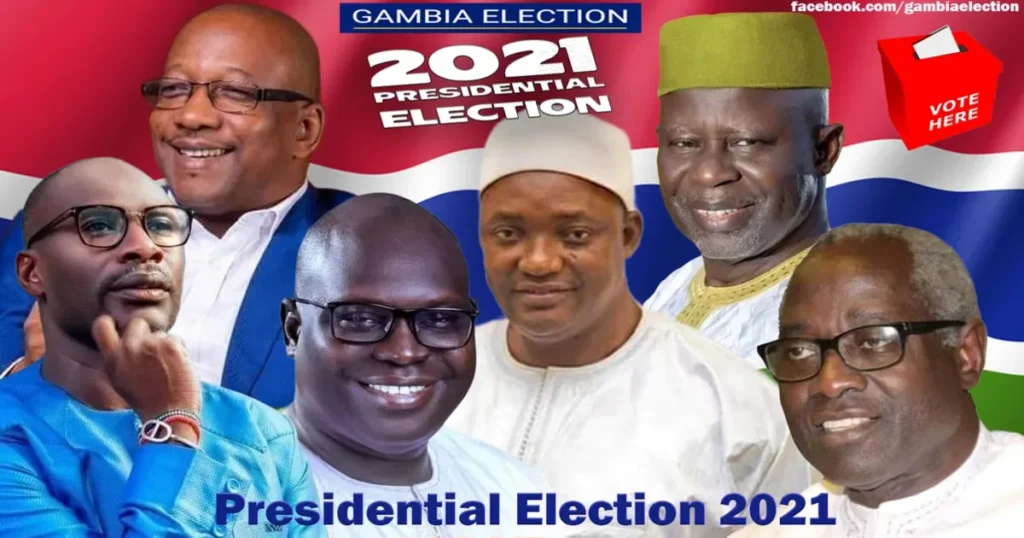
This coalition helped consolidate Barrow’s 2021 victory.
What changed after 2021?
Since the last election, the coalition has fractured and reconfigured:
- PPP has now distanced itself from the NPP-led bloc and is aligning with emerging opposition formations, including the Golden Era movement (pending IEC approval)
- Momodou Bah has fully returned to independent politics
- Several smaller actors have either exited alliances or gone inactive
The result is a more fluid and less predictable political environment heading into 2026.
New political re-entry
A notable development is the return of Dr Isatou Touray, a key figure in the 2016 opposition coalition that backed President Barrow.
She is now entering the 2026 political race as an independent candidate, adding a familiar but unpredictable dimension to the contest.
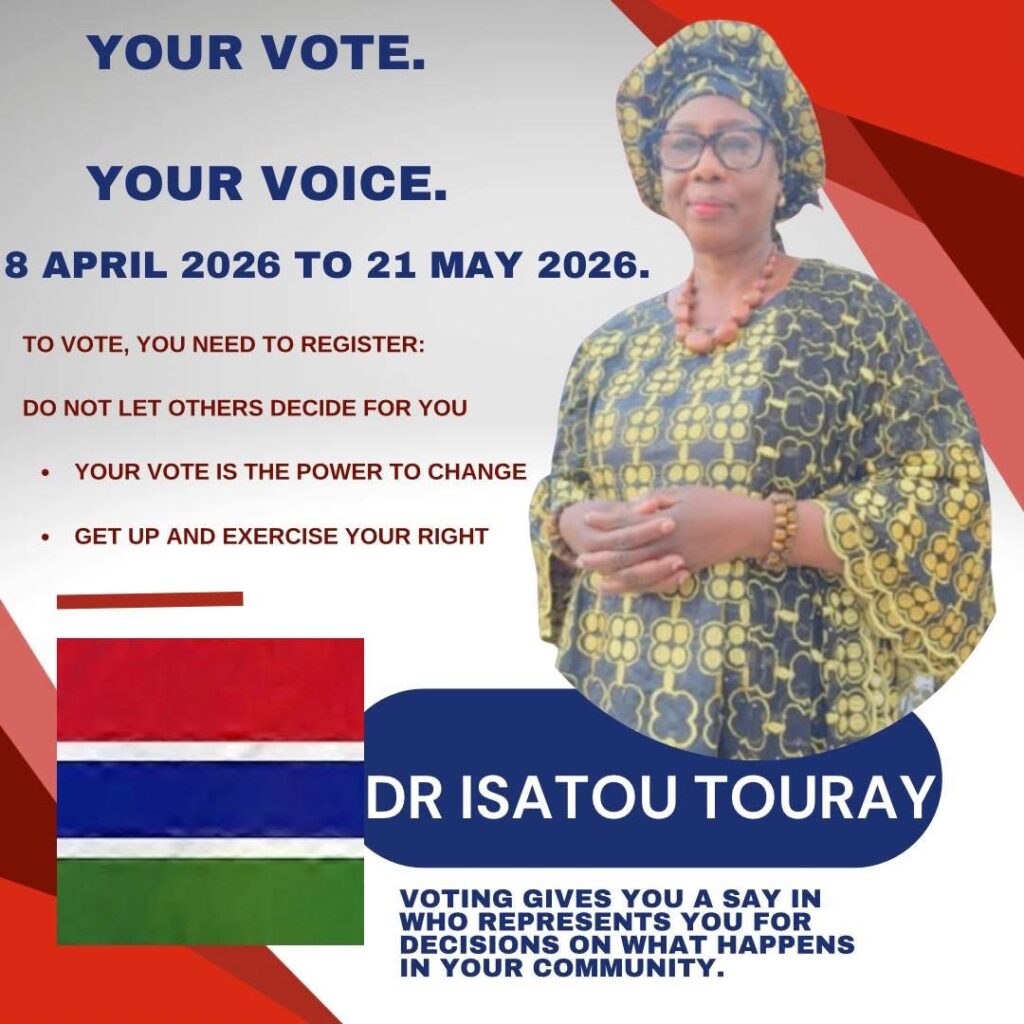
There is coalition talk with some political parties, but nothing has been made official as to which parties have formed a coalition for the 2026 elections
KEY ELECTION TIMELINE:
Here are the critical dates in the electoral cycle:
- Voter registration is ongoing and ends: 28 May 2026
- Nomination of candidates: 26 October – 6 November 2026
- Campaign period: 10 November – 3 December 2026
- Election day: 5 December 2026
What is shaping the 2026 race
The 2026 election cycle is being shaped by a clear break from the political alignments that defined both the 2016 and 2021 contests. Many of the coalitions that once brought parties together have since fragmented, with former allies now operating separately or in opposition to one another. At the same time, new political movements are emerging and seeking approval from the Independent Electoral Commission, signalling a gradual expansion of the political field.
Alongside these developments, independent candidates are gaining more visibility, reflecting a more open but also more divided political environment.
As the campaign period draws closer, these shifting dynamics suggest that alliances are unlikely to remain fixed for long. Instead, they are expected to continue evolving, making this one of the most fluid and unpredictable political periods since the end of the Jammeh era.
Malagen will keep you informed with election-related updates, providing clear explainers and analysis before, during, and after the polls.
