
Explainer: Why the Court Acquitted Women in the Fatal FGM Trial
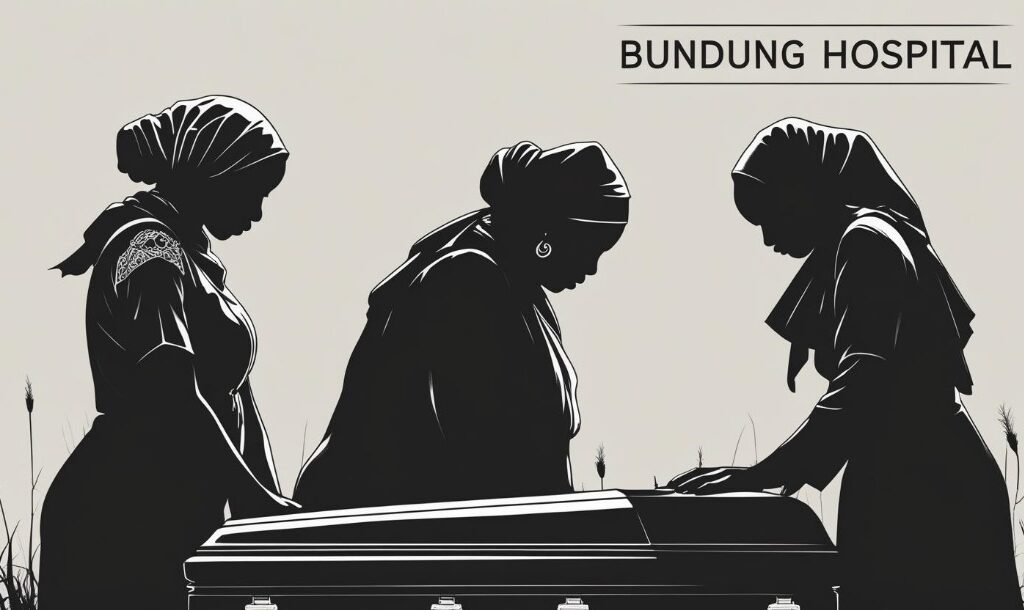
A baby died following an alleged FGM procedure, but the High Court acquitted all three women accused of carrying out or facilitating the act, after finding that the prosecution did not present sufficient evidence to sustain the case.
On 7 May 2026, the Bundung High Court acquitted three women accused of carrying out a female genital mutilation (FGM) procedure that allegedly led to the death of a one-month-old baby in Wellingara in August 2025.
In her ruling, Justice I. Janneh upheld a “no case to answer” submission by the defence. In practical terms, the court found that the prosecution had not presented enough legally admissible evidence to justify calling on the accused to open their defence.
This explainer breaks down what the case was about, why it collapsed, and what the decision means for FGM prosecutions in The Gambia.
FGM Law in The Gambia
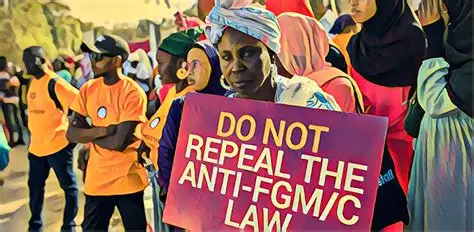
FGM has been illegal in The Gambia since 2015, when the Women’s (Amendment) Act criminalised the practice in all its forms. The law is broad in scope: it does not only punish those who carry out the procedure, but also anyone who assists, encourages, or knowingly fails to report it.
On paper, the legal framework is strict. In practice, however, enforcement has been limited. Although FGM is still reported in parts of the country, relatively few cases have reached the courts over the past decade, and even fewer have resulted in completed prosecutions.
This gap between the law and its enforcement is important for understanding this case. It shows that FGM trials are not only about proving what happened in a specific incident, but also about the challenges investigators and prosecutors face in gathering evidence that meets the strict standards of criminal court.
What Was This Case About?
The accused were Fatou Camara, Hawa Conteh, and Oumie Sawaneh. They were charged in connection with the alleged circumcision of Baby Sarjo Conteh, a one-month-old infant, on 8 September 2025.
Each of the accused faced specific allegations under the charge sheet:
The state filed four counts:
- Conspiracy to commit a felony
- Performing FGM
- Aiding and abetting the procedure
- Failing to report the act
Fatou Camara was accused of allegedly carrying out the FGM procedure and taking part in the alleged conspiracy. Hawa Conteh was charged as an alleged accomplice for reportedly requesting the procedure and facilitating its execution. Oumie Sawaneh, the child’s mother, was also charged as an accomplice on the basis that she allegedly failed to report the incident to authorities.
Prosecutors alleged that the infant died from external haemorrhage following the procedure.
To prove its case, the state called 11 witnesses, mostly police officers and medical personnel. Exhibits included photographs of the deceased, hospital admission forms, and an autopsy report.
What Does “No Case to Answer” Mean?
Under Section 245 of the Criminal Procedure Act 2025, a trial can be halted after the prosecution closes its case if the judge finds that the evidence presented is not strong enough to sustain a conviction. This is known as a “no case to answer” submission.
At this stage, the court is not deciding whether the accused are guilty or innocent. Instead, it is assessing whether the prosecution has provided enough credible and admissible evidence that could, on its own, justify a conviction if the defence chose to remain silent.
In this case, Justice Janneh concluded that the evidence fell below that legal threshold. As a result, the court ruled that the accused had no case to answer and discharged them without requiring them to present a defence.
Why Did the Case Collapse?
In her ruling, the judge identified serious weaknesses in the way the case was investigated and presented.
1. No Direct Evidence Linking the Accused
Several police witnesses admitted that their knowledge of the alleged FGM came from what others told them — including superiors or the child’s mother. None testified to witnessing the procedure.
Other officers described procedural steps such as taking photographs or effecting arrests, but did not provide direct evidence connecting the accused to performing the act.
Courts generally give more weight to firsthand evidence. Where testimony is largely secondhand, it weakens the chain linking an accused person to the alleged crime.
2. Confessional Statements Were Thrown Out
A major setback for the prosecution was the exclusion of statements attributed to the first and third accused.
The investigating officer admitted that no independent witness was present when the statements were recorded. The Evidence Act requires such a safeguard to ensure that statements are voluntary and free from coercion.
Because that procedure was not followed, the judge ruled the statements inadmissible. Justice Janneh observed that failures of this nature deprived the court of potentially critical evidence.
3. Medical Records Were Inconsistent
The medical evidence also raised concerns.
- The “brought-in-dead” form listed the cause of death as “unknown” and made no mention of FGM.
- A triage form referenced “circumcision,” but this was based on the history provided by the parents rather than an independent clinical finding.
- The pathologist who conducted the autopsy acknowledged under cross-examination that he could not identify the instrument used or
conclusively determine the cause of the lacerations. He further admitted that his initial impression of genital cutting was influenced by information provided by the police before the examination.
Taken together, these inconsistencies weakened the prosecution’s argument that FGM had been definitively established as the cause of death.
How Many FGM Cases Have Reached the Courts?
Since the 2015 ban on FGM, only a small number of cases have made it beyond the initial stages of investigation and into formal court proceedings. While the law criminalises the practice, enforcement has often proved difficult, and prosecutions remain uncommon.
One of the earliest known cases came in 2019, when two women were charged after the death of a five-month-old girl allegedly following an FGM procedure. The matter, however, did not proceed to conviction. It was later withdrawn due to insufficient evidence, highlighting early challenges in building strong prosecutorial cases.
A more significant development came in August 2023, when three women were convicted for performing FGM on eight infant girls. The court imposed fines, with a one-year jail term in default of payment. This case was widely noted as the first successful conviction under the anti-FGM law, marking a rare instance where the prosecution met the burden of proof.
Against this backdrop, the Bundung High Court case stands out as one of the few FGM-related matters to reach the High Court stage. Its outcome reflects a broader pattern in FGM litigation: while the law is firmly in place, cases often struggle to progress through the system or withstand the evidentiary demands of criminal trial.
Does This Ruling Change the Law?
The ruling does not change the law. FGM remains a criminal offence in The Gambia under the Women’s (Amendment) Act 2015.
What the decision does highlight is the legal threshold required in criminal trials. In such cases, the responsibility lies entirely with the state to prove its case beyond reasonable doubt. This means the evidence presented must be both credible and legally admissible, and strong enough to support a conviction on its own.
When that standard is not met—whether due to procedural errors, missing safeguards, or contradictory evidence—the court is bound by law to rule in favour of the accused. In this case, the judge found that threshold had not been reached, leading to the acquittal.
Why This Case Matters
The death of an infant inevitably evokes strong public emotion. For some, the acquittal raises concerns about accountability. For others, it affirms the principle that criminal convictions must be grounded in solid, lawfully obtained proof.
Beyond the individuals involved, the case exposes broader challenges in investigating and prosecuting FGM-related offences: the need for proper forensic documentation, adherence to evidentiary safeguards, and clear medical findings.
Justice Janneh reminded the prosecution of its right to appeal. Whether that happens or not, the ruling sends a clear message: serious allegations require equally rigorous investigations.
At its core, the decision reinforces a fundamental rule of criminal justice — however grave the accusation, a conviction cannot stand without sufficient and properly admitted evidence.
