
“That Is Stealing.” Students Were Told Their Money Was Being Saved. They Found Nothing.
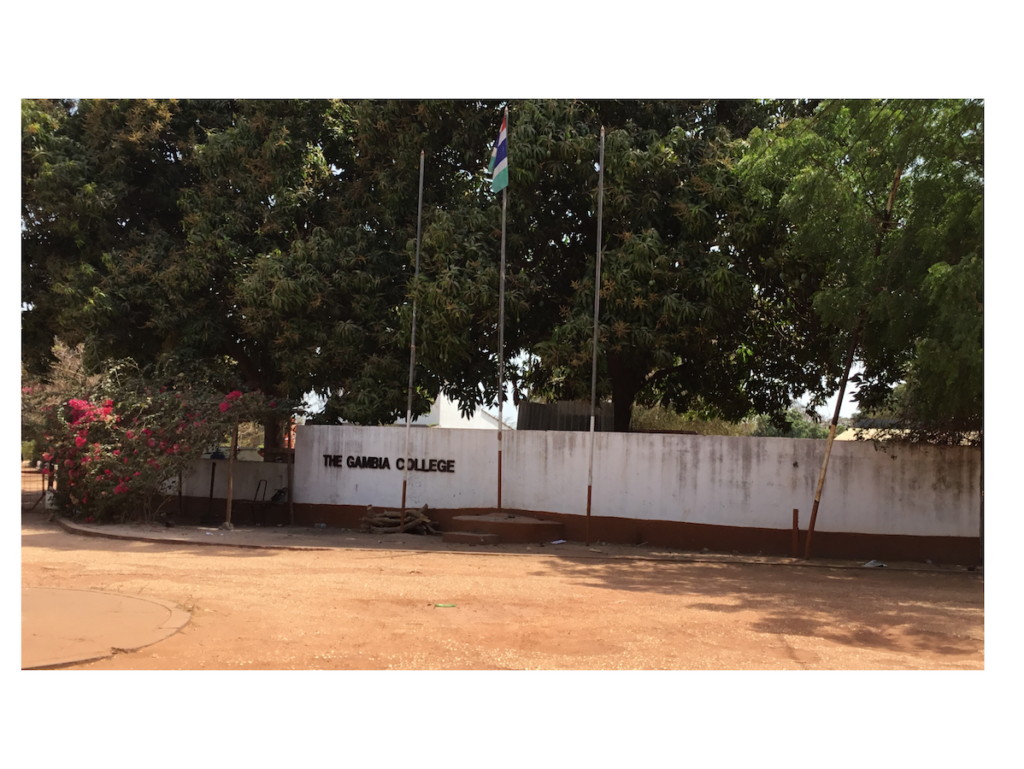
The Gambia College potentially deducted roughly D19m from the stipends students received from the government. Now, they could not explain where it all went.
Students enrolled in teacher training programmes at the Gambia College queued each month for their D500 government stipends. But the college withheld D100 from each payment to be saved for them. Now, years after graduation, many said they found no account or money to their name.
“That was what I was counting on,” said Batch Samba, 38, from Old Jeswang. A former trainee at the college, he said he was cash-trapped when he was deployed for his first teaching post in rural Gambia in 2017. Then, he went to the Gambia Teachers’ Union Cooperative Credit Union offices in Kanifing, hoping to withdraw part of monthly savings that would have added up to D3000. “I was told that there was no money there for me,” said Mr. Samba. “I was furious and disappointed.”
The Gambia college enrolled thousands of students between 2011 and 2016 for the government-backed teacher training programmes. The money deducted from each student during that period would amount to roughly D19 million.
Officials at the credit union for teachers said the college did not deposit the money collected from the students. The officials at the college denied that the deductions were intended as savings. Yet, they did not explain what the withholdings were for and provided no proof for how the funds were spent.

Nearly a dozen former college students with experiences like that of Mr. Samba’s had reached out to Malagenin recent months, describing how they had been unable to access the money they were told would be available after completing their three-year programme.
The trainees said how their stipends would be deducted was announced on their first at the college, during orientation. Since then, each month, they signed vouchers at the college’s accounts office to confirm receipt of D500. But in actual fact, they were going home with only D395 in cash.
From each payment, the college withholds a total of D105. Of that, D5 was meant for union dues and D100 set aside as savings.
“It was presented as part of the programme structure, not optional,” said Ebrima Sonko, a former student who left the college in 2017, and now a teacher.
The college left no paper trail to reflect the deductions: no payslips, no receipts, and no account statements confirming deposits at the credit union.
Demba Ceesay, then-registrar of the college, who was said to have announced the arrangement at one orientation, did not respond to repeated phone calls and text messages for comments. We visited his office twice in February: on the first visit, we were informed he was on leave, and on the second, he was said to be away on official duty.
Baboucarr Joof, then General Manager of teachers credit union, now the Minister of Defense, declined to comment. “Please reach out to the current leadership of G.T.U.C.C.U. for clarity,” he said in a WhatsApp message.
When contacted, Dawda Kujabi, the managing director however also declined to comment. “Go to the college…they have the answer,” he said in a WhatsApp message.
In an interview he gave in 2018, while still serving as general manager, Mr. Joof had said the deposits from the college were irregular. “The college consumed the money. We cannot credit students for funds we did not receive,” he told the journalist, who requested anonymity because has since taken up permanent employment at the United Nations offices in Banjul.
Mr. Joof’s comments were not previously reported by the journalist or any media.
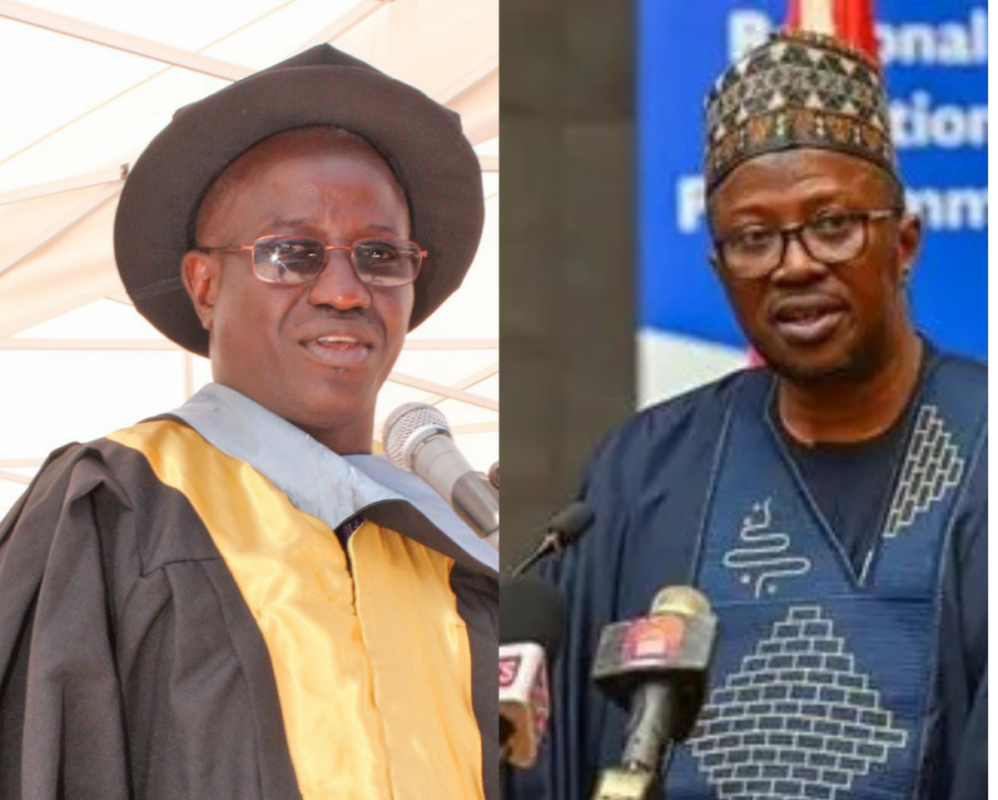
For decades, the government funded two teacher training programmes at the Gambia College: Primary Teacher Certificate or P.T.C. and Higher Teacher Certificate or H.T.C. The measure, which was meant to ease teacher shortages in the country, was discontinued in 2016.
About 5,358 students were enrolled for the two programmes between 2011 and 2016, according to admission reports reviewed by Malagen. This means that the college deducted over D19 million from the students over that period alone.
It is not clear how much was actually transferred to the credit union. Documents reviewed by Malagen show that the college last remitted funds to the credit union in 2014, covering deductions from January to July of that year.
Abubacarr Jallow, the principal at the Gambia College, said the deductions were not meant to be kept as savings for students. But he did not explain why the deductions were made.
Instead, Mr. Jallow said the college paid D4 million from the money to pay for trainees needing to resit for the West African Senior School Certificate Examination or W.A.S.S.E.
When asked to provide proof of that payment, he said the credit union has it.
The trainees interviewed by Malagen said the college’s explanation did not add up, noting that they neither sat those exams nor authorised their money to be used for that purpose.
“I know there was an arrangement for those that needed to resit private WASSCE. But this was not for all students. Yet all students had a D100 deducted from their stipend,” said Baka Dem, a former executive member of the college’s student union.
Mr. Dem, who now works at the Gambia Teachers Union, said during his time as an executive member of an advocacy group for young teachers, Young Teachers Platform, they had raised issues with the credit union about the deductions. The then general manager, Mr. Joof told them that “those deducted monies were never remitted” to the credit union.
Documents reviewed by Malagen also seem to contradict the principal, Mr. Jallow’s account of how the funds were spent.
Between April 2012 and June 2016, the credit union in fact gave about D8.4 million as loan to the college to pay fees for students who needed to re-sit the W.A.S.S.E.
In a letter dated 5 June 2014, Mrs. Isatou Ndow, then Head of the School of Education at Gambia College, instructed the credit union to use money from the savings of students who sat for the private W.A.S.S.E. to repay the loan.
Then, in 2015, the credit union took D3.9 million from students’ savings accounts to repay the loan. However, in a Jan. 2018 letter, Mr. Joof wrote to the college principal regarding the balance of about D4.4m.
“Despite collecting money from the students, remittances to G.T.U.C.C.U. stopped in 2014,” Mr. Joof said in the letter.
Deployed to often unfamiliar villages, the young teachers had expected to fall back on what they believed were savings.
Instead, many were left struggling to get by as they waited for their first salary. Others said they took loans to cover basic needs such as housing and food.
“They used our money without telling us,” Mr. Batch said “That is stealing. It was ours.”
