
After Baby Sarjo’s Death, All Eyes on Supreme Court Over FGM Ban
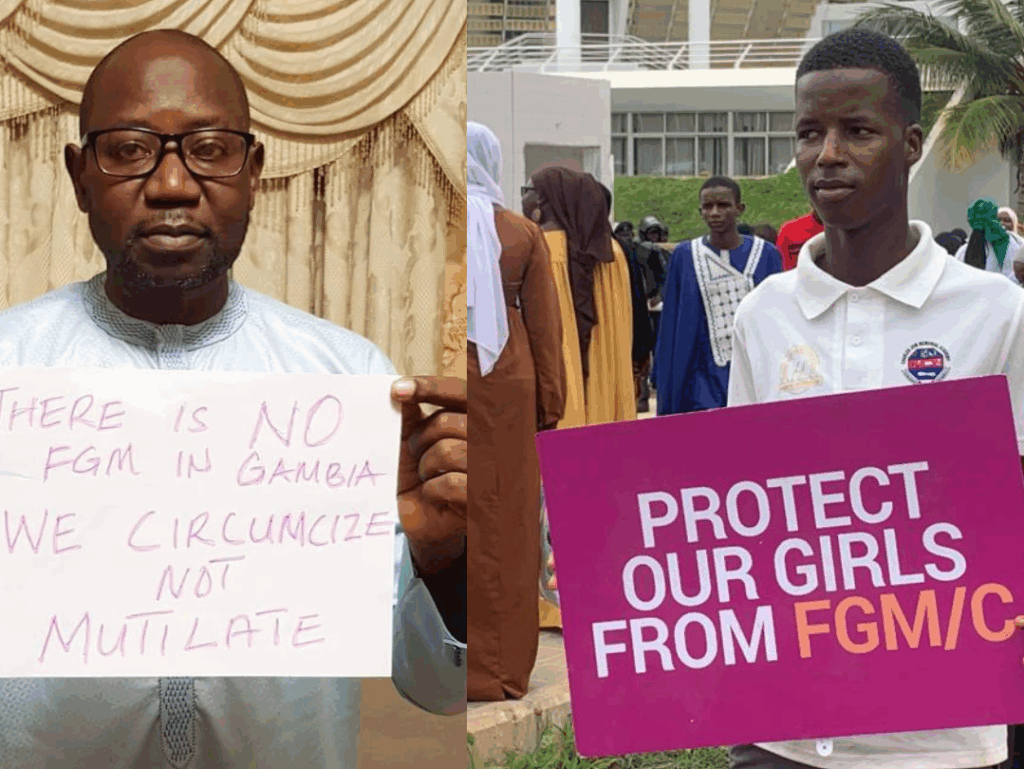
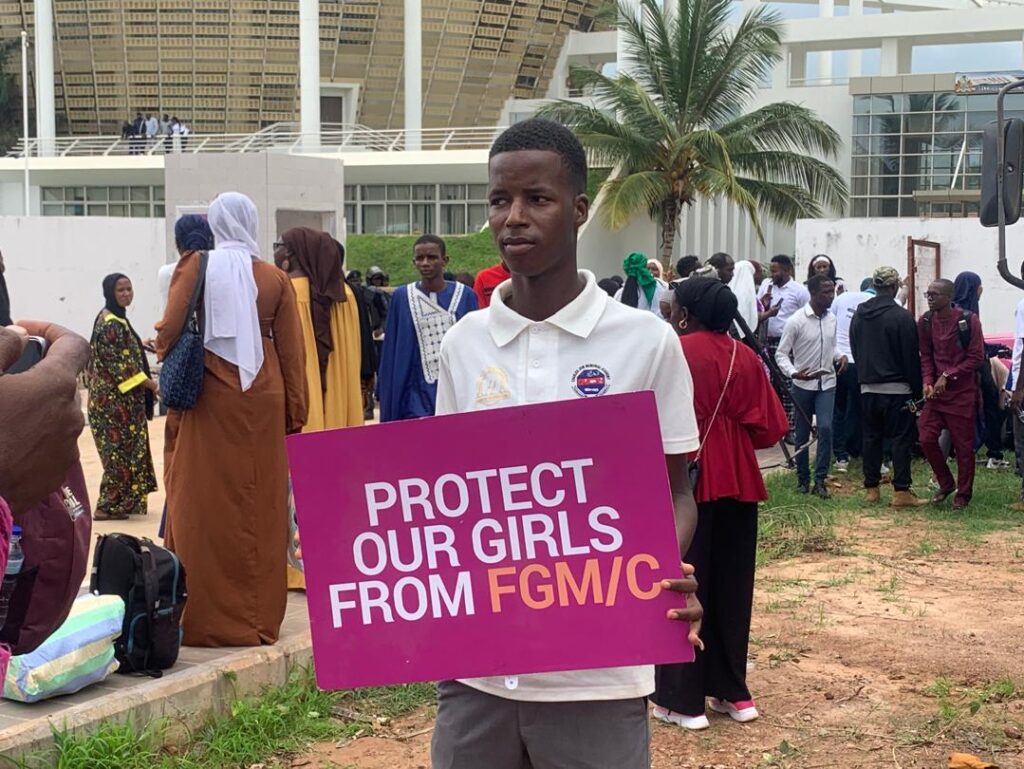
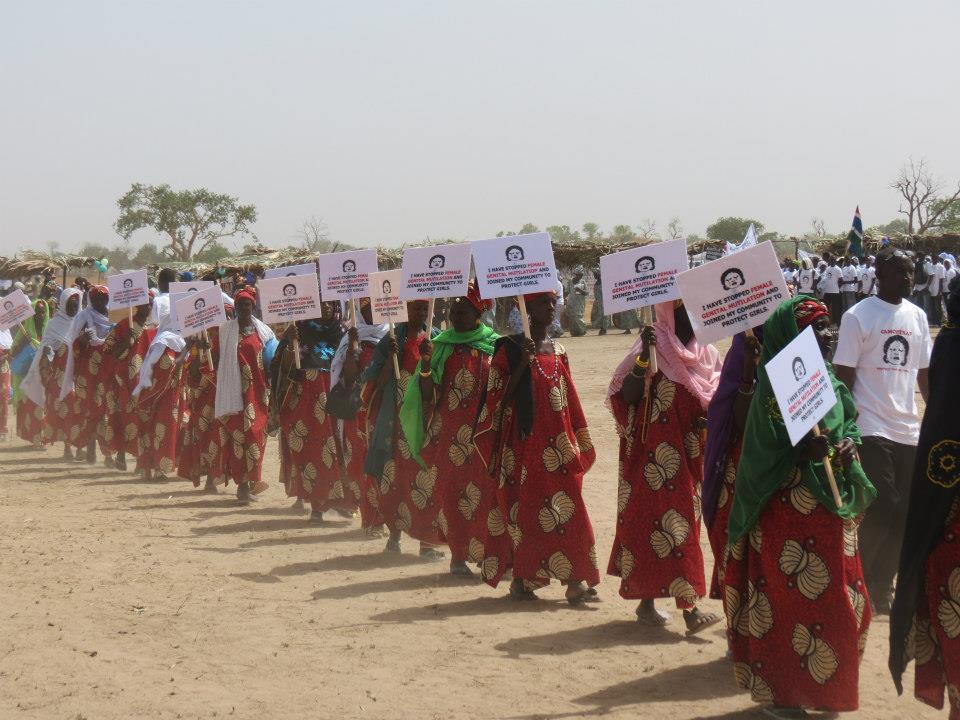
The death of one-month-old Baby Sarjo comes only weeks ahead of a crucial Supreme Court ruling on whether the legislative ban on the circumcision of girls violates the rights of those who want to keep the practice. Her 30-year-old mother said she wasn’t aware when her baby girl was cut.
Gripped by fear and guilt, Oumie Sawaneh clutched her only child, who lay still and quiet in her arms, and rushed to the hospital. Sarjo Conteh, only a month old, was still bleeding a day after her clitoris was removed.
But she was already beyond saving.
Baby Sarjo died from heavy bleeding caused by lacerations to her vaginal areas, according to a government press release, citing an autopsy report, which the ministry of health declined to share because “it is confidential”.
On a recent afternoon, Mrs. Sawaneh was trying to find some normalcy after her world had apparently collapsed under her feet in an instant. First, her child’s death. Then, she was thrown behind bars for it and thrusted into the harsh glare of global scrutiny.
We found her among three women in a large, crowded compound, crouching near two plastic pans filled with water and laundry soap, preparing to wash some clothes.
“Can we go somewhere private to talk?”
Mrs. Sawaneh nodded, picking a piece of cloth to dry her hands and headed to the veranda of her house.
“I am in pain for losing my child and on top of that, they have charged me for a crime I did not commit,” said Mrs. Sawaneh, her voice low, eyes threatening to tear up.
She rose, bringing a gentle but firm close to the conversation, saying her husband warned her not to speak about the case. Still, before walking back to her laundry, she managed to say, quietly: “I was not aware when my child’s paternal aunt secretly took her to circumcise her.”
It wasn’t the first time a mother denied involvement in a circumcision that ended in her daughter’s death, raising questions about how much power mothers truly have in a practice where they’re often left holding the bag. And men who are the most prominent public supporters of the practice do not face questions when things go wrong, campaigners observed.
Quiet for years, until a conviction
After decades of campaign, the Gambia enacted a law in 2015 banning female circumcision, also known as female genital mutilation or cutting (FGM/C), but the cultural practice is widely carried out. Campaigners said many offenders in recent incidents have walked free after those cases were swept under the rug.
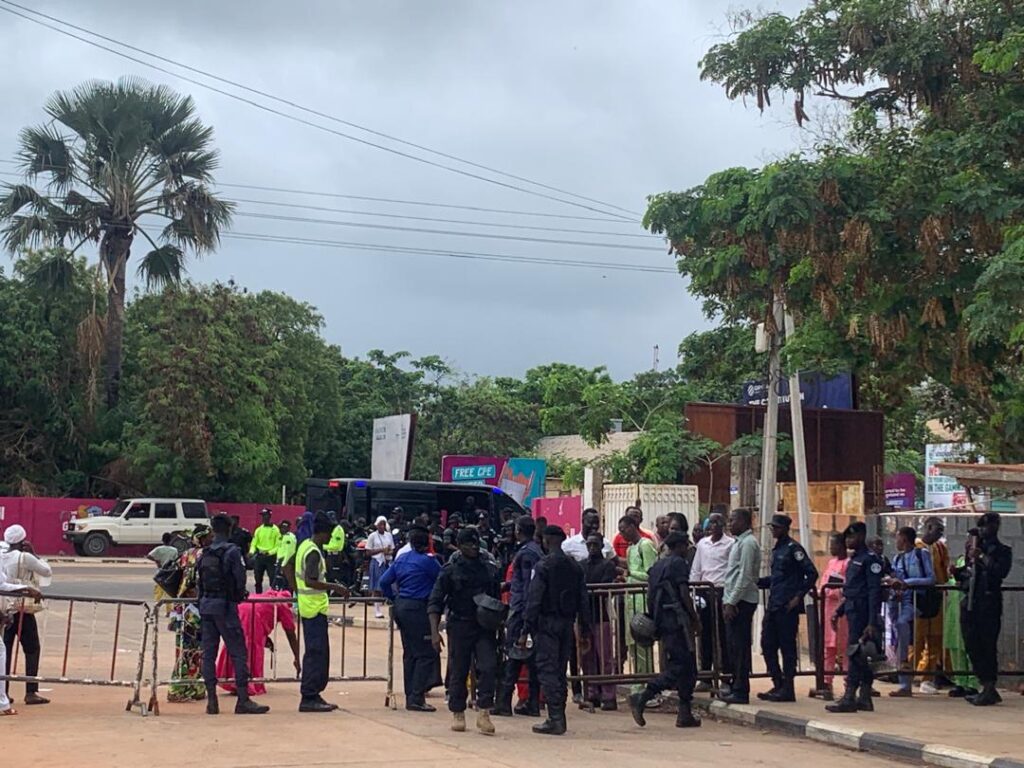
In 2023, a minor was harmed after she was cut, but the family has now lost interest in the case due to delays in the investigation by the police, according to Anna Njie, president of an advocacy group composed of female lawyers, FLAG.
“Earlier this year, we sent out a written follow-up to the police to understand the stage of the investigation,” said Ms. Njie. “We have not yet received formal confirmation on progress.”
Ms. Njie would not share any further details of the case with us “to safeguard the interests of victims in the process.” Several other campaigners we spoke to gave similar reasoning for withholding information about such incidents, citing concerns of victim protection and legal sensitivities. But it is those very conditions of secrecy and “legal sensitivities” promoted by police and campaigners under which the practice continues with impunity.
In eight years since the anti-FGM law was passed, only one case was successfully prosecuted.
The law was first tested in Feb. 2016, only three months after enactment, when a 5-month-old girl died ten days after she was cut. Her mother, Saffiatou Darboe, said she wasn’t aware when she was circumcised, but she was still charged to court alongside her mother-in-law, Sunkaru Darboe, as the circumciser fled. “She almost healed,” said Mrs Darboe back then, adding that ten days after the cutting, her daughter bled so heavily that she “could not figure out where all that blood was coming from.”
That case did not make it far “due to lack of evidence.”
Then, in 2023, three elderly women from Bakadaji in Niani district, Central River Region North were each fined D15,000 (approx. $200) after performing female circumcision on two young girls between- 4 and 12 months olds, who were left in critical condition. Their conviction set off a national crisis, drawing in influential religious leaders such as Abdoulie Fatty, a former State House imam, who paid the fines and launched a tirade of attacks against the ban, citing religious and cultural rights.
In January 2024, Almami Gibba, National Assembly Member for Foni Kansala, introduced a private member’s bill in an attempt to lift the ban. His move was shot down after the ruling National People’s Party and its allies, who form a majority in parliament, opposed the bill. Mr. Gibba, whose former ruling APRC party enacted the ban, went on to file a suit at the Supreme Court, seeking the constitutional court to declare the legislative ban on FGM unconstitutional.
A girl died. The stakes grew
In April, the country’s highest court declared that it has the authority to decide the fate of the law. Now, it is expected to rule in October on whether the ban on the cutting of girls infringes on the rights of those who want to keep the cultural practice. The death of Baby Sarjo reignited that polarising public debate. Those campaigning against the lifting of the ban are now framing the pending case as a moral crossroads, not just a legal one.
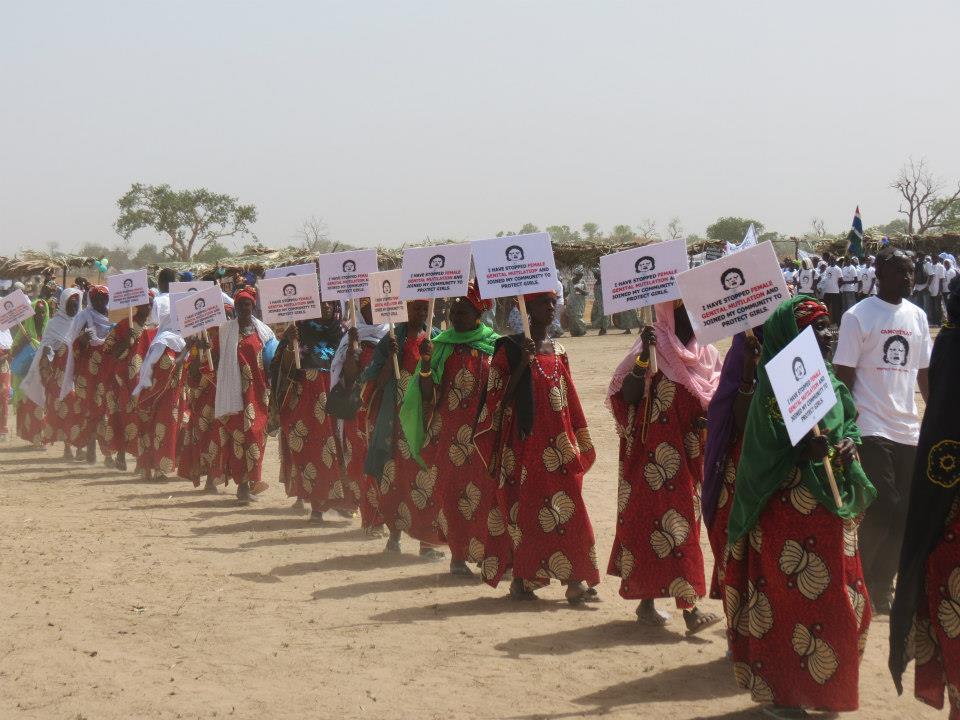
“When a child’s life is tragically lost to FGM, the debate ceases to be abstract,” Satang Nabaneh, PhD, LLD, a Gambian law professor at University of Dayton, U.S., who has authored and edited several books and research papers on women’s rights, including FGM. “It forces us to ask: what is the cost of cultural conformity, and are we willing to pay for it with the lives of our girls?”
“This is not the first such death, but it serves as a devastatingly urgent reminder that the act is a brutal violation of the most fundamental rights, including the right to life,” Mrs. Nabaneh added.
As the country braces for the landmark Supreme Court verdict, Baby Sarjo’s mother is readying herself for a legal battle, her fate perhaps resting on that outcome. Mrs. Sawaneh and her sister-in-law Awa Conteh, 40, have been charged with accomplice to female circumcision, according to the police. If convicted, they could spend up to three years in jail. The circumciser, Fatou Camara, believed to be in her 50s, has been charged under section 35 of the Women’s Act, which prohibits female circumcision, and hasn’t been granted bail. She could spend the rest of her life in jail, if found guilty.
If these women are convicted, there may be justice for Baby Sarjo and protection for thousands of other girls who are at risk of the practice that has proved to be harmful and deadly. But such justice, it appears, would almost always come at the cost of another woman’s life or freedom, including the girl’s mother. In all the FGM related cases, only women have faced charges. The role of men, as fathers, and sometimes enforcers of tradition has rarely, if ever been scrutinised.
