
A Cry From Mile ll
The Gambia’s transitional justice programme promised ‘Never Again’, but for those trapped within the walls of its prisons, it is more or less the same old story.
The ‘injustice’ of the Gambia’s justice system is something Keluntang Jarjue experienced first-hand.
Convicted on cannabis charges he strongly denied, he endured three and a half years in Mile ll, the Gambia’s central prison notorious for its harsh conditions and cruelty.
He was just 19, and improbably, it became his redemption.
“I was framed,” said Jarjue, now 31, and an instructor of electrical installation skills to inmates. “I think it is a miracle that I was meant to journey through the prisons to discover my purpose in life.”
But Jarjue’s journey, from inmate to educator, is a rare bright spot in a prison system still struggling to shed its dark past.
The Gambia promised to reform the national security institutions used by former President Yahya Jammeh to inflict violence and cruelty on people. These efforts, part of the ambitious transitional justice programme, received over 7.2 billion dalasi (approx. $100 million) in international funding.
“It is money that has been utilised in the right direction and the purpose that it was meant for,” the National Security Adviser, Baboucarr Jeng, told Malagen.
But the prisons – epicenter of Jammeh-era violations – remains a site of neglect and accountability for atrocious crimes committed within their walls remains a distant dream.
“What has in fact changed in the prisons?” queried Neneh Cham, president of the Gambia Bar Association and a criminal law practitioner.
The Echoes of a Brutal Past
Much of the shocking accounts of state-sponsored torture, murder, and horrific abuses revealed at truth commission hearings occurred within the walls of Mile II Central Prison, cynically touted by Jammeh as a “5-star hotel”.
“I do not have control over them,” David Colley, the then prisons chief, told the inquiry, detailing how agents of the National Intelligence Agency and Jammeh’s hit squad, the Junglers, had free access to detain, torture and kill. “And always, they arrest. Always, they bring people at night,” he added.
But Mr. Colley and the prison leaders were not helpless bystanders. They took advantage of the breakdown of rule of law to victimise inmates, keeping them in deplorable conditions and even stealing from them.
The cells were overflowing. Inmates were forced to sleep in toilet areas. They were even fed with animal carcasses. ‘Pap’, a watery corn porridge, was served to prisoners sometimes multiple times a day, causing widespread ‘beri beri’, a nutritional deficiency disease that causes swelling in legs and feet, even heart failure.
An estimated 36 inmates died of “beriberi” alone, with more than a dozen others murdered, killed by torture, or left to die in their cells.
The Gambia’s transitional justice programme promised a break with that dark past, a commitment to “Never Again.”
But the case of Ousainou Bojang, a suspect in the shootout that killed two police officers, triggering a politically-charged high-profile murder trial, echoes the country’s brutal past.
“The condition of my cell is suffocating me,” Mr. Bojang cried out in court in a recent hearing. “It is a confinement.”
His complaints had sent the National Human Rights Commission scrambling for answers, dispatching a fact-finding team to Mile ll.
Multiple prison sources confirmed that Mr. Bojang was being treated as a ‘special case.’ The keys to his cell are handled by the prison’s riot wing, not by regular prison wardens. He was also the last to be let out of his cell and the first to be taken back, an indication that punitive measures are used for political cases.
A System Failing to Reform
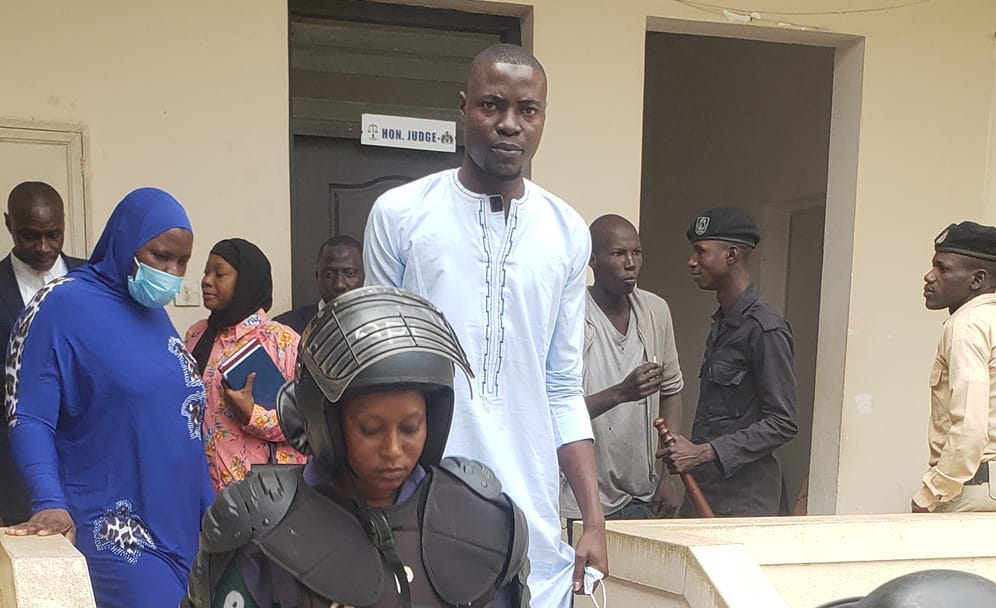
For the new prison chief, Ansumana Manneh, the system in significant ways is not as it was.
“And unlike before when the pap from the previous night was served, we give them freshly cooked meals,” said Mr. Manneh.
Inmates are no longer fed with ‘pap’ multiple times a day, but once a week, according to multiple prison authorities interviewed by Malagen.
On a regular day, inmates eat half a loaf with tea for breakfast; rice with sauce for lunch, and cereals for dinner. But the food served is low in quality and quantity, according to former inmates and human rights reports.
“Many illnesses experienced by prisoners come from the food they consume,” said Mr. Jarjue, who still has access to the prisons through his mentorship.
Some of the prison cells have recently been refurbished with new toilet facilities, bunk beds and new mattresses, according to multiple sources. Bamba Dinka, a secret and illegal detention facility where mainly political opponents were kept and tortured is an abandoned site, now used for firewood storage.
But congestion in prison remains an issue.
As of January this year, over a thousand were in various jails: more than half in Mile ll, about a quarter in Jeshwang, and less than a tenth in Janjanbureh, according to data shared by the spokesperson of the department of prisons.
The overcrowding is severe at the Remand Wing of Mile ll, where those awaiting trials are kept. The 11 cell blocks, which should each hold 5 people, had over 211 male inmates, according to a 2019 UN report.
At Jeshwang, more juveniles are awaiting trial than have been convicted, some up to seven years.
“Beatings, torture or other forms of punishments are no longer practiced here,” according to Mr. Manneh and other sources with access to the prisons.
But the prison authorities have failed to put in place “any administrative measures” to prevent the invasion of the prisons similar to those done by the NIA and Junglers.
A 13% Score for Prison Reforms
One morning in February, Keluntang Jarjue was found teaching electrical lessons to diploma students at Insight, a vocational training centre. “I never thought I’d one day stand before a classroom to teach,” he later told Malagen.
His story highlights some change within the prisons, which have become more accessible for monitoring and research visits, a stark difference from the recent past, when even the UN Special Rapporteur on prisons was denied entry.
But human rights advocate Madi Jobarteh, who was a member of the prisons reform committee, said that the conditions remained intolerable.
A monitoring system established by the National Human Rights Commission shows that only 13 percent of TRRC recommendations with respect to prison reforms were implemented.
The professionalisation of the prison system was assessed at 60 percent, but the neglect of prison infrastructure is evident in its zero percent score.
Justice Minister Dawda Jallow promised that his office would soon visit prisons to assess conditions. But eight months later, Minister Jallow had still not seen the inside of the prison gates.
Senior prison officials who oversaw the torture and killing of inmates continue to enjoy impunity, despite official recommendations for their prosecution.
