
FACT-CHECK: No evidence Gambian dalasi is West Africa’s most stable currency
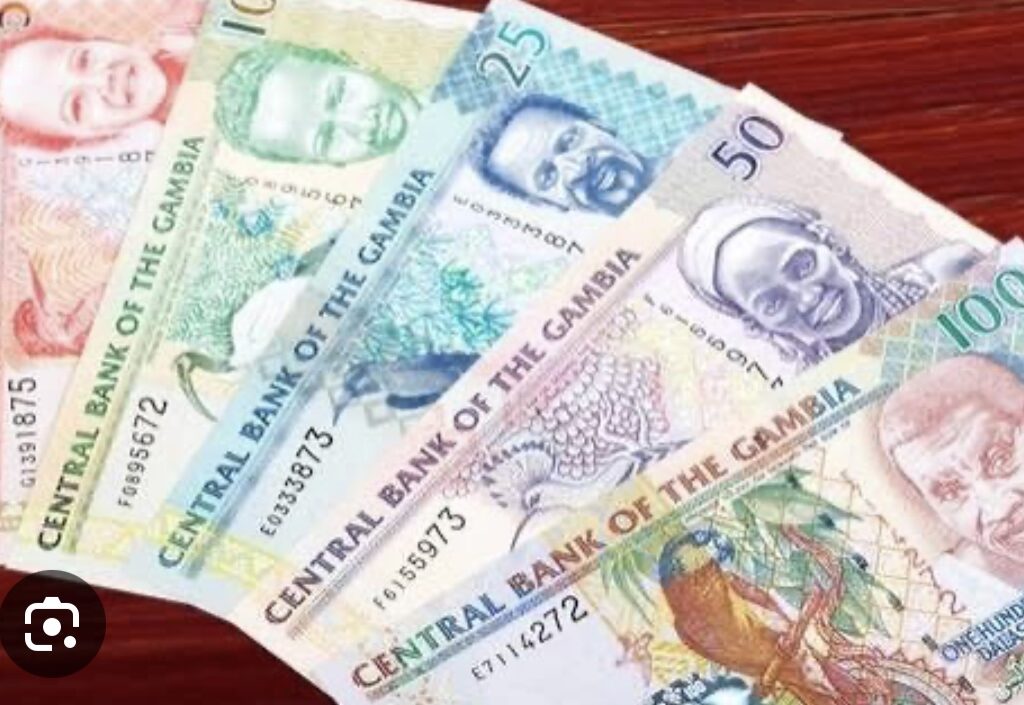
There is no available financial data showing that the Gambian dalasi is performing better than the Ghanaian cedi or the U.S. dollar, nor is there evidence that it is the best-performing currency in West Africa.
On 25 February 2026, Minister of Information Dr. Ismaila Ceesay appeared on the state broadcaster to provide updates on government activities.

During the programme, between minute 28 and 29, Dr. Ceesay stated that:
“The dalasi is doing better than the naira, cedi, leone and the American dollar.”
“We are one of the most stable currencies in West Africa today.”
This fact-check examines whether available economic data supports that claim.
Verification:
What the data shows
According to Bloomberg’s latest currency performance data for 2025, the Ghanaian cedi emerged as Africa’s best-performing currency, gaining approximately 40–41 percent in value against the U.S. dollar over the year.
A currency appreciates when it strengthens relative to major international currencies like the U.S. dollar, meaning fewer units of that currency are needed to buy one dollar. This is often seen as a sign of improved investor confidence, stronger foreign exchange inflows, or tighter monetary policies.
- Ghanaian cedi — 1st in Africa
- Congolese franc — 2nd
- Zambian kwacha — 3rd
- South African rand — among the top-performing currencies
In contrast, the Gambian dalasi ranked 18th out of 22 African currencies tracked in the same assessment.
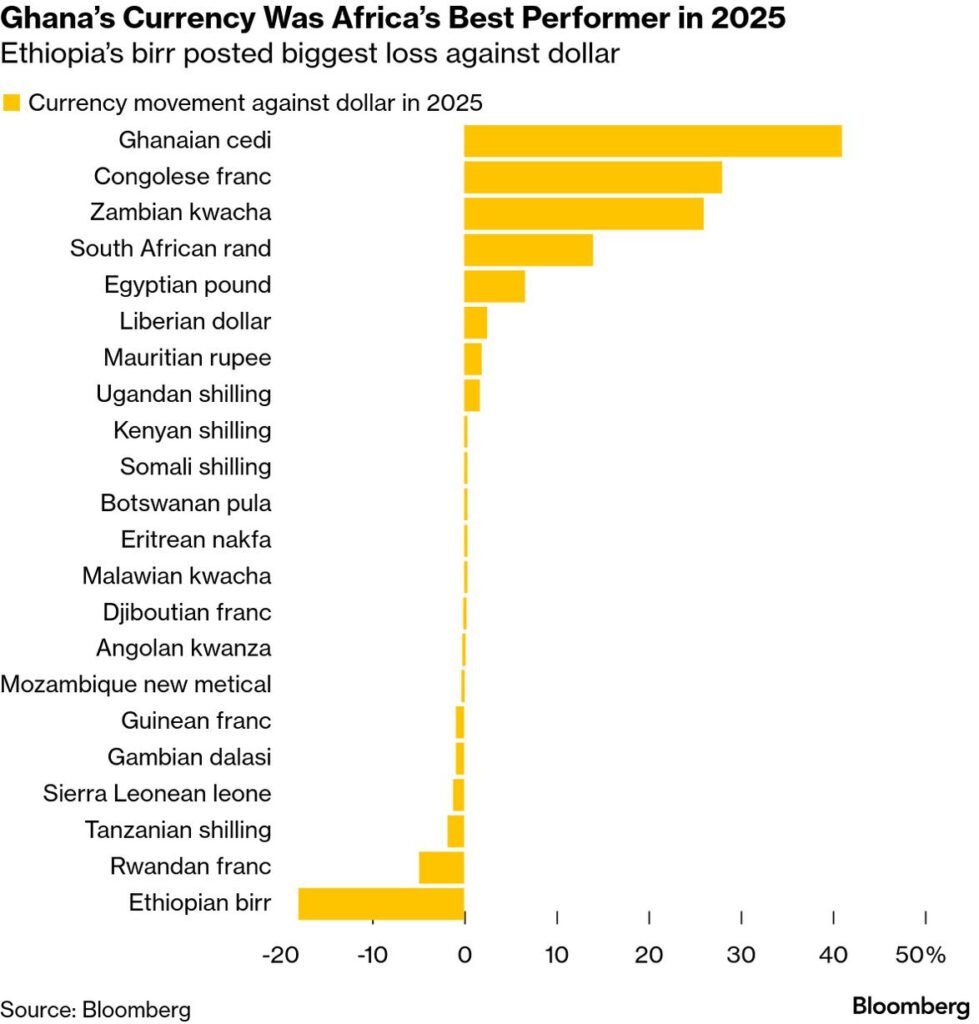
This ranking shows that while the dalasi may have experienced periods of relative stability, it did not lead currency performance either in West Africa or across the continent during the period reviewed.
How the dalasi compares with other West African currencies
Ghanaian Cedi
The Ghanaian cedi recorded strong appreciation in 2025, largely due to tighter monetary policies introduced by Ghana’s central bank and improved foreign-exchange inflows from exports and international financial support. As a result, the cedi strengthened significantly against the U.S. dollar and outperformed most African currencies during that period, according to Bloomberg
Nigerian Naira
The Nigerian naira experienced sharp volatility in recent years following foreign-exchange shortages and policy changes. However, recent market reports indicate that the currency began stabilising in early 2026 after reforms aimed at improving dollar liquidity and narrowing the gap between official and parallel market exchange rates.
Sierra Leonean Leone
The Sierra Leonean leone remains one of the weakest currencies in West Africa and has undergone substantial long-term depreciation. Frequent inflationary pressures and structural economic challenges have contributed to large swings in its value over time.
CFA Franc Zone
Several West African countries, including Senegal and Côte d’Ivoire, use the CFA franc, which is pegged to the euro. Because its exchange rate is fixed to a major international currency, the CFA franc generally experiences lower volatility and more predictable movements than freely floating currencies such as the Gambian dalasi. This peg often makes CFA currencies appear more stable in regional comparisons.
Is the dalasi stable?
The Gambian dalasi has recorded relatively modest short-term movements against the U.S. dollar in recent months, meaning its value has not fluctuated sharply within short periods.
However, short-term steadiness alone does not automatically make a currency the most stable in a region. Currency stability is usually assessed over longer periods and through comparison with regional peers.
Available long-term data and independent currency rankings do not show the dalasi consistently outperforming stronger regional currencies such as the Ghanaian cedi or euro-pegged CFA franc currencies.
About the U.S. dollar claim
The assertion that the Gambian dalasi is doing better than the U.S. dollar is not supported by economic evidence.
The U.S. dollar is the world’s leading reserve currency and is widely used in international trade, global financial markets and central bank reserves. Because of this role, most currencies — including the dalasi are measured and valued against the dollar rather than outperforming it.
In practical terms, the dalasi’s exchange rate is assessed based on how many dalasis are required to buy one U.S. dollar. This makes the dollar a global benchmark for stability and value, meaning claims that a small, import-dependent economy’s currency is performing better than the U.S. dollar are not supported by standard financial indicators.
Conclusion
Available independent financial data does not support the claim that the Gambian dalasi is the most stable currency in West Africa or that it is performing better than the Nigerian naira, Ghanaian cedi, Sierra Leonean leone, or the U.S. dollar.
While the dalasi has experienced periods of relative short-term stability, currency performance is assessed using broader indicators such as long-term exchange-rate trends, appreciation against major global currencies, and comparative regional rankings.
On these measures, available data including international market assessments place other currencies, particularly the Ghanaian cedi and euro-pegged CFA franc currencies, ahead of the dalasi in terms of performance and stability.
Dr. Ceesay did not cite any credible or verifiable source to support his assertion. Therefore, the claim that the Gambian dalasi is performing better than the naira, cedi, leone, or the U.S. dollar is false.
Verdict: False
Available regional and international financial data do not support the claim.
