
FACT-CHECK: IEC Confirms Viral Press Release on UMC Registration Is Fake
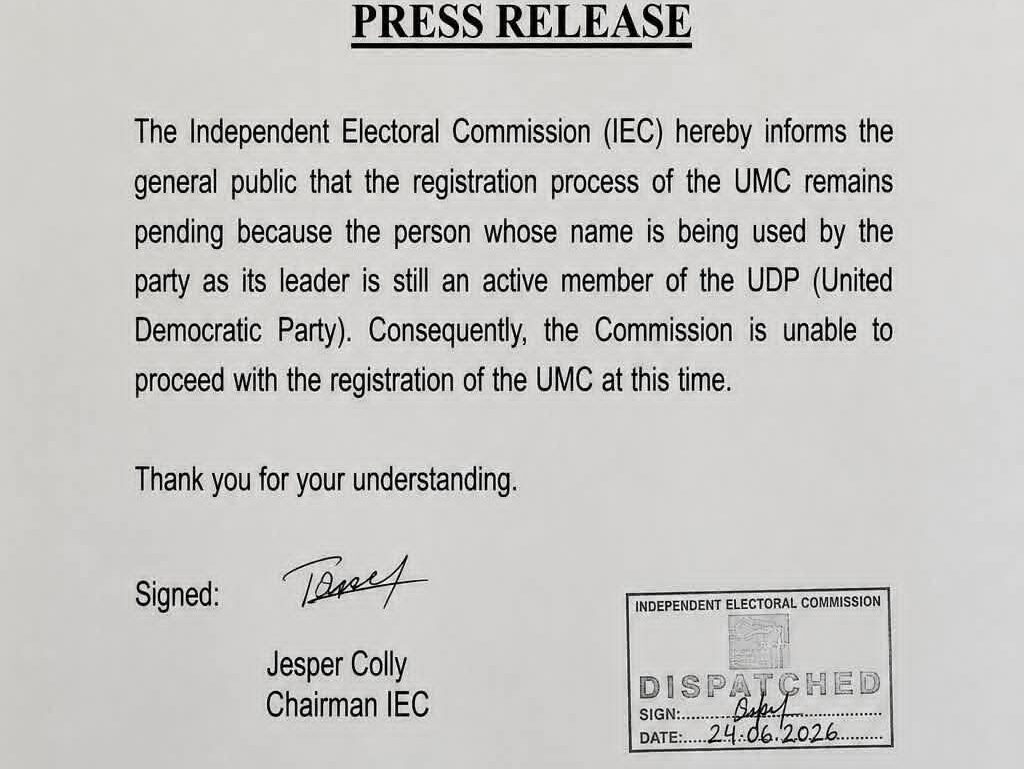
The IEC has debunked a viral press release alleging that UMC's registration remains pending due to its leader's purported membership in the UDP. The Commission told Malagen that the document is fabricated and does not reflect its official position.
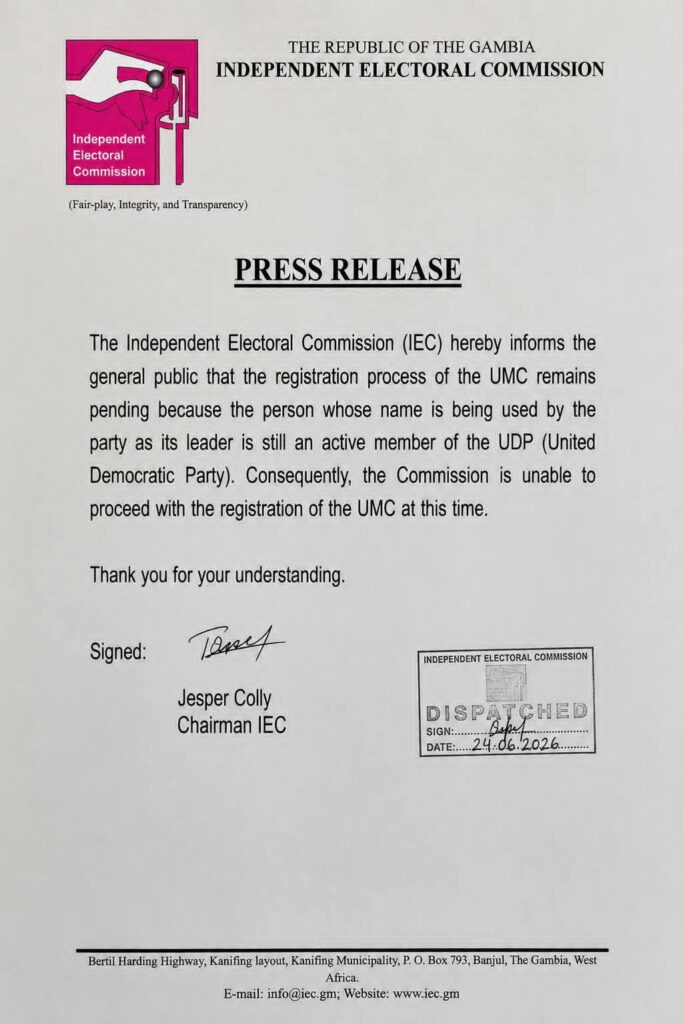
A document circulating on social media and messaging platforms, purportedly issued by the Independent Electoral Commission (IEC), falsely claims that the registration of the United Movement for Change (UMC) has been put on hold because the individual being presented as the party’s leader remains an active member of the United Democratic Party (UDP).
The document, designed to resemble an official IEC press release, has generated significant public discussion and speculation about the status of the party’s registration.
Verdict: FALSE
Malagen’s verification found that the purported press release is not authentic.
In response to inquiries from Malagen, the IEC confirmed that it did not issue the statement. Officials at the Commission described the document as fabricated and advised the public not to treat it as an official communication.
The Commission further emphasized that information relating to elections, political parties, voter registration, and other electoral matters should only be relied upon when disseminated through its official communication channels.
The electoral body has urged members of the public to verify information before sharing it and to rely on official IEC announcements for updates concerning political party registration and other election-related matters.
How the Claim Spread
The document gained traction after being widely shared on social media platforms and WhatsApp groups, where many users presented it as a genuine announcement from the electoral body.
The claim received additional attention after it was shared by Pa Manneh, the campaign manager of the United Democratic Party (UDP). However, he later clarified that the information was inaccurate and publicly apologized for sharing it.
The incident illustrates how unverified information can quickly gain credibility and reach large audiences, particularly when it is circulated by prominent political figures or widely shared within partisan networks.
Why This Matters
False information concerning electoral processes can have serious consequences. Misleading claims about the registration of political parties may create confusion among supporters, influence public perceptions, and undermine confidence in democratic institutions.
The circulation of fabricated documents that imitate official government or electoral communications can also erode public trust, particularly during politically sensitive periods when citizens rely on accurate information to make informed decisions.
The case further highlights the growing challenge posed by digital manipulation tools, including artificial intelligence and graphic editing software, which can be used to create convincing but fraudulent documents that are difficult for the public to distinguish from genuine communications.
Conclusion
Members of the public are encouraged to verify election-related information through official sources before sharing it, particularly when such information could affect public understanding of the electoral process.
