
A Legacy Betrayed: Barrow’s New Election Law Spits on Solo Sandeng’s Sacrifice

In April 2016, the blood of Solo Sandeng watered the seeds of Gambia's democratic revolution. His death under torture, alongside the brutal arrest of fellow UDP protesters demanding electoral reforms, ignited a fire that consumed a 22-year dictatorship. By December 2016, the people had voted out Yahya Jammeh and placed their hope in Adama Barrow, who promised a new dawn of fair elections and robust democratic institutions.
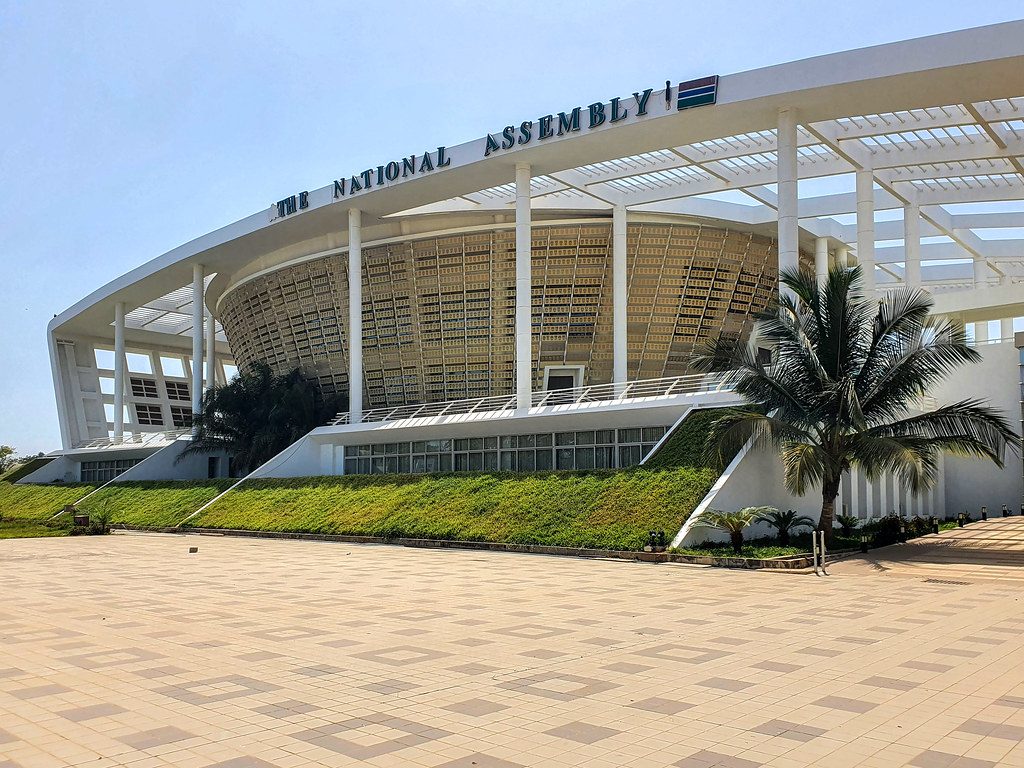
Nine years on, that dawn has been eclipsed. The Elections Bill passed by the National Assembly on September 29, 2025, and now awaiting presidential assent, is not a fulfillment of that promise; it is its most profound betrayal. By signing this bill, President Barrow would not merely be endorsing a policy – he would be desecrating the memory of the very martyrs who paved his path to power.
The Gilded Cage of Candidacy
The heart of this betrayal is detailed in the cold, precise language of the bill itself. Clause 42(1) formally institutionalizes a system of economic exclusion, mandating exorbitant nomination deposits: one million dalasis for President (up from D10,000), D150,000 for National Assembly Members (up from D5,000), and D100,000 for Mayor/Chairperson.
Furthermore, Clause 106(2)(h) skyrockets the party registration fee to two million dalasis.
While these figures might be comparable to other countries, they are profoundly disproportionate in The Gambia’s economic context. For an average Gambian worker, saving D150,000.00 – the fee for a parliamentary seat – could take up to seven years or more. This is an insurmountable barrier for many, including teachers and civil servants who traditionally enter politics.
The financial burden is exacerbated by the minimal support from political parties. Due to their own constraints, parties often cover only 5-20% of a candidate’s total campaign expenses, leaving the individual to shoulder the rest. Testimonies from sitting Assembly members reveal many are forced to take out personal loans to finance their campaigns.
This financial barrier actively deters qualified individuals from running for office. As research from the Westminster Foundation has previously indicated, the high cost of political participation discourages capable candidates—a problem that this new law dramatically worsens, effectively pricing democracy out of reach for the average citizen.
“The idea of electoral reform was to open up the democratic space,” said Biran Gaye, a political scientist at the University of The Gambia. “For the fee to be increased to 2 million is geared towards disadvantaging political parties, especially those in the opposition.”
“The Bill… will disenfranchise many youth, women, and persons with disabilities,” said Yankuba Manjang of the Election Watch Committee (EWC). “Considering the economic realities… they stand absolutely no chance.”
EWC data already shows women constitute only 16% of councilor candidates. These fees guarantee that number will plummet further.
According to Mr Manjang the bill is a direct affront to the people’s will.
“I think the recently passed Elections Bill is not reflective of the wishes of the citizens,” Manjang stated. “In as much as we advocated for an electoral reform, these reforms passed by the NAM’s are well short of those aspirations.”
He highlighted the devastating economic impact, noting, “considering the economic realities of most of the people in this bracket, they stand absolutely no chance of paying that huge amount and also putting up a good campaign thereby giving them absolutely no viable opportunity of winning an election. Therefore, I think this is one law that the NAM’s pass to secure their own positions.”
A Silenced Opposition and a Distracted Civil Society
The bill’s passage reveals a troubling political calculus. A member of civil society, speaking to Malagen on condition of anonymity, laid bare the dynamics that led to this moment.
“The opposition failed to stop it in the national assembly largely because the bill requires a simple majority and the government has the numbers,” the source said. “Civil society tried to advocate against the bill but it dragged on for so long and activists forgot about it. When it resurfaced, a lot more attention was focused on diaspora voting. And now while parliament has passed the bill, there is still an opportunity to convince the president not to sign it into law but most CSOs are sitting silently in their corners.”
This account points to a broader failure: the UDP, the party of Solo Sandeng, was outmaneuvered by the government’s majority, while a fatigued and fragmented civil society saw its advocacy efforts diluted over time.
Fatima Sandeng: A Daughter’s Plea
For the family of the movement’s first martyr, the new law is a profound and painful echo of the past. Fatoumatta Sandeng, daughter of the late Solo Sandeng, draws a direct line from her father’s protest to the current bill.
“These kinds of provisions are the reasons why Solo Sandeng especially took to the streets,” she said. “He saw that they were means used by the then sitting president to deter the opposition party… Now this new election bill is no better. I think it got even worse.”
Ms. Sandeng issued a direct plea to the man who inherited her father’s political legacy: “The president should not sign this election bill… It will be an insult to the legacy of Solo and every other meaningful Gambian who has fought since dictatorship.”
A Final Chance at Redemption
The bill also fails on other fronts, notably by completely barring diaspora voting, a key reform demand. Biran Gaye noted this “sends a signal that perhaps IEC or National Assembly members are not willing to grant the diaspora the right to vote,” calling it a “key set back.”
The EWC, in its submissions, had pleaded for a law that would “strengthen the conduct of free and fair elections,” warning of the “potential damage” of one that does not. Instead, the passed bill ignores key recommendations, such as lowering the prohibitive 40 percent vote threshold for returning a presidential candidate’s deposit, a measure the EWC argued should be reduced to 20 percent to align with regional best practices.
With the bill on his desk, President Barrow faces a defining choice. He can sign a law that analysts and activists agree is designed to weaken multi-party democracy, or he can return it to parliament for review. According to The Gambia’s 1997 Constitution, the President has 30 days from the bill’s presentation to either sign it or return it to the Assembly.
A civil society source captured the precarious nature of this last opportunity: “I hope the president does not sign that bill. It will harm our multiparty democracy.”
Yankuba Manjang’s position is clear: “I believe the bill as it is should not be assented to by the President. It should be sent back to the Assembly for a review.”
“President Barrow must listen to the ghosts of the past, the pleas of the present, and the warnings of civil society. He must pick up his pen not to sign this regressive bill, but to veto it. The soul of the revolution, and the legacy of Solo Sandeng, demand nothing less,” an activist noted.
The new election law is not a simple update; if signed, it will be a monument to a promise broken. And will ultimately unmask a government that has chosen to consolidate power rather than honour the sacrifices that brought it to power.
Malagen reached out to the Office of the President for comments but officials at the directorate of press and public relations said the president is on leave.
