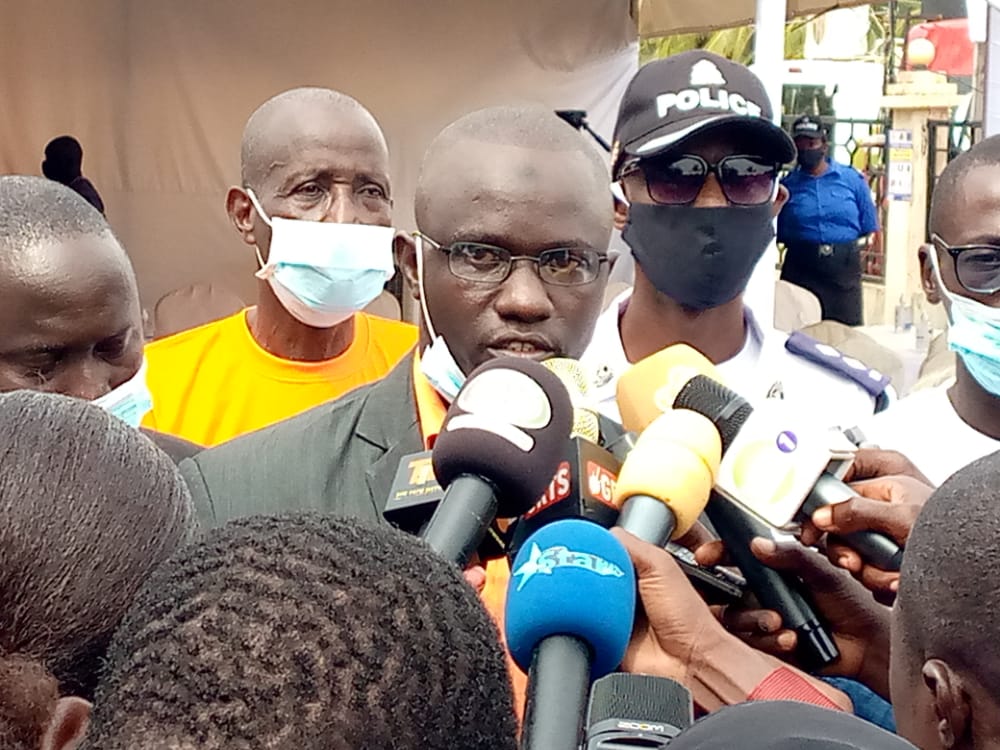
Claim 1: Executive order (directives) is law
Source: Deputy Inspector General of Police Momodou Sowe
Verdict: The claim is false
On November 2, a local newspaper in the country published an article quoting the deputy inspector general of police Momodou Sowe saying executive orders are law.
Some observers expressed disappointment at such statement coming from a police chief. Gambia has just emerged from 22 years of dictatorship during which executive directives were frequently used by ex-president Yahya Jammeh to arrest, detained or make declarations such as turning the country into an Islamic State in 2015.
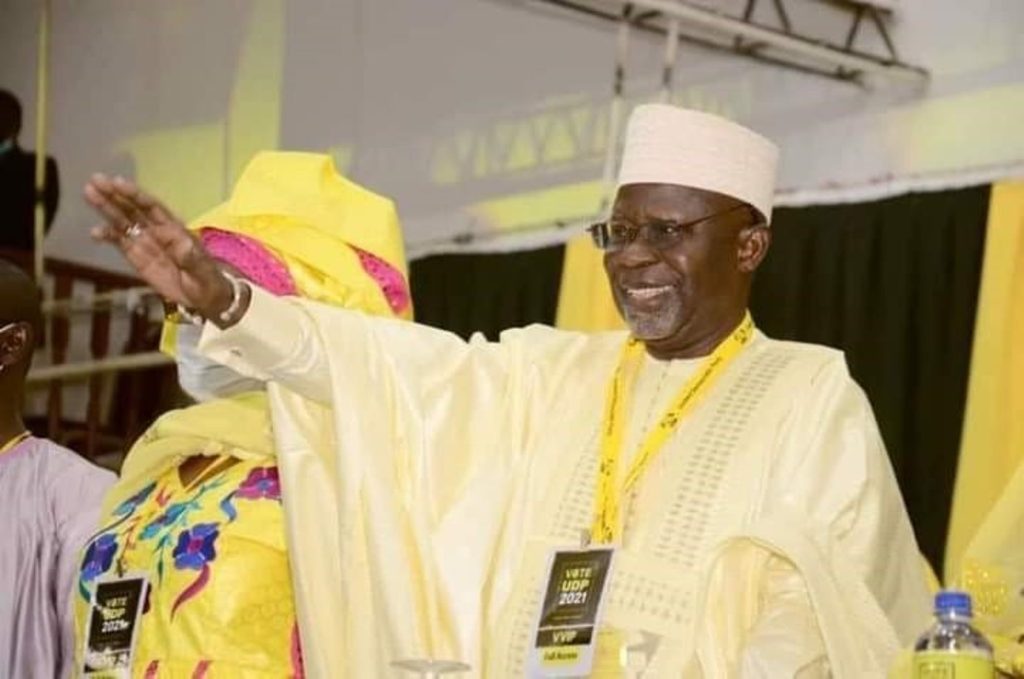
Ousainou Darboe, 73, has made good on his promise by making a public declaration of his assets, few days after submitting his nomination files with the Independent Electoral Commission (IEC). This makes the United Democratic Party leader the first presidential hopeful in Gambia to have made such public declarations.
Gambians head to polls on December 4, in what is the small country’s most crowded presidential race since independence. Close to two dozen candidates are expected to be nominated.
According to Gambia’s electoral laws, candidates are required to declare their assets to the IEC. These asset declarations and other documents submitted by candidates will be available to the public to scrutinize various candidates on November 6, before the electoral authorities publish the final list of candidates qualified to run for presidency.
However, the IEC does not make copies of these submissions by candidates available to the media, nor do they allow them to be filmed or pictured.
“I am giving the media my asset declaration and I am challenging all candidates, particularly president Adama Barrow to also release his asset declaration to the media,” said Darboe.
Darboe is one of the three frontrunners for State House. The UDP leader goes up against a former treasurer of his party Adama Barrow— now President and leader of National People’s Party (NPP)— and Mama Kandeh, a former lawmaker under the administration of ex-president Yahya Jammeh, who is now leader of Gambia Democratic Congress.
The 73-year old’s assets include a leased property on 57 Kairaba Avenue acquired in 1975 approximately worth D10,000,000. He also has undeveloped plots of land in Kembujeh, Serekundanding, Tanji Batosilokang, Tanji Salanding, Sanyang, Gunjur, Sukuta and Bansang (kongko santu). All the properties, except the Bansang property which was acquired in 2021, were acquired between 1989 to 2015.
Darboe also has a 2-living room property in Kotu approximately worth D600, 000. No Property was Acquired Between 2015 to 2020, within the time he held office as Minister of Foreign Affairs—from 2017 to June 2018 and vice president—from 2018 to March 2019.
Vehicles
The UDP leader also acquired Toyota 4 runner in 2016 valued at D850, 000; Toyota Highlander acquired in 2018 valued at D700, 000; Toyota Prado acquired in 2020 valued at D1, 500, 000; Mercedes Benz acquired in 2017 valued at D350, 000; and ford F150 acquired in 2020 valued at D150, 000.
Bank Balances
Darboe’s bank balances are Trust Bank LTD account which has D774, 237. 23; Access Bank LTD account with balance D6, 555. 06; Guaranty Trust Bank account with balance D12,403,73; and Bank of America savings with balance US$11, 942. 56.
Government bonds, Treasury Bills and shares
The assets Darboe declared to IEC also include government bonds, Treasury bills and shares, with his Treasury bills at Trust Bank Limited standing at D19, 200.
The 73-year-old human rights lawyer and politician first ran for president in September 1996, following the military coup in 1994. As a candidate of his newly formed United Democratic Party, Darboe finished second with 35.84% of the votes while ex-president Yahya Jammeh of the Alliance for Patriotic Reorientation and Construction (APRC) party got 55.77% of the votes.
Since then, the popularity of the UDP or the coalitions it led at polls took a nosedive. In 2001, the party got 32.59% of the total votes, losing to Jammeh. In 2006, Darboe got 26% of the votes and 17% of the votes in 2011. However, in 2016, the UDP joined a coalition of 7 parties and 3 independent candidates, choosing the party’s treasurer and now president Adama Barrow as flagbearer.
At this time, Darboe was serving a 3-year jail-term at Mile 2. He was arrested on April 16, for taking to the streets to protest for the release of Ebrima Solo Sandeng, a member of his party who was arrested on April 14, 2016 and allegedly tortured to death by members of the National Intelligence Agency (NIA). Seven top former NIA operatives are being prosecuted for Sandeng’s ‘murder’.
Mama Kandeh, the leader of the Gambia Democratic Congress (GDC), has downplayed the potential impact of his alliance on victims’ pursuit of justice had he get elected president. Gambians head to polls on December 4 in what is country’s most crowded race for presidency since independence.
On Tuesday, the GDC leader led an impressive crowd of supporters to file his nominations with Independent Electoral Commission. In the midst of the crowd, eyes couldn’t miss the purple (GDC party colour) and green (APRC colour).
The GDC has announced for[edgtf_dropcaps type=”square” color=”” background_color=””][/edgtf_dropcaps]ming a coalition with a faction of the Alliance for Patriotic Reorientation and Construction party that is with Yahya Jammeh, ex-Gambian leader. The APRC initially announced an alliance with President Adama Barrow’s National People’s Party but Jammeh rejected that proposal causing a split within the party.
The legally registered APRC party led by Fabakary Tombong Jatta stays with Barrow while Jammeh, a self-declared supreme leader of the party, goes with Kandeh and Gambia Alliance for National Unity led by Sheikh Tijan Hydara. But GANU later quit the alliance, leaving GDC and a faction of the APRC.
Critics said the alliance between the ARPC and GDC will affect Kandeh administration pursuit for justice if he gets elected on December 4. A Truth, Reconciliation and Reparations Commission (TRRC) that investigated the rights violations of the Jammeh regime has found the former ruler to have ordered dozens illegal executions and torture, among others. The report of the investigations on those violations is expected to be on the President’s desk this month, an issue any coming administration will inherit.
“I believe these [breakaway APRC faction] are Gambians who you cannot send away from this country…,” said Kandeh.
“… I am in support of the TRRC because the meaning of the TRRC is to reunite Gambians, to bring Gambians together after the truth has been revealed. So, we have to reconcile…”
After their alliance with the APRC faction, both parties signed an agreement that was never made public. However, the GDC leader said they did not sign any agreement regarding an amnesty for Jammeh who has been living in exile in Equatorial Guinea since 2016.
Curbing corruption
Meanwhile, the GDC leader has promised to tackle corruption when he gets into office. “… Since this current administration came to power, I have not heard anybody being fired or dismissed from his or her position because of corruption, and we know that corruption is rampant in this country.”
Many Gambian observers, relying on anecdotal evidence, have said corruption is rising in the country. The Gambian leader Barrow haven’t shown tough stance against corruption. However, few people were indeed prosecuted on corruption charges including a former permanent secretary of the Ministry of Fisheries, Dr Bamba Banja.
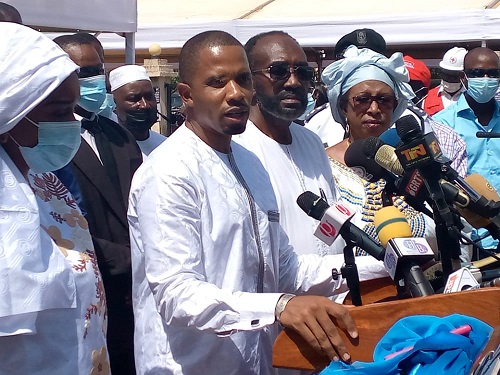
Following Kandeh at the election house to file for his nominations was the leader of Citizens’ Alliance, Dr. Ismaila Ceesay. The former political science lecturer at the University of the Gambia has expressed intent to manage national wealth by curbing corruption.
“We are serous in fighting corruption because we believe that the perennial problem, one of the key reasons why we still cannot provide the most basics for our people is corruption. It is because of the lack of transparency; it is because of non-accountability of our public institutions.”
To curb corruption, Dr Ceesay said the CA will embark on governance and finance management reforms. He said CA will make it a compulsory on political appointees and public officials to declare their assets before holding public office. He also promised that his administration will put in place mechanisms to conduct periodic lifestyle audit of public officials.
Victims of human rights violations
As nominations and political campaigns begin in Gambia, one of the leading issues in public debates is how to address the past human rights violation under ex-leader Yahya Jammeh. Dr Ceesay promised justice will be served under a CA administration.
No one should be immune from paying the ultimate price for unleashing terror on innocent people, said Dr Ceesay.
Apart from Kandeh and Ceesay, the IEC officials have received nomination papers from two other presidential hopefuls. They are independent candidates Mamadi S.K Camara and Mamadou Bah. All candidates would know whether their nominations are accepted to allow them to contest in the election or not on Saturday, November 6th.
The nomination for presidential candidate in Gambia’s December 4 election has started on Saturday with the submission of nomination papers by Joseph Henry Joof, a one-time justice minister under ex-president Yahya Jammeh. The controversial figure passed a bill in 2000 indemnifying soldiers who shot student protesters.
“I will win these elections. I am very optimistic. Gambia needs a new breed of politicians…,” Joof told journalists after submitting his nominations at the Election House. Joof will be an independent candidate if his nomination gets a pass from the Independent Electoral Commission (IEC).
In April 2000, hundreds of Gambian students took to the street demanding justice for the death of Ebrima Barry in the custody of Fire and Rescue Services and the alleged raping of Binta Manneh by member of paramilitary forces at the Independence Stadium in Bakau. None of the incidents was investigated, causing rage among the students. Fourteen students were killed and dozens wounded.
Mr Joof, who arrived at the election house on Saturday morning in the company of two others, appeared before Gambia’s Truth Commission investigating the human rights violations of ex-president Jammeh. He denied any wrongdoing.
Joof did not, however, submit all documents required for nominations by Independent Electoral Commission (IEC). He, like other potential candidates who fell short in their nominations requirements, can still make submissions before nomination closes on Friday, October 5, Samboujang Njie, the IEC chief electoral officer, told Malagen.
On November 6, all candidates and their details will be published for public scrutiny, giving IEC an opportunity to publish the final list on the evening of the same day.
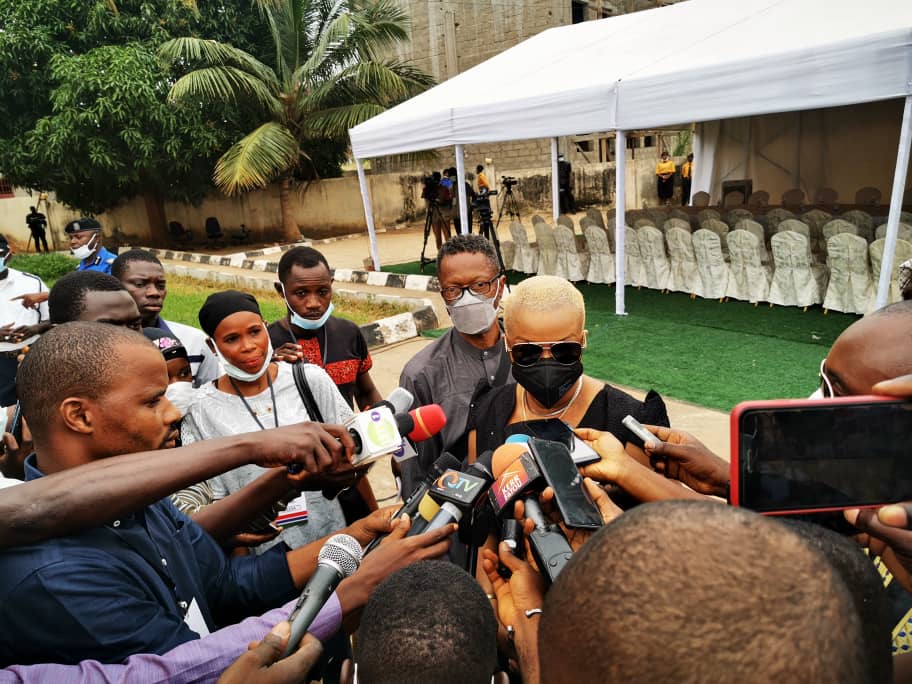
Meanwhile, Marie Sock has also filed her nomination papers on Saturday, making her Gambia’s first female presidential aspirant to have gone that far. The country’s current vice president Isatou Touray was the first to have make attempts to nominate for presidential elections in 2016, but she withdrew to support President Adama Barrow.
So far, the electoral body is expected to receive nominations of 26 candidates, 13 of which are independent candidates. However, the number of candidates to nominate is expected to reduce as parties and potential independent candidates form alliance ahead of elections.
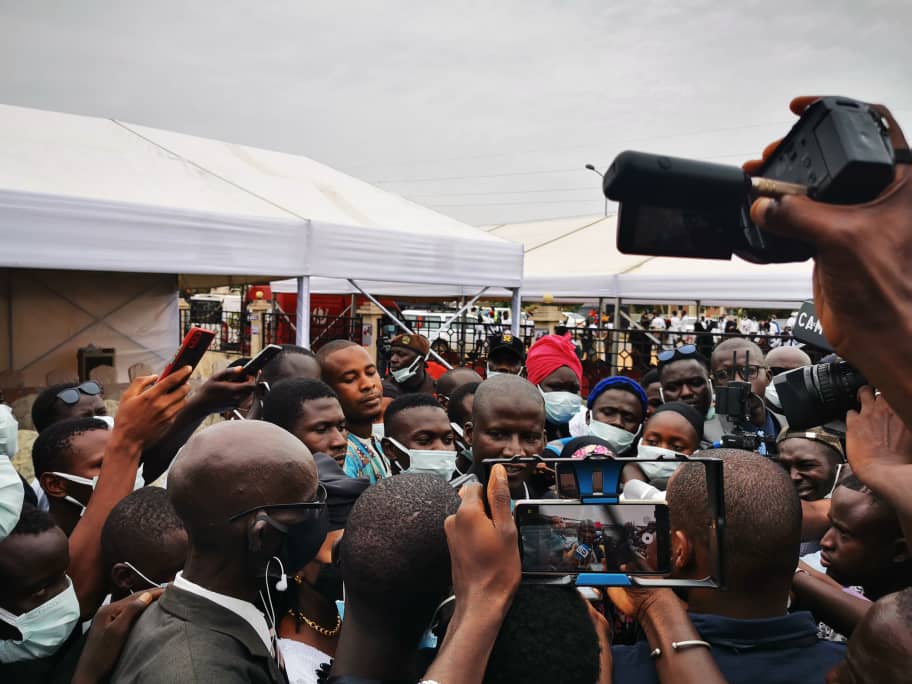
Meanwhile, the third to submit his nomination papers on Saturday was Alhaji Mamadi Kurang, a chartered accountant who founded the Jollof Tutors, a tertiary school that offers training in information technology.
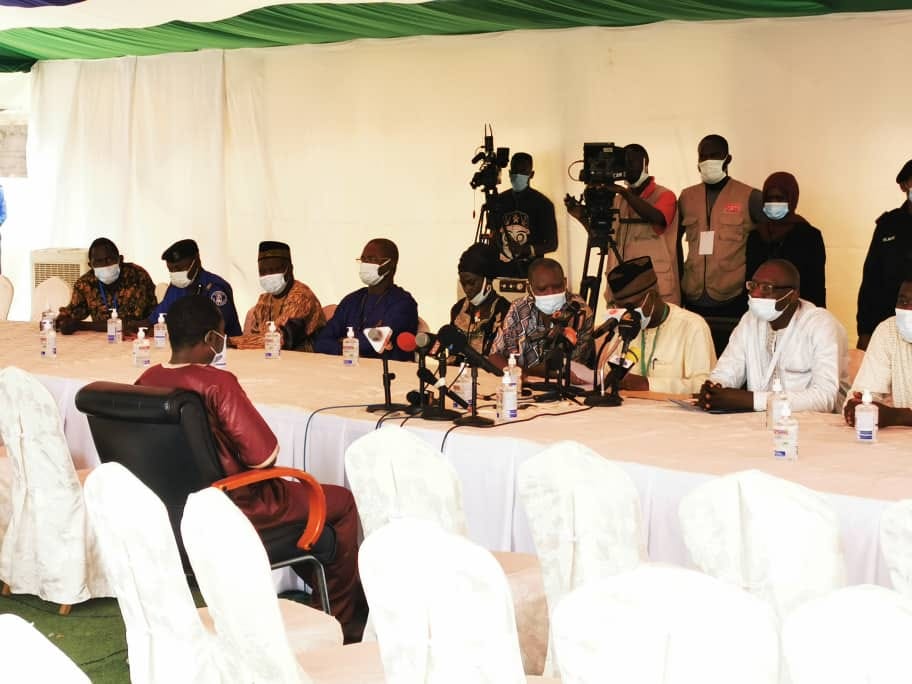
Meanwhile, Mathew Gomez who initially filed for nomination as an independent candidate has withdrawn his application on Saturday. Little is known about Gomez. He came to election house on Saturday afternoon to withdraw but declined to speak to the press.
On October 29, the Gambia Democratic Congress has announced an alliance with Gambia Alliance for National Unity and a faction of the Alliance for Patriotic Reorientation and Construction (APRC) party. The other faction of the APRC led by Fabakary Tombong Jatta is with President Adama Barrow’s National People’s Party.
The requirements for nominations are the following: Gambian citizenship; one must be at least 30 years; senior secondary school certificate; resident in the country 5 years preceding 4 Dec., 2021; nominated by 5000 voters, at least 200 of which have to come from each region; submit a sworn assets declaration; a tax clearance certificate; a deposit of D10, 000; produce a party symbol, colour and photograph of a candidate; adhere to IEC code of campaign ethics, submit a manifesto on tolerance and multi-culturalism and finally a person qualified to register as a voter may be qualified as an independent candidate.
In the last few days, Gambian social media sites were saturated with a video recording of a phone call the ex-Gambian leader Yahya Jammeh made to his supporters during a rally in Gunjur on October 23.
In his address, Jammeh made several claims about developments he did in the country, that he said were destroyed by President Adama Barrow in 4 years. In this article, we look into the accuracy of those claims.
Claim 1: The 2016 election was rigged
Source: Ex-president Yahya Jammeh
Verdict: Inaccurate
Claim
President Barrow took over or assumed power after defeating Jammeh at the polls in 2016. The former President rejected the election results, few days after accepting defeat, describing the process as the “most transparent”, “rig-proof” elections in the world.
His rejection of the results prompted a military intervention by regional leaders dubbed “operation restore democracy”. Jammeh eventually left the country for Equatorial Guinea where he currently lives in exile.
In his widely circulated address to his supporters at the said rally in Gunjur, Jammeh claimed the election was rigged by Barrow with the help of unnamed powers.
“In fact, 2016 they didn’t win… They rigged the elections with support of some powers…,” he said.
Fact-check
In 2016, an amendment to the electoral laws introduced what is called an on-the-spot counting system. The results are counted where votes are cast and results displayed on the wall, after each party agent records in their votes.
According to the Independent Electoral Commission, the difference of votes between Jammeh and Barrow is 19, 221. With a simple majority voting system, just a vote ahead qualifies one to be president.
Jammeh relied on the IEC tabulation error to annul the results. He claimed there was error in the results from the Basse region. However, the Electoral Commission declared the elections as credible, free and fair.
Verdict:
The claim is inaccurate.
Claim 2
Claim 2: 99% chance of maternal death
Source: Ex-president Yahya Jammeh
Verdict: Inaccurate
In the same address to his supporters, the ex-Gambian leader, touting his achievements as a president, claimed maternal mortality rate is at a scale never seen in the country.
Jammeh puts chances of death while giving birth at 99%.
“Even pregnant women are afraid to go to the hospital because there is a 99% likelihood that they will not come back alive,” he said.
Fact-check
There have been frequent protests by activists and women groups about ‘rising’ maternal death in the Gambia. The available data shows the country is far behind in meeting the Sustainable Development Goal target of reducing maternal mortality ratio (MMR) to less than 70 per 100,000 live births by 2030.
However, all available data have shown a decline in maternal death. Not an increase. A recent performance audit published by the National Audit Office (NAO) in September 2020 shows a 36.8% reduction in maternal mortality rate between the year 2000 and 2017.
Meanwhile, the results from the Demographic and Health Survey 2019/2020 estimated that the MMR, in the 7 years preceding the survey, was at 289 maternal deaths in every 100,000 live births. And pregnancy related death within the same period was 320 for every 100,000 live births.
A more recent data on MMR has been published by the Ministry of Health in the first week of October for years 2019 and 2020. The data gathered from public health facilities across the country showed that MMR has declined from 221 deaths per 100, 000 live births in 2019 to 169 deaths per 100,000 live births in 2020.
This shows a significant improvement in MMR from 2007. According to the 2007 Situational Analysis of Obstetric Fistula In The Gambia Report, the maternal mortality ratio was 556 per 100,000 live births. By all indications then, MMR has significantly reduced in The Gambia, between 2007 and 2020.
Deliveries at health facilities
The recent media reports on increased maternal deaths have caused apprehension among women, according to Dr Musa Marena, a gynecologist and head of the Health Ministry’s unit responsible for maternal health.
“We are receiving reports that some people are avoiding the [public] health centers and hospitals because of fear that it is not safe to deliver in these places,” said Dr Marena.
“And when complications arise because of the time they take hesitating to visit the health facilities, it is often late to [save] some of them.”
Despite this though, the Demographic and Health Survey has shown that successful deliveries have actually increased at heath facilities.
“Health facility deliveries increased from 63% in 2013 to 84% in 2019-20, while home deliveries fell from 37% to 15%,” stated the DHS.
Therefore, available data by government agencies and from studies have shown that maternal death has declined under Barrow administration, not increased as claimed by Jammeh.
Verdict:
The claim is inaccurate.
Claim 3
Claim 2: Decline in NAWEC’s capacity
Source: Ex-president Yahya Jammeh
Verdict: Inaccurate
The claim
In the same address to his supporters in Gunjur, the ex-Gambian leader, touting his achievements as a president, said the country is witnessing a declining energy supply.
Jammeh said Gambia’s electricity supply was one of the best on the continent during his time, before he took time to lambast Barrow for destroying it.
“One week after I left the Gambia, the electricity and water goes down… When it comes to electricity, we were one of the best in Africa,” he said.
Fact-check
We looked at these claims from two angles. The first part was answering the question relating to the financial status of NAWEC as at the time President Barrow took over. According to a forensic audit by a UK audit firm Ernst and Young, the national energy company was indebted or owing over D9 billion, with a total liability that exceeded its total assets.
And NAWEC has been increasingly reliant on externally obtained debt to finance not just its capital expenditure, but also its day-to-day operations to service its current debt.
According to a World Bank assessment, NAWEC was essentially bankrupt with a negative net worth of about 6 percent of GDP. The British audit firm also said the energy company has been insolvent for seven years preceding 2018. Therefore, from a financial point of view, the Barrow administration inherited a NAWEC which was on its knees, if not ‘bankrupt’.
Power generation
At the beginning of 2017 towards 2018, NAWEC’s power supply was at its lowest ebb, prompting a protest called #OccupyWestfield. The national energy company reacted to the poor power supply with two short-term measures.
They signed a power purchase agreement with SENELEC—a Senegalese energy company—to give electricity supply to the North Bank and Lower River Regions. The energy company also entered into another power purchase agreement with Karpowership, a Turkey-based company, for supply of 30 MW of energy.
According to the World Bank— sponsored Gambia Electricity Restoration and Modernization Project, Gambia’s installed capacity of the grid was 99 MW (of which 88 MW was in Greater Banjul Area [GBA]) as of 2018. This was an improvement from 2017 when the available capacity in the GBA deteriorated to 44 MW.
Now, despite the continuous poor energy situation, according to the national energy strategic roadmap developed by the energy ministry, as of mid-2021, the total net installed capacity of NAWEC is 154.5 MW of reciprocating engines, but only 97.0 MW are currently available for power generation.
The data quoted in the national energy strategic roadmap developed by the energy Ministry shows blackouts in the country have also reduced. In 2017 the country witnessed 36 blackouts, 45 blackouts in 2018, 25 blackouts in 2019, 12 blackouts in 2020 and 11 blackouts in 2021.
Conclusion: The established facts have shown that the Barrow administration inherited an insolvent NAWEC, with huge debt. Not a buoyant energy company as suggested by Jammeh. In addition, the power generation capacity of the national energy company did not decline under Barrow. It improved.
Verdict: the claim is inaccurate
Researched by Mustapha K Darboe
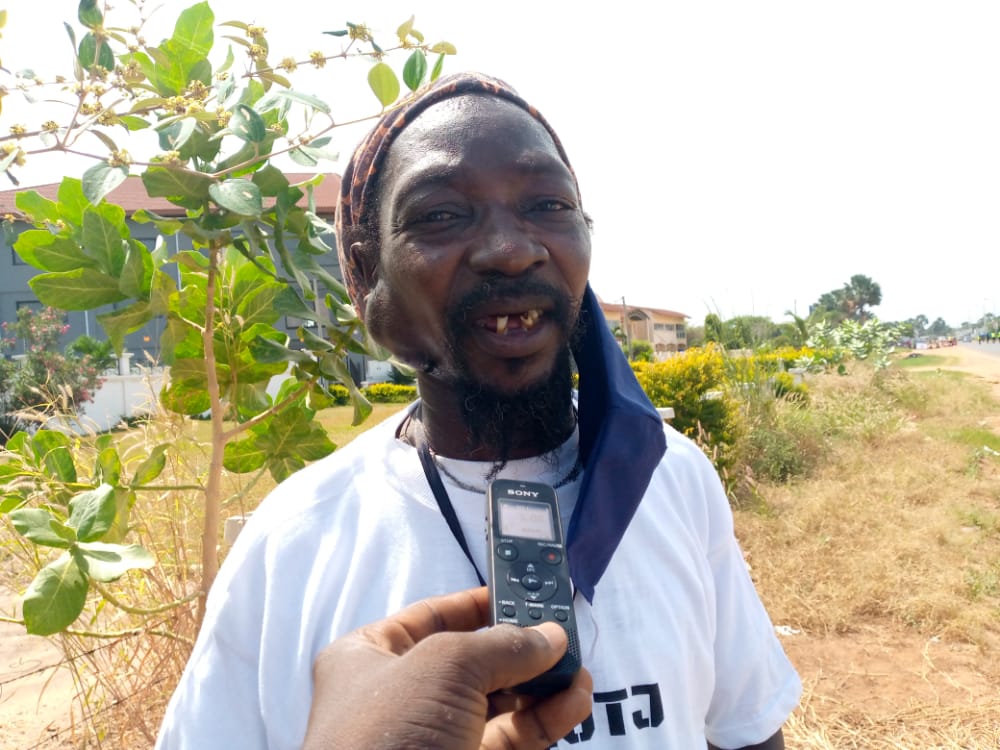
Bankole Yao Jojo Ahadzie, 43, has made history on Sunday by becoming the first rasterman to file for nomination as a presidential candidate in Gambia. Gambians head to the polls on December 4, a crowded race that show 22 people declaring interest in the country’s top job.
Banky, as he is commonly called, has been a staff of the Medical Research Council (MRC) since the 2000. He studied internet engineering in the United Kingdom.
The rasterman is seen by many observers as one of the underdogs in the coming elections. However, he is hailed for his simplicity and kindness by associates. He arrived at the Election House on motorbike with couple of colleagues.
Banky could not grant an interview to waiting journalists, citing health reasons. However, his campaign manager, Lamin Jatta, urged Gambians to be more opened minded towards their candidate and end the long-held stereotypes against rasters or people with dreadlocks.
“Rasta, that doesn’t mean [anything bad]. The content (of a person) is more important… Raster is only hair. It is just like any other hairstyle,” said Jatta.
“The talent that Banky has is the most important thing. I have voted before but I support Banky in this election because his agenda is good. I know that he will bring development to the country… He is talented and educated.”
Ending apathy among rasters
In the Gambia, the raster community is generally disinterested in voting or running for political office. Often time, the issue of dreadlocks is associated with Marijuana use, sale or criminal behavior.
But Banky appears to have overcome such stereotypes, thus giving a positive image to the raster community in the country. Legalizing Marijuana is on his agenda, a product he values for its economic and medical potency.
Pa Camara, 57, is also a mobilizer for Banky’s campaign. He is confident that with Banky’s presidency, the Gambia will see advancement in education, health, agriculture and youth development.
“I am happy because before I do nothing in politics besides voting on election days. But this time, I am participating in the process, and I hope we end it in peace.” Banky is expected to complete his nominations with submission of papers on asset declaration, income tax clearance and a photo sample.
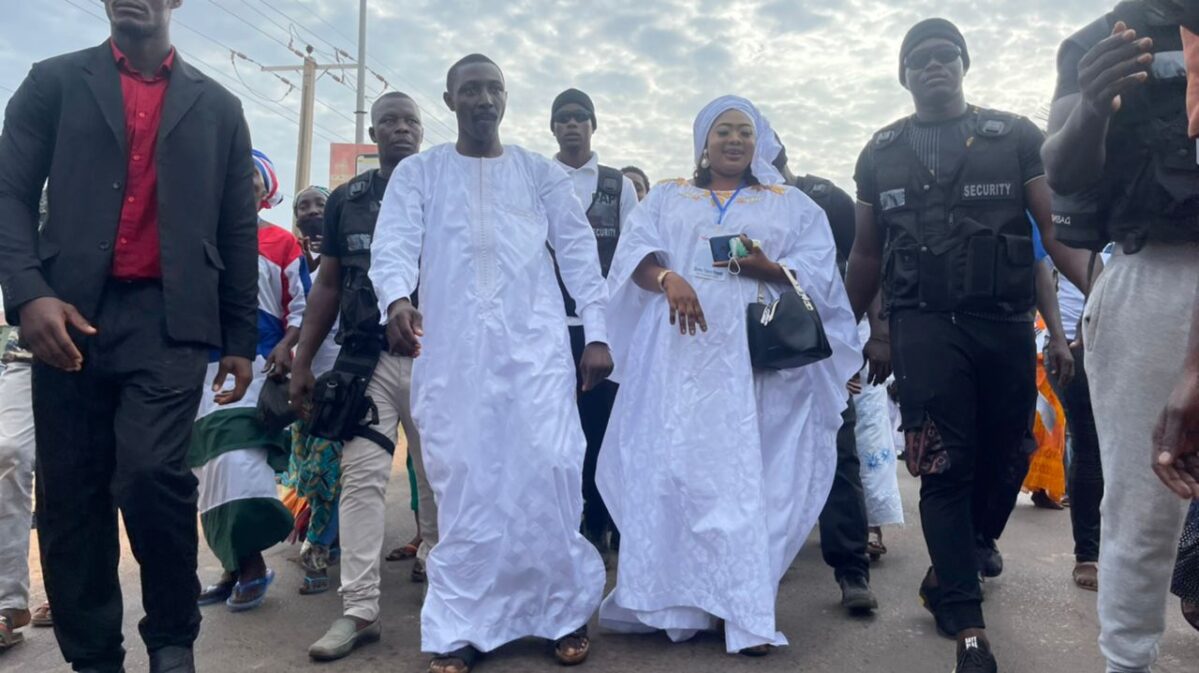
Two others to have filed their nominations on Sunday were Lamin Satu Bojang, a retired army general and candidate for Alliance for National Re-orientation and Development and Momodou Bah, an independent candidate. Bojang was Gambia’s deputy ambassador to Saudi Arabia under the administration of ex-leader Yahya Jammeh.
He was reappointed in 2017 as deputy ambassador to Russia. However, he would soon resign from the post to become the presidential candidate of the Gambia Action Party (GAP). A controversy arose when a nude video emerged purportedly of him which led to his dismissal by GAP. He eventually registered his party in April 2021.
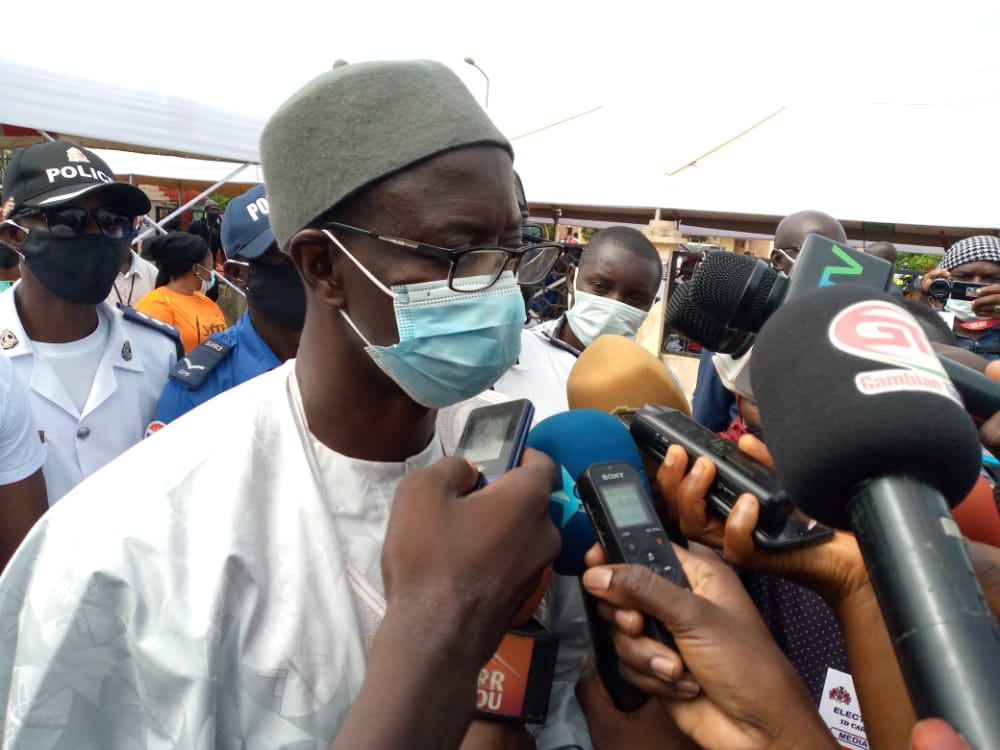
Bah, 37, is a teacher by profession who earned master’s degree in African Studies from Sheikh Anta Diop university.
“…I am the… Gambian people have been looking for. I am a unifier,” said Bah.
The nominations with the IEC is expected to close on Friday, October 5, Samboujang Njie, the chief electoral officer, told Malagen.
On November 6, all candidates and their details will be published for public scrutiny, giving IEC an opportunity to publish the final list on the evening of the same day.