
Securing Borders in a Time of Rising Migration Flows
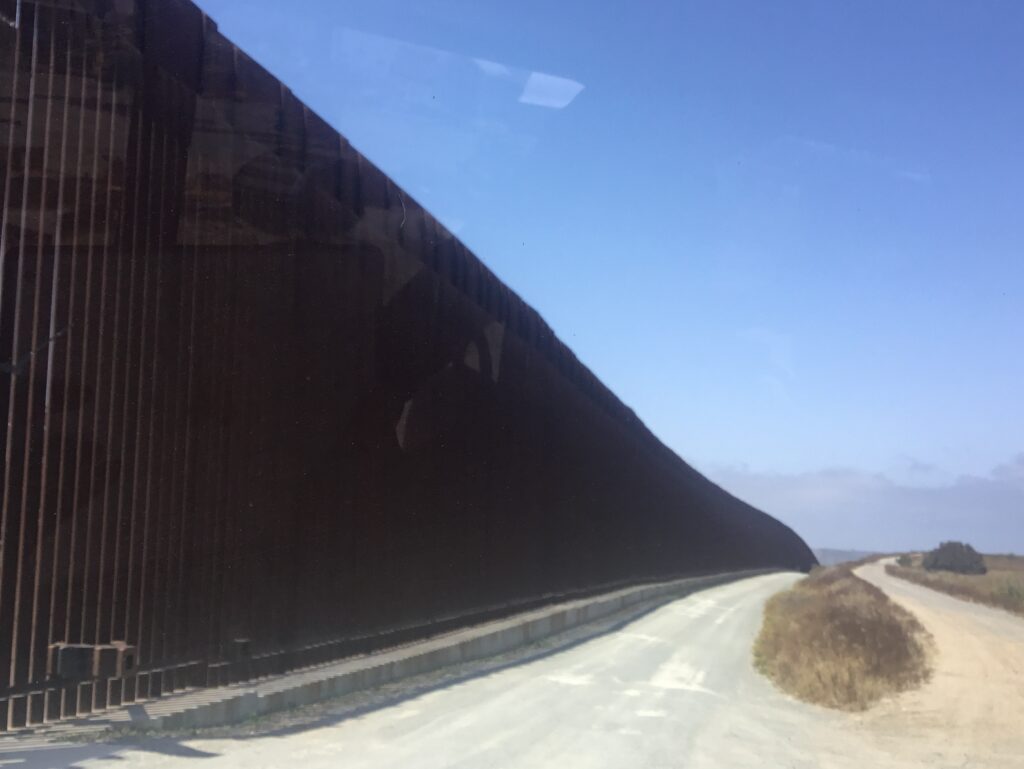
The U.S. experience offers lessons that are less about replicating scale or technology, and more about understanding how effective border governance is structured and sustained over time. At its core, the American model reflects a shift from viewing borders as fixed physical boundaries to treating them as integrated systems of governance, where law, intelligence, surveillance, and operational capacity function in coordination rather than isolation.
For The Gambia, migration is not an abstract policy issue confined to government reports or diplomatic discussions; it is a lived reality that directly shapes household decisions, community dynamics, and national priorities. In practical terms, many families are affected by the departure of young people who leave in search of work, while others rely on remittances sent from abroad to sustain daily livelihoods.
Over the past decade, the country has continued to contend with irregular migration alongside other transnational crimes such as human trafficking, drug trafficking, and cross-border smuggling. These challenges are reinforced by structural constraints. Border infrastructure at key crossing points remains limited, surveillance systems are not fully developed or consistently deployed, and enforcement agencies often operate with restricted budgets, equipment shortages, and logistical gaps. As a result, monitoring and regulating movement across borders can be inconsistent, particularly in remote or informal crossing areas.
At the same time, migration pressures remain strong. Thousands of young Gambians continue to leave the country each year through increasingly dangerous and irregular routes, shaped largely by unemployment, economic insecurity, and limited access to stable opportunities at home. In many cases, migration is not simply viewed as an aspiration for upward mobility, but as a necessary step toward survival and economic responsibility for families left behind.
The rise of new migration corridors
In recent years, one of the most notable shifts in West African migration patterns has been the emergence of what became widely known as the “Nicaragua route.” This pathway involved migrants from The Gambia, Senegal, Guinea, and other West African countries first flying legally to Nicaragua in Central America, often through arrangements that did not immediately raise immigration red flags, before embarking on a long and complex overland journey through multiple countries toward the United States–Mexico border.
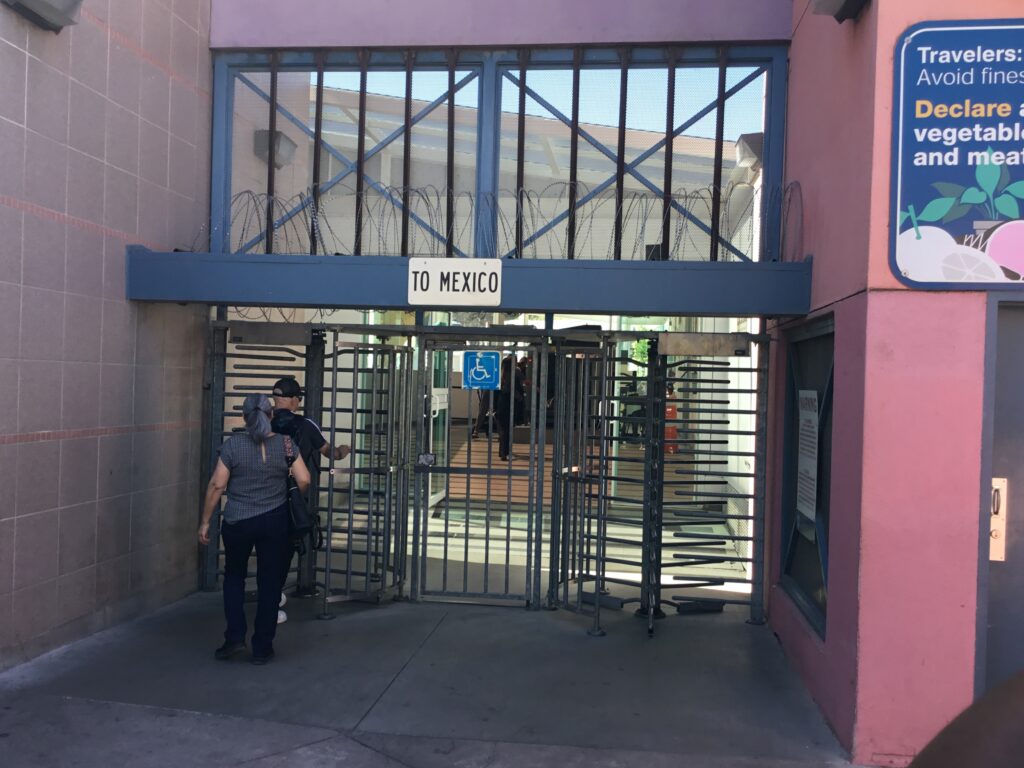
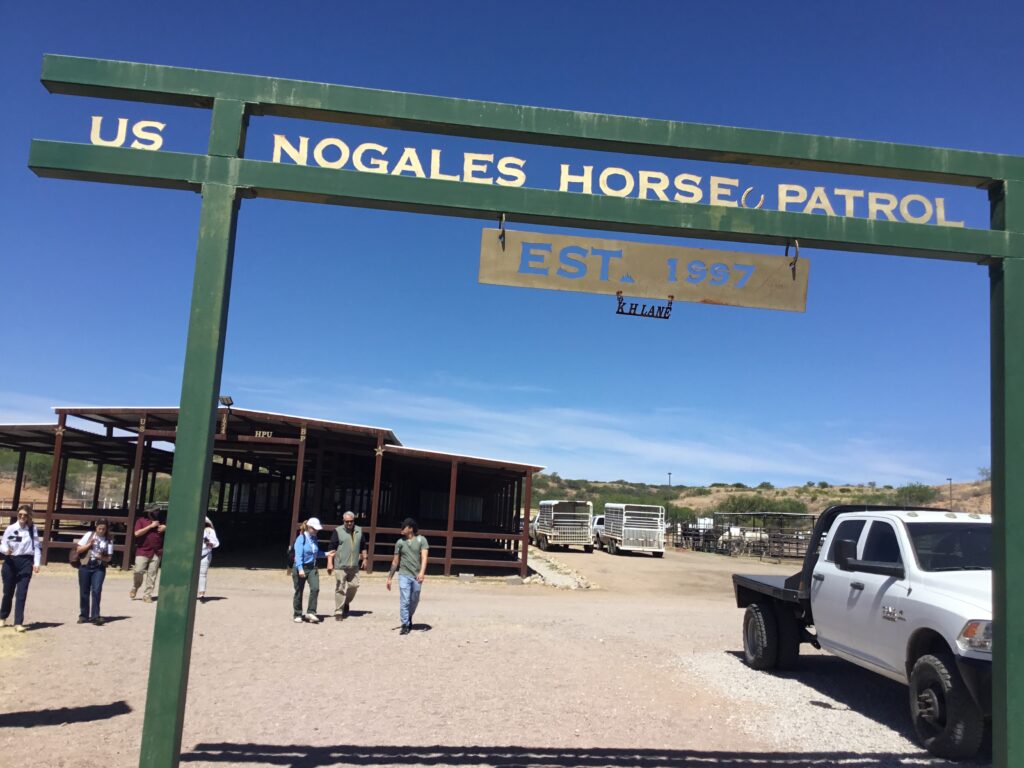
The Nogales border sector, a key focal point of U.S. efforts to monitor and manage irregular migration along the southern border.
For many who attempted it, the route initially appeared to offer a more accessible entry point into the Americas compared to more heavily policed Atlantic or Mediterranean crossings. However, the reality on the ground was far more dangerous. Once in transit across Central America and Mexico, migrants often moved through fragmented jurisdictions where enforcement gaps, criminal networks, and irregular transit systems intersected.
The consequences were severe and uneven. Some migrants eventually reached the United States after months of travel and uncertainty. Others were intercepted, detained, or deported along the way. Many encountered extortion, robbery, or coercion by smugglers and criminal groups who controlled sections of the route. In the most tragic cases, individuals disappeared without trace, their journeys ending in unrecorded outcomes far from their countries of origin.
The scale and complexity of these migration trajectories have raised difficult but urgent policy questions for countries like The Gambia. In a context of increasing mobility, how should borders be managed when movement extends far beyond national territory? What does “effective enforcement” actually mean in countries with limited institutional and technological capacity? And, perhaps most importantly, what practical lessons, if any, can be drawn from states with more advanced and better-resourced border systems?
Learning through observation: a border tour in the United States
These questions came into sharper focus during a reporting tour themed “Securing Borders and Restoring Operational Control,” which Malagen reporter Kaddy Jawo joined in Tucson, Arizona, and San Diego, California.
The tour offered rare, structured access to a range of U.S. border institutions, including patrol stations and official ports of entry along the southern border. These sites sit along one of the world’s most heavily policed and politically sensitive migration corridors, where border enforcement is shaped not only by national security concerns but also by long-standing debates over immigration, asylum, and labour mobility.
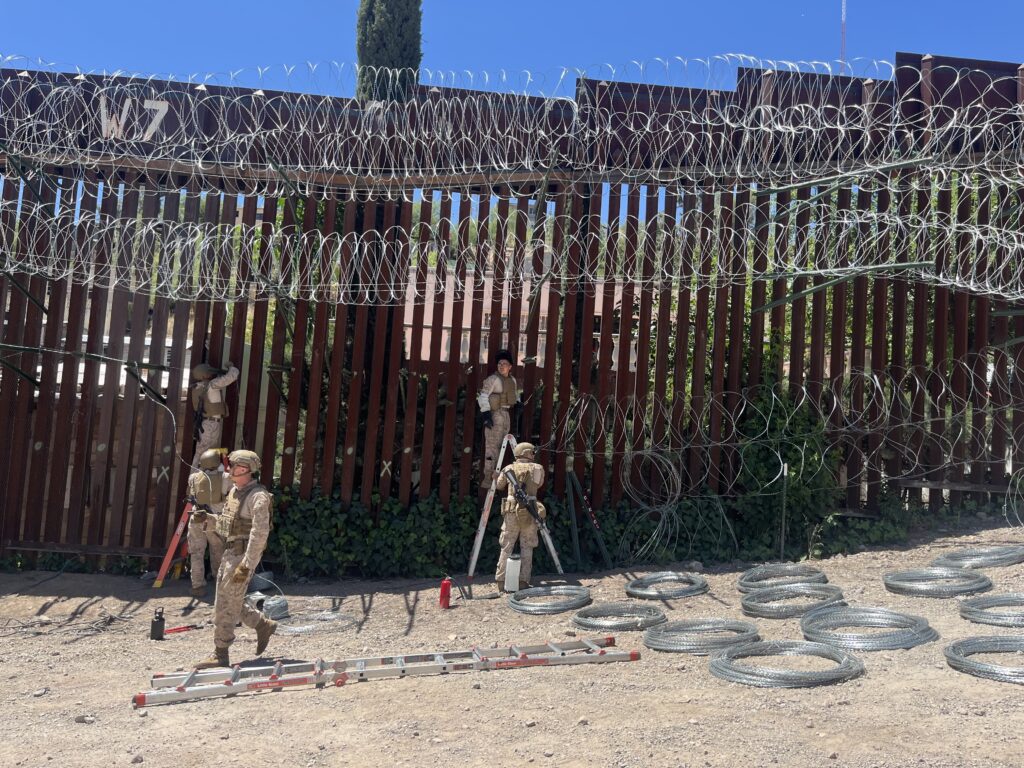
Officers install razor wire along sections of the border fence as part of ongoing reinforcement and security operations.
What becomes evident early in the engagement is that U.S. border management cannot be understood through physical infrastructure or frontline enforcement alone. While border walls, patrol agents, and checkpoints are highly visible elements, they represent only the surface of a far more complex system.
Beneath that visible layer lies an institutional framework shaped by legislation, enforcement hierarchies, surveillance technologies, inter-agency coordination, and long-term operational planning that connects federal, state, and local actors.
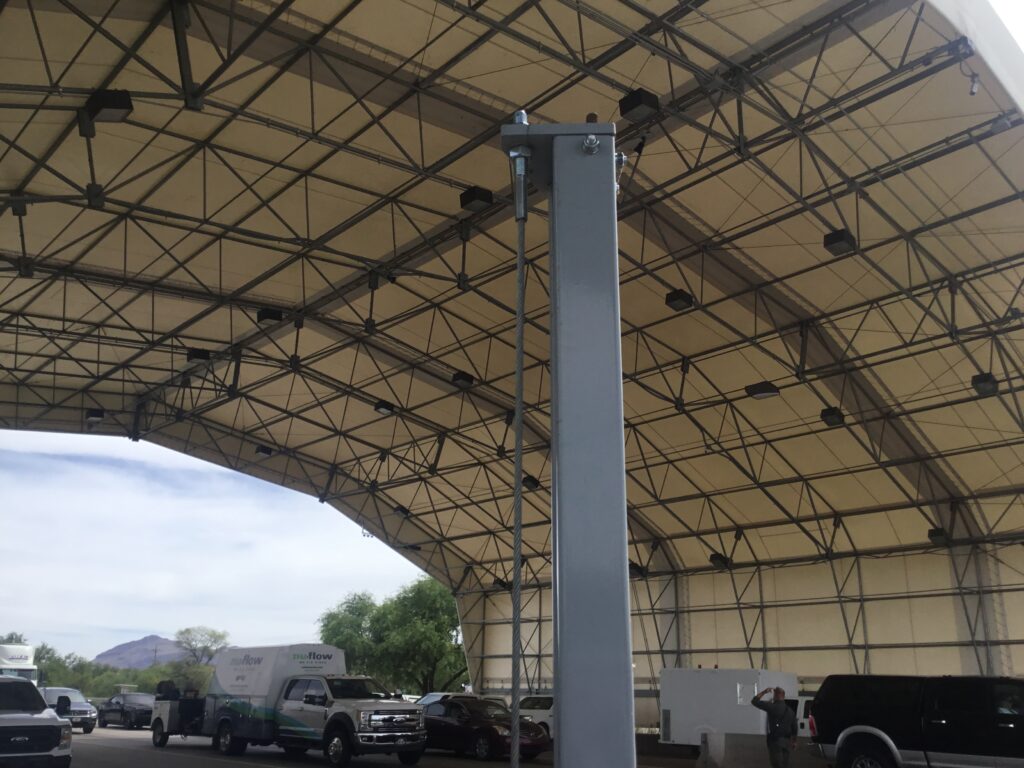
The first port of entry connecting Nogales, Mexico, to the United States through the Arizona border corridor. The facility is equipped with sophisticated surveillance cameras and K-9 units that assist officers in border security and enforcement operations.
In this sense, border enforcement is not a single action or isolated intervention. It functions instead as a continuous system of governance, one that operates across time, space, and multiple institutions working in coordination toward a shared operational objective.
The U.S. border model: beyond the wall
Outside the United States, American border enforcement is often reduced in public perception to a single dominant symbol: the wall along the U.S.–Mexico border. However, field observations in Arizona’s Nogales border sector complicate this simplified narrative.
The wall is present and highly visible, but it represents only one layer within a far broader architecture of border control.
Over several decades, particularly from the 1980s onward, U.S. immigration enforcement has undergone a significant transformation. This evolution was driven by rising concerns over irregular migration, drug trafficking, and other forms of transnational crime. In response, successive legislative reforms expanded the powers of immigration authorities, strengthened deportation and removal procedures, and increased sustained federal investment in border enforcement operations.
A key milestone came with the Secure Fence Act of 2006, which accelerated the construction of reinforced fencing in selected high-traffic segments of the southern border. However, even after this period of physical expansion, policy direction gradually shifted beyond static infrastructure toward a more layered and technology-driven enforcement model.
Today, border control in the United States operates as a multi-dimensional system that integrates several interconnected components, including:
- Advanced surveillance systems and monitoring towers
- Drones and aerial reconnaissance operations
- Ground-based sensors and motion detection technologies
- Biometric identification systems at ports of entry
- Mobile patrol units supported by rapid-response teams
- A network of inland checkpoints positioned beyond the immediate border zone
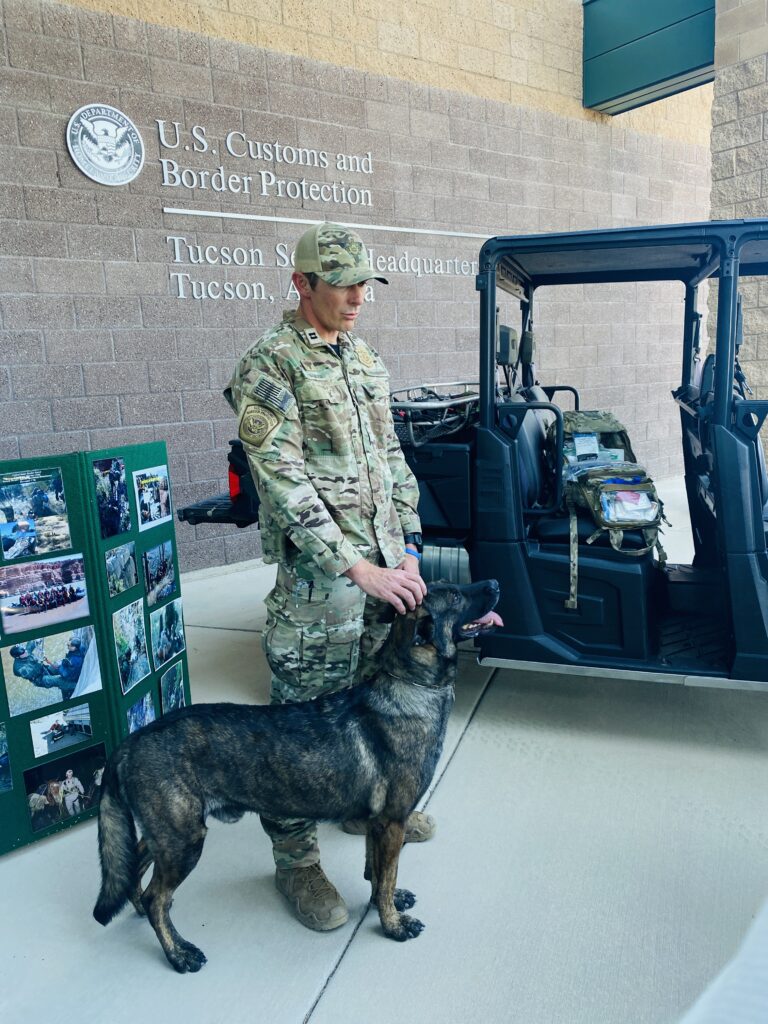
An officer with Delo, a four-year-old K-9 working dog that supports border security operations, including detection and patrol assistance.
During briefings with officials, a recurring point was that many of the core immigration laws themselves are not new. Instead, what has changed over time is the degree of enforcement, particularly the consistency, coordination, and operational intensity with which existing laws are applied.
At the centre of this system is what authorities describe as “operational control.” This refers to the capacity to determine who is crossing, where crossings are taking place, and how movement patterns evolve in real time, allowing enforcement agencies to respond in a coordinated and timely manner.
Regardless of political interpretation, one reality is difficult to dispute: border enforcement has become a central pillar of the United States’ broader migration governance framework.
For The Gambia, the most relevant lesson is not the scale of resources or technology deployed, but the underlying structure. The effectiveness of the U.S. model lies in coordination, where legislation, intelligence gathering, surveillance systems, and operational personnel function as interconnected parts of a unified enforcement ecosystem.
Nogales: a border under constant observation
At the Nogales border sector in Arizona, the density of enforcement infrastructure is immediately visible.
Steel bollard fencing stretches across desert terrain, reinforced with vehicle barriers designed to slow or redirect movement. Surveillance cameras operate continuously, feeding live data into monitoring centres. Sensors detect movement in remote areas, while drones and helicopters provide aerial surveillance over difficult terrain.
Inside the Virtual Matrix Display Centre, agents monitor real-time footage from multiple points along the border. Activity is tracked continuously, 24 hours a day.
For a visitor from The Gambia, the contrast is striking.
In many parts of the Gambia–Senegal border region, communities on both sides share family ties, trade networks, and daily movement patterns. Crossing points are often informal, and enforcement capacity is limited by staffing, infrastructure, and resources.
In Nogales, however, border control is layered and persistent. It does not rely on a single checkpoint, but on overlapping systems of detection and response:
- Surveillance identifies movement
- Analysis determines risk
- Patrol units respond
- Legal systems determine outcomes
The system is designed to function continuously, not intermittently.
The lesson for The Gambia is not technological replication. It is institutional coordination—ensuring that border agencies are linked through communication systems, intelligence sharing, and clearly defined operational mandates.
Enforcement and humanitarian considerations
One of the most notable aspects of U.S. border operations observed during the tour is the coexistence of enforcement and humanitarian response mechanisms.
While public debate often frames border control in punitive terms, operational practice reflects a more complex reality.
At processing facilities in Nogales, officials explained that migrants are typically held for short periods before being processed, transferred, or returned under immigration procedures. Vulnerable individuals, including unaccompanied minors, are handled under separate safeguarding protocols.
The facilities observed appeared structured and orderly, with designated areas for different categories of migrants.
In addition, parts of the desert landscape include humanitarian interventions embedded within the enforcement strategy. Emergency communication stations are placed in remote areas, allowing migrants in distress to request assistance. In some locations, water supplies are strategically placed in high-risk crossing zones where extreme heat can quickly become life-threatening.
These measures reflect an operational recognition of a difficult reality: regardless of enforcement intensity, migration routes often expose individuals to severe humanitarian risk.
For countries like The Gambia, this raises a critical policy question: can border enforcement systems be strengthened without eroding human dignity?
The evidence suggests that enforcement and humanitarian response are not mutually exclusive, but balancing the two requires deliberate policy design.
Why migration continues despite enforcement
Despite tighter border controls in destination countries, migration pressures across West Africa remain strong.
In The Gambia, Senegal, and Guinea, migration is shaped by a combination of structural factors: limited employment opportunities, economic inequality, social expectations, and the influence of diaspora success narratives that circulate widely through families and digital platforms.
The emergence of routes such as the Nicaragua corridor reflects how migrants adapt quickly to shifting enforcement environments. When one pathway closes, another is created.
But the risks remain severe.
Across transit countries, migrants may encounter criminal networks, exploitation, detention, extortion, or violence. Some complete the journey. Many do not. Others are returned without achieving their intended objectives, often after significant financial and emotional loss.
Ultimately, enforcement may redirect migration flows, but it does not eliminate the conditions that drive movement in the first place.
Behind every migration statistic is a set of lived realities shaped by pressure, aspiration, and constraint.
What The Gambia can realistically learn
The Gambia cannot replicate the technological scale or financial capacity of the U.S. border system. Nor is such replication necessarily desirable or appropriate in a different socio-economic and geographic context.
However, the most transferable lesson is not infrastructure—it is governance.
The country continues to face vulnerabilities linked to irregular migration, trafficking, and smuggling networks. These challenges are often exacerbated by institutional fragmentation, limited coordination, and gaps in enforcement capacity.
One of the most significant weaknesses lies in the legal framework governing migrant smuggling. While existing provisions under immigration law prohibit facilitation of illegal entry or exit, enforcement mechanisms and penalties are widely considered insufficient to deter organised criminal networks operating across borders.
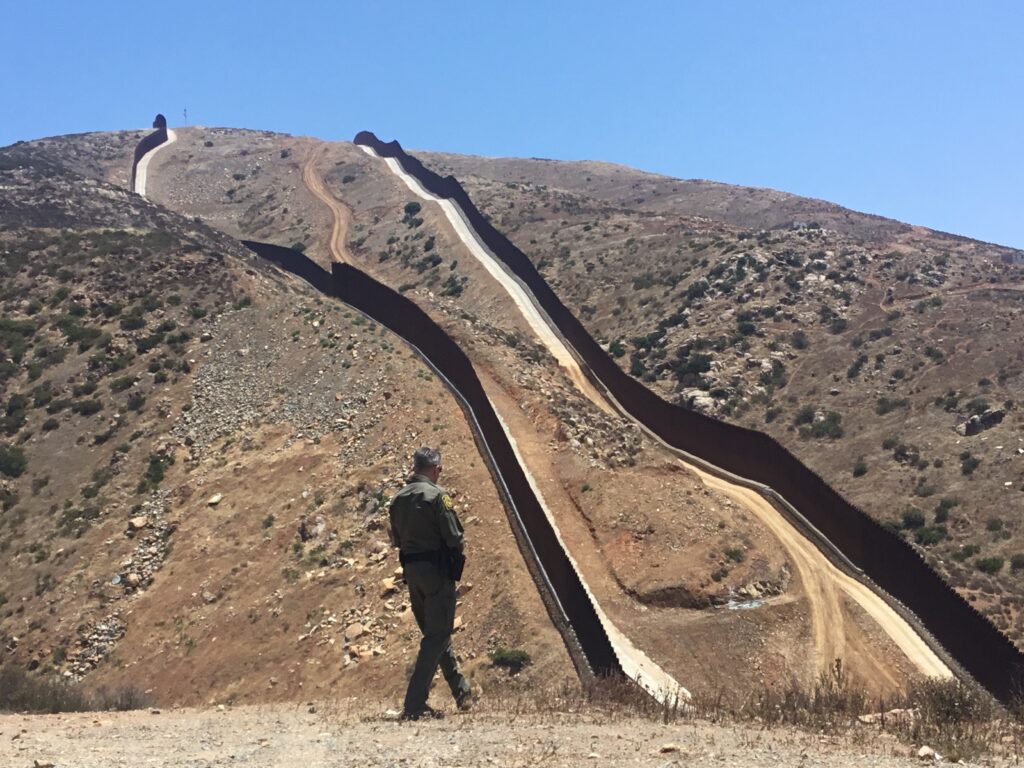
Standing beside the towering steel wall in San Ysidro, a U.S. Border Patrol agent looks across the U.S.-Mexico border. Beyond the imposing infrastructure lies a complex mission of security, migration management, and border enforcement, one carried out daily by officers tasked with safeguarding the nation’s frontiers.
This creates a broader structural gap between international commitments and domestic implementation.
From the U.S. experience, a key principle emerges: laws alone do not create enforcement capacity.
They must be:
- Clearly defined
- Operationally supported
- Consistently enforced
- Backed by institutional coordination
The Gambia’s priority, therefore, is not militarisation of borders but strengthening of systems: improving inter-agency coordination, investing in training, updating legal frameworks, and building accountability mechanisms that make enforcement consistent and predictable.
Operational control begins not with technology, but with governance capacity.
Beyond borders: a broader governance question
Standing at the U.S.–Mexico border in Nogales, where steel structures stretch across vast desert landscapes, it becomes clear that modern borders are no longer simply geographic demarcations. They are spaces where law, security, politics, economics, and human aspiration intersect.
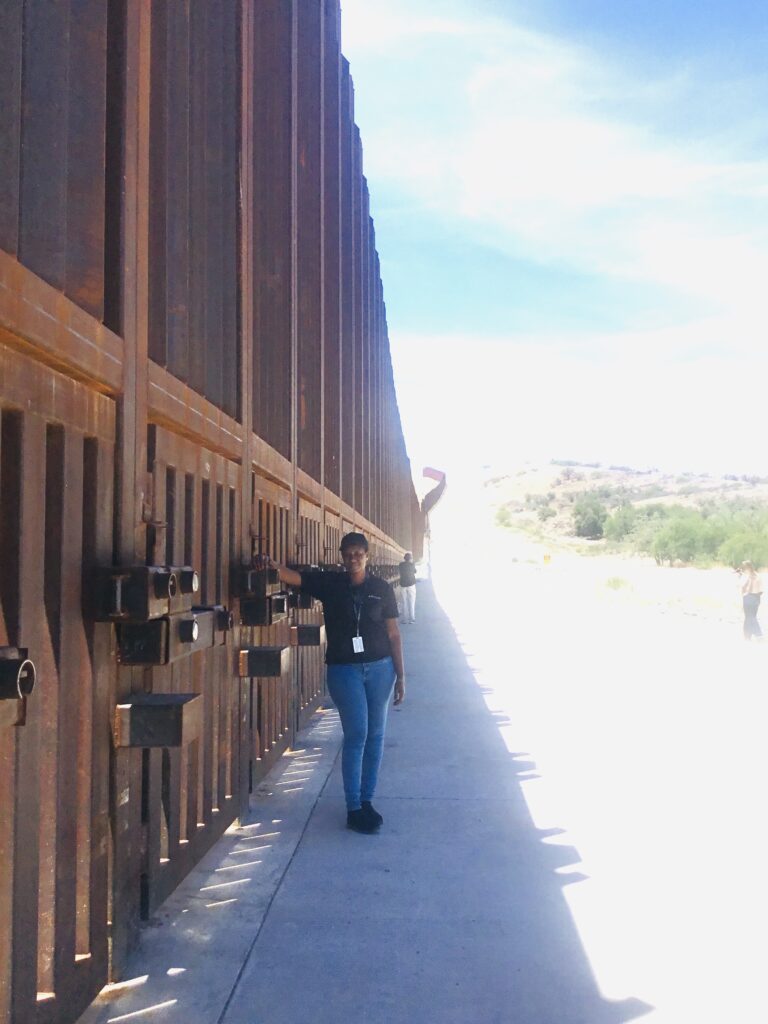
Malagen reporter Kaddy Jawo stands beside the steel border wall in Nogales, Arizona. Stretching for miles across the rugged landscape, the barrier is one component of the layered enforcement system used to monitor movement along the U.S.–Mexico border.
For The Gambia, the central challenge is not whether to replicate external models, but how to govern mobility within its own realities.
For countries like The Gambia, where border management is shaped by limited infrastructure and constrained resources, the relevance lies not in the hardware of enforcement, but in the architecture of coordination. The key questions become how institutions are aligned, how information is shared across agencies, and how consistently laws are implemented in practice. In that sense, the U.S. approach underscores a central principle: border effectiveness depends less on geography or technology alone, and more on the strength, coherence, and discipline of the systems that govern movement.
How can border security be strengthened without undermining humanity?
How can smuggling networks be disrupted without exposing migrants to greater risk?
And how can domestic opportunity be expanded so that migration becomes a choice rather than a necessity?
Migration will remain a defining feature of the global system. The question is not whether it stops, but whether it is managed more effectively, more fairly, and more safely.
In the end, effective border governance is less about walls or surveillance systems than it is about the strength of institutions, the clarity of laws, and the coherence of national responses to one of the most complex issues of our time.
