
A Tax Cut Was Meant To Make Sanitary Pads Cheaper. It Hasn’t
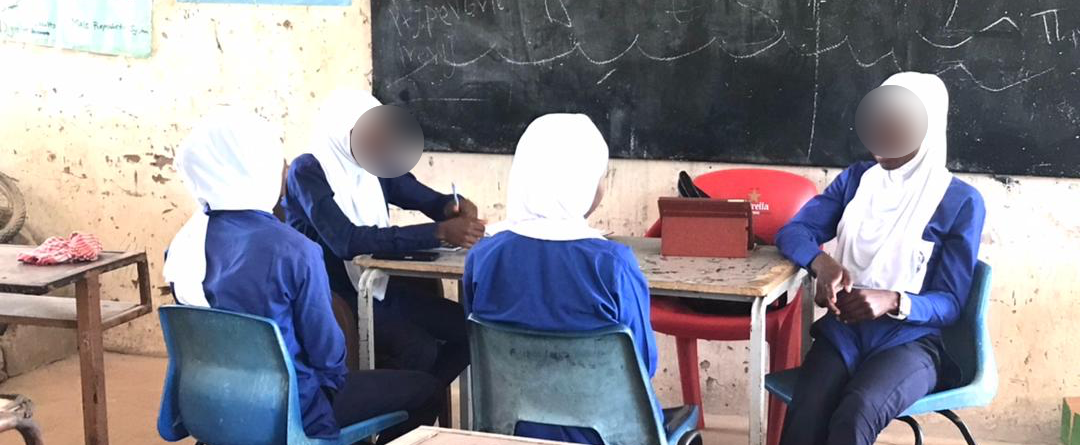
Sanitary pads for women are still out of reach for many, especially school girls, who are dropping out as a result, as a government tax exemption fails to bring prices down.
The Gambia government had nearly one year ago declared a tax exemption on imported sanitary products, a move meant to bring down prices to ease the struggles women and girls go through every month to manage their menstrual period.
That appears to remain only on paper.
“We are buying and selling at the same prices,” Pa Alieu, a manager at Heewal Supermarket, said in a recent month, in response to questions about the cost of sanitary pads.
The prevalence of period poverty – the inability of women and girls to afford pads – is reportedly high in The Gambia. Schoolgoing girls, especially those in rural areas, are the most affected. A previous Malagen investigation revealed that many girls miss vital hours and in extreme cases drop out of school because they could not access or afford sanitary pads. Some resort to using rags.
The tax exemption was expected to significantly lower the cost of pads. Months after it was announced, Malagen conducted a price survey at about half a dozen high-profile pharmacies and supermarkets. Most operators say they were not aware of the tax exemption.
With both wholesale and retail prices unchanged, there is hardly any relief for mothers like 48-year-old Maimuna Jallow, a market vendor who is raising four daughters, all between the ages of 14 and 20.
Seated behind her makeshift stall in a recent month in Latrikunda, where she sells charcoal and basic cooking ingredients to support her family, she counts the day’s earnings repeatedly.
Most days, she said, the profit covers only rice, cooking oil and a few other household essentials. Little, if anything, is left for sanitary pads, which has become one of the most expensive regular expenses in her household.
Isatou Jallow, 14, a Grade 8 student, said she gets anxious each time her menstrual cycle comes around because she could hardly afford pads. “When I don’t have pads, I worry about going to school because my clothes might get stained,” she said. So, she stays out during those days. She said every missed lesson makes it harder to keep up with schoolwork.
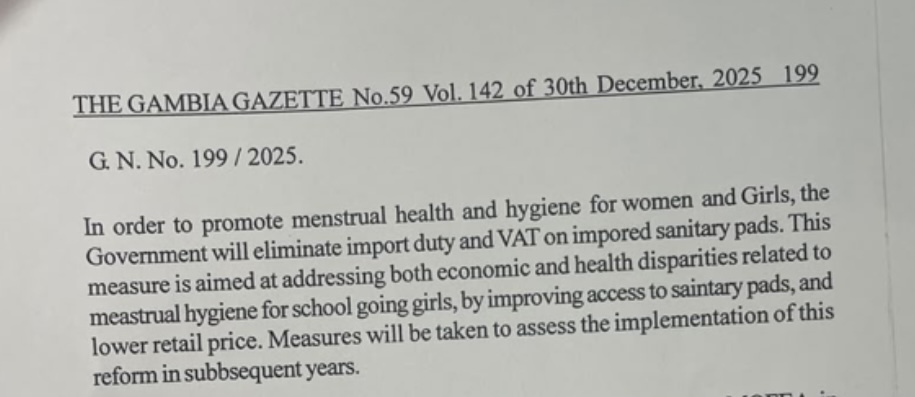
The tax – import duty and VAT – waiver for sanitary pads was announced in December last year as the Minister for Finance, Seedy Keita, presented the 2026 national budget before the National Assembly.
“This measure is aimed at addressing both economic and health disparities related to menstrual hygiene for school-going girls, by improving access to sanitary pads, and lower retail prices,” Mr. Keita said. He added that the waiver would take effect from January.
At the time, among a wide variety of sanitary pad brands found on the shelves, some of the cheapest, such as Bella, cost around D50, and Always, a widely used one, was sold for D120. Some premium brands were sold for as much as D600.
Those prices have not become cheaper across at nearly half a dozen pharmacies and supermarkets we visited, including Stop Step Pharmacy, Medicare, Heewal Supermarket, Premium and Right Choice Supermarket.
Retailers told Malagen that they had received no information indicating that sanitary pads were now exempt from taxes. They continued buying stock at the same wholesale prices as before.
One importer, who requested anonymity to protect his business interest, said its most recent shipment, which arrived in April 2026, four months after the tax exemption was due to take effect, was still subject to the levy.
When contacted, the Ministry of Finance said the tax exemption had come into effect on Jan. 1, as announced by Minister Keita. “We have formally communicated this to the Gambia Revenue Authority for implementation,” the ministry said in a letter in May.
The GRA also said the exemption on sanitary products is effective. “The system has been configured to reflect it,” said in a letter. “Anyone who imports sanitary pads can benefit from the exemption.”
We also contacted the Gender Unit at the Ministry of Basic and Secondary Education (MoBSE) to find out whether it was aware that prices of sanitary products were not lowered despite the tax removal. They declined to comment.
Yet, for businesses across much of the supply chain, it is business as usual. So it is for mothers like Maimuna and girls like Isatou.
“When a girl cannot manage her period with dignity, she doesn’t come to school,” said Kawsu, a teacher at Bakadagi Senior Secondary School. (He requested that we do not use his full name.).
Kawsu said the girls featured in the previous Malagen investigation had all graduated from the school. But he added that the challenges they had faced, including stigma, use of rags amid lack of access to affordable sanitary pads, are alive and well at the school.
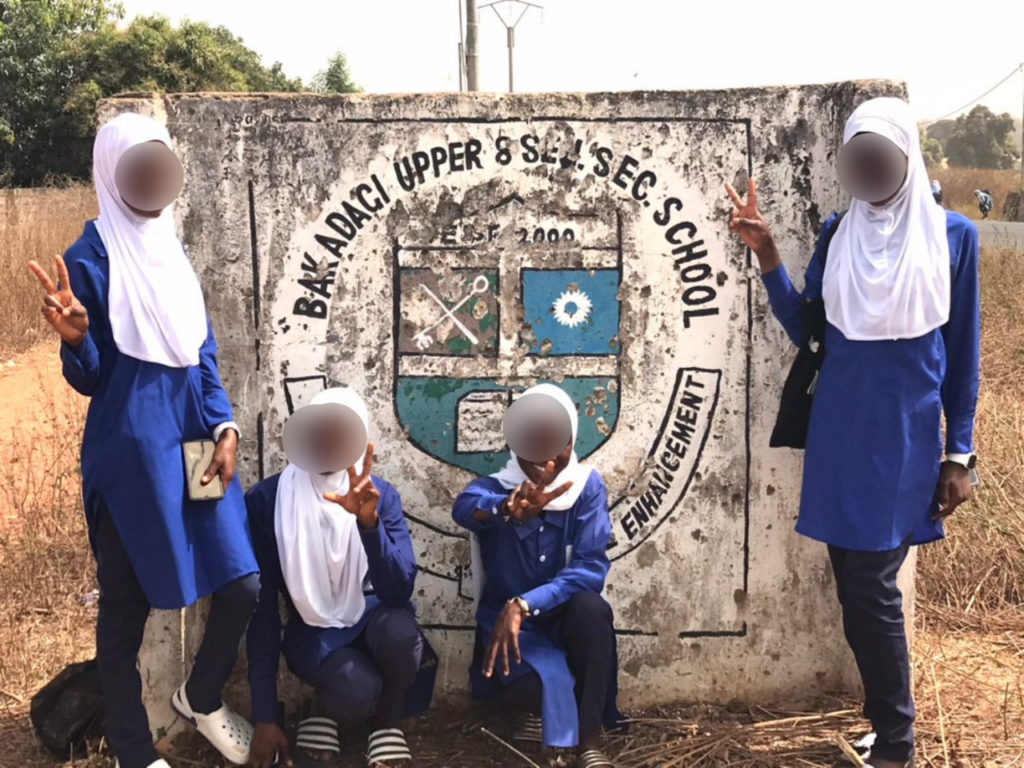
“Some girls miss lessons every month,” he added. “Over time, it affects their confidence and pushes them out of the classroom.”
