
Hamat Bah Flagged Over Anti-Foreigner Rhetoric
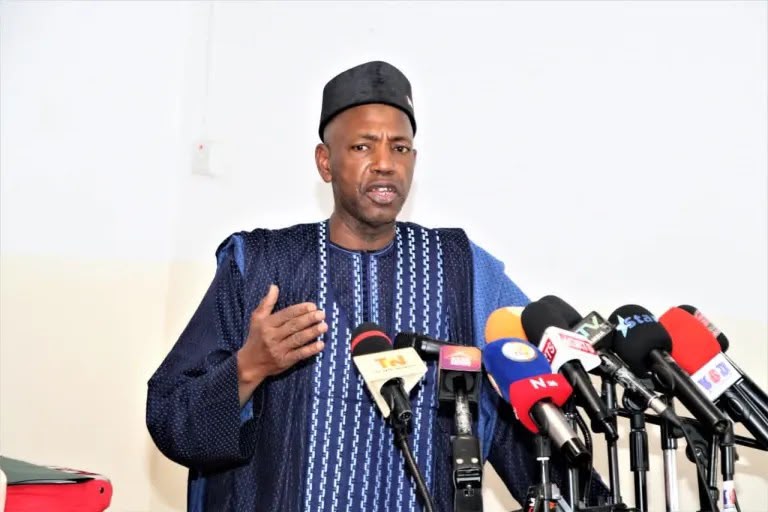
As The Gambia heads towards the December 5 presidential election, rhetoric around who belongs and who does not is increasingly entering political discourse. Lands Minister Hamat Bah is among the prominent political figureheads previously flagged by Malagen for rhetoric requiring scrutiny, making his latest remarks particularly significant.
Malagen’s Media Monitoring has flagged comments made by Hamat Bah, The Gambia’s Minister of Lands, Regional Government and Religious Affairs, in which he said the country “will never be Lebanon” and that “nobody will give this country to foreigners.”
Bah made the remarks while speaking at a political gathering in Farafenni as political parties mobilise supporters ahead of The Gambia’s December 5, 2026 presidential election.
He said:
“This country will never be Lebanon and nobody will give this country to foreigners.”
Why Malagen is flagging this
The statement raises concerns because it frames political leadership and national belonging through the lens of ‘foreignness’ and perceived ancestry, rather than political ideas, policies or records.
While political actors may legitimately debate citizenship, national sovereignty and foreign influence, broad references to “foreigners” can become exclusionary when used to portray people based on their nationality, ancestry or perceived origin as less entitled to participate in the country’s political affairs.
The remarks are particularly significant because they were made by a senior government minister during an election campaign, when political rhetoric can reach large audiences and shape perceptions of political opponents and communities.
Context
The Gambia is approaching its December 5, 2026 presidential election, with political parties and coalitions increasingly mobilising supporters across the country.
Malagen’s previous hate-speech monitoring has documented the risks associated with rhetoric that portrays particular communities or groups as threats to the country. Its 2021–2023 monitoring identified advocacy of hatred or hostility, advocacy of discrimination and incitement to violence among the forms of hateful content observed during the election period. The report also documented narratives portraying non-Gambians as interfering in the country’s political affairs.
Malagen’s 2023 Media Monitoring Report on Hate Speech also included Hamat Bah among the political leaders monitored under the NPP-led alliance. His inclusion in the monitoring report provides additional context for examining the current remarks he made.
Malagen has also previously flagged rhetoric concerning Talib Bensouda and his alleged foreign identity. In October 2025, the organisation flagged a UDP supporter who claimed that a Bensouda presidency would turn The Gambia into a “Lebanese territory”. Malagen noted that such rhetoric could encourage prejudice or discrimination against Gambians of Lebanese descent or people perceived as outsiders.
The latest remarks therefore warrant attention in light of the recurrence of a “Lebanese/foreigner” narrative in political discourse surrounding Bensouda, if the full context establishes that the Lebanon reference was directed at him.
Why the rhetoric matters ahead of the election
Political competition is a normal part of an election, and politicians have the right to strongly criticise their opponents. The concern arises when political competition is framed through nationality, ancestry or ethnic identity, potentially turning political differences into questions of who belongs to the nation.
This is particularly relevant in The Gambia, where Malagen’s previous monitoring has identified ethnicity and migrant/foreigner narratives among recurring categories in hate-speech discourse. UNESCO, citing Malagen’s monitoring, reported that ethnicity accounted for the largest share of hate-speech cases recorded during the 2021–2023 election cycle, followed by migrants and religion.
Identity-based political rhetoric can contribute to an environment in which individuals or communities are viewed not simply as political opponents but as outsiders or threats to the country. During an election period, such narratives can also be amplified through social media and political networks.
Conclusion
The concern is not that politicians should refrain from criticising opponents or discussing national sovereignty and foreign influence. Rather, political debate should not stigmatise people or communities on the basis of their nationality, ancestry or perceived foreignness.
As The Gambia heads towards the December 2026 presidential election, Malagen will continue monitoring political rhetoric that has the potential to deepen social divisions, reinforce exclusionary narratives or contribute to hostility towards individuals or communities.
