
Fact-Check: Are Mandinkas Still The Gambia’s Largest Ethnic Group?
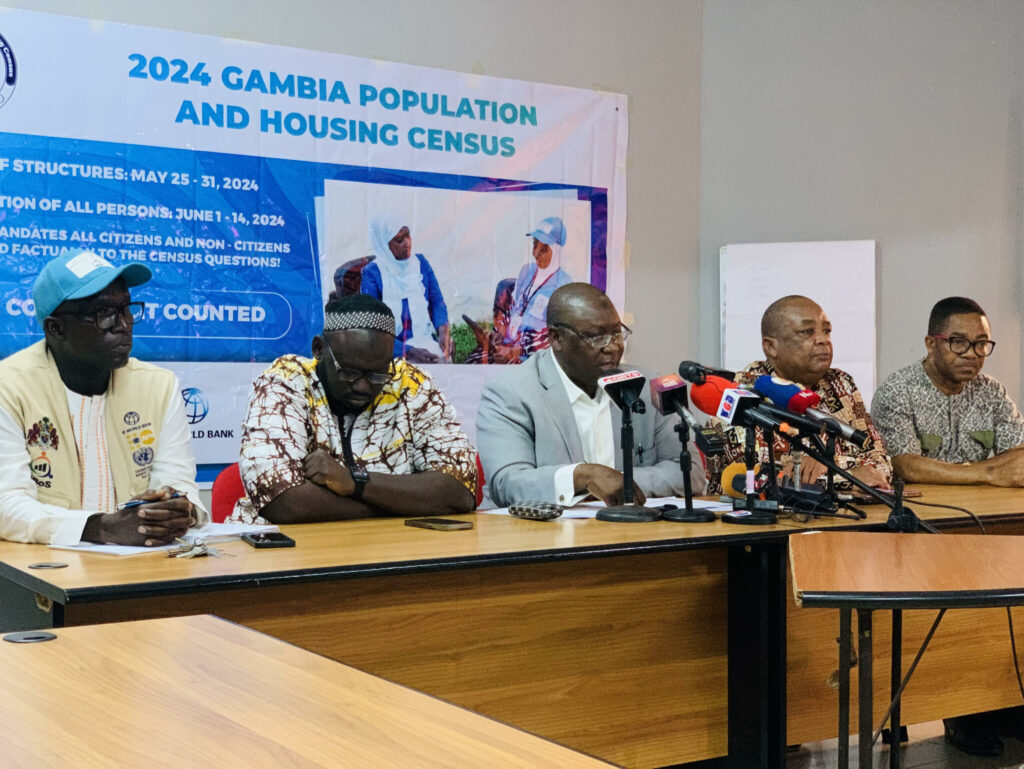
Mandinkas have remained The Gambia’s largest ethnic group for decades—but GBoS census data show their share of the population has steadily declined. So, have they finally been overtaken? The latest figures tell a different story.
Claim
Pa Njie Girigara, a businessman and political commentator, claimed on the Dialectic Podcast that Mandinkas are not the majority ethnic group in The Gambia and suggested that the largest ethnic group fluctuates between Mandinkas and Fulas.
Between 6:21 and 6:37 of the podcast, Mr Girigara said:
“The Mandinkas believe they are the majority tribe in The Gambia and that is not true.”
He further claimed that the figures “fluctuate between the Mandinkas and the Fulas” and that Mandinkas are “not the majority anymore”.
When asked about the source of his figures, Mr Girigara said they were “based on reality”.
What We Found
According to the latest Population and Housing Census conducted by the Gambia Bureau of Statistics (GBoS) in 2024, Mandinkas remain the largest ethnic group in The Gambia, accounting for 34.4% of the population.
They are followed by Fulas at 25.0% and Wolofs at 15.4%. Jolas account for 9.5%, Sarahules 8.2% and Sereres 2.9%. The Mandinka are still the largest single ethnic group in the country.
What the previous censuses show
GBoS census data also contradicts the suggestion that the largest ethnic group has fluctuated between Mandinkas and Fulas.
Mandinkas have remained the largest ethnic group in every census listed by GBoS since 1973. Their share of the population has, however, declined over time:
| Census year | Mandinka | Fula |
| 1973 | 42.3% | 18.2% |
| 1983 | 40.8% | 19.0% |
| 1993 | 39.5% | 18.8% |
| 2003 | 35.9% | 21.9% |
| 2013 | 34.4% | 24.1% |
| 2024 | 34.4% | 25.0% |
GBoS’s 2013 census report explicitly states that Mandinkas constituted the largest ethnic group, at 34.4%, followed by Fula at 24.1%, Wolof at 14.8% and Jola at 10.5%.
However, the same report shows that the Mandinka share has declined substantially since 1973, when they represented 42.3% of the population. At the same time, the Fula share increased from 18.2% to 24.1%.
What the data actually show
The available census data show that the proportion of Mandinkas in The Gambia’s population has declined from 42.3% in 1973 to 34.4% in 2024. However, this decline does not mean that Mandinkas have been overtaken by Fulas.
It is therefore incorrect to say that the largest ethnic group fluctuates between Mandinkas and Fulas. GBoS census data show that Mandinkas have remained the largest single ethnic group across the census periods, while Fulas have consistently ranked second, despite their share of the population increasing over time.
Why this matters
Ethnicity is a sensitive issue in The Gambia, particularly in political discourse. Claims about which ethnic group constitutes a majority can influence perceptions of political power, representation and demographic dominance.
For that reason, claims about ethnicity should be grounded in census data rather than perceptions or assumptions about what is “based on reality”.
The GBoS census is the appropriate source for determining the country’s ethnic distribution. The 2024 census was conducted in May and June 2024 and is the country’s latest Population and Housing Census.
Verdict:
Mr Girigara is therefore incorrect to suggest that Mandinkas are not the largest ethnic group in The Gambia. The latest GBoS Population and Housing Census places Mandinkas at 34.4% of the population, making them the country’s largest single ethnic group.
