
Tribal Rhetoric Alert: Imam Baba Leigh Flagged Over Remarks About Mandinkas
Beyond Imam Leigh’s remark, Malagen examines the broader dangers of tribal and divisive rhetoric, including how repeated ethnic stereotyping can reinforce prejudice, deepen social divisions and be exploited during politically sensitive periods such as elections. The report also draws on findings from the National Human Rights Commission (NHRC) where Imam Leigh serves as a commissioner, which has repeatedly warned about the prevalence and impact of hate speech and the responsibility of influential voices to prevent, rather than fuel, such rhetoric.
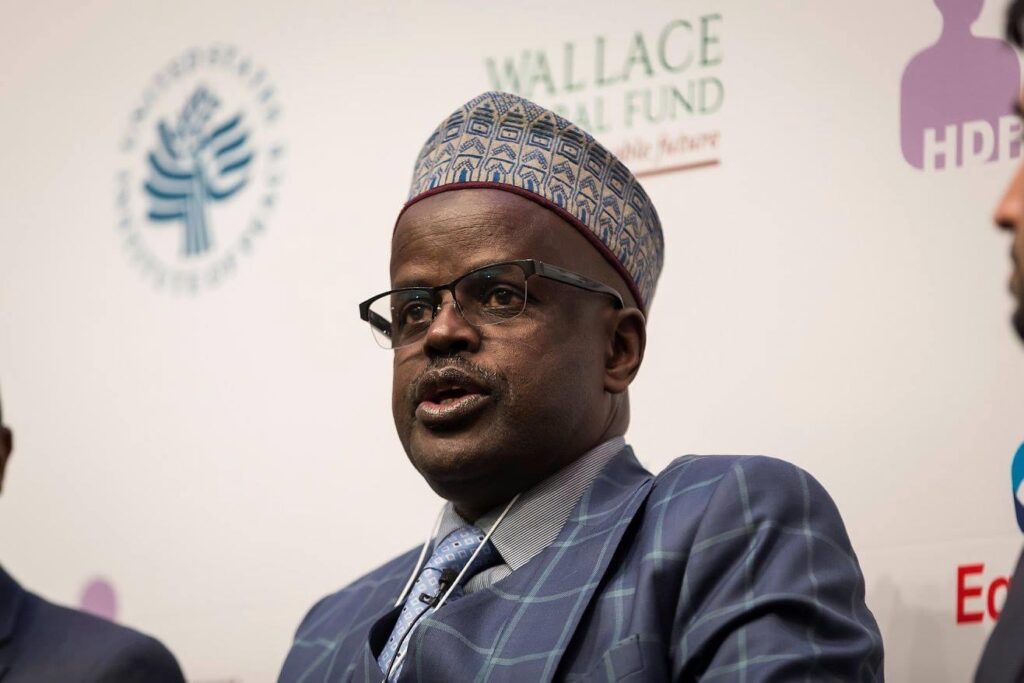
Malagen Media Monitoring has flagged Imam Baba Leigh for tribal rhetoric after an audio circulating widely on social media captured him referring to Mandinkas as “angry people”. The remark has sparked online reactions, raising concerns about ethnic stereotyping at a time when The Gambia is heading towards a highly consequential presidential election.
The concern is heightened by who made the statement.
Imam Baba Leigh is a prominent Islamic cleric, human rights activist and commissioner of The Gambia’s National Human Rights Commission (NHRC), an independent institution mandated to promote and protect human rights.
The NHRC has itself documented the prevalence of hate speech and the role of ethnic identity in divisive rhetoric. Its 2024 NHRC Research on Hate Speech in The Gambia examined respondents’ perceptions of ethnic groups likely to be targeted by hate speech. Thirty-three per cent of respondents, 118 people, said Mandinkas were very likely to be targets, the highest proportion recorded among the ethnic groups assessed. Jolas and Manjagos followed at 5% each, and Fulas at 4%.
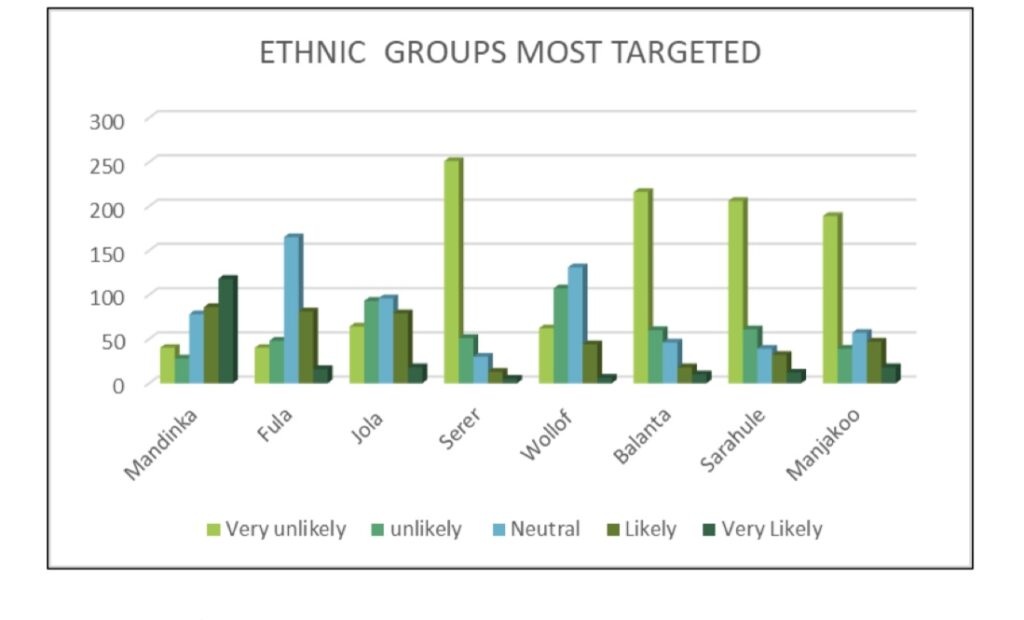
NHRC
These figures reflect respondents’ perceptions, not a count of actual hate-speech incidents against each ethnic group. The NHRC’s subsequent Follow-up Study on the Prevalence of Hate Speech in The Gambia found that 80% of respondents considered hate speech prevalent, with ethnic/tribal and political-affiliation hate speech among the forms identified as most prevalent.
This context does not, by itself, establish that Imam Leigh’s remark meets the threshold for hate speech. However, describing an entire ethnic group as “angry people” is a broad negative generalisation that reinforces an ethnic stereotype. When such language comes from a prominent public figure, it can legitimise prejudice, deepen social divisions and contribute to a climate in which hostility towards a community becomes increasingly normalised.
Context
Imam Leigh’s influence extends beyond his role as a private citizen. As a religious leader, his words can reach large audiences, while his position as an NHRC commissioner gives his public statements additional institutional weight.
The concern is therefore not simply about one phrase, but about how ethnic stereotypes can be repeated, amplified and normalised.
On social media, a short audio clip can travel rapidly, often without the context in which it was originally delivered. A generalisation about one ethnic group can consequently be repeated until it becomes a broader narrative about that community.
Why this matters ahead of the 2026 election
The timing is significant.
The Gambia is scheduled to hold its presidential election on 5 December 2026, as political parties and candidates prepare to intensify mobilisation.
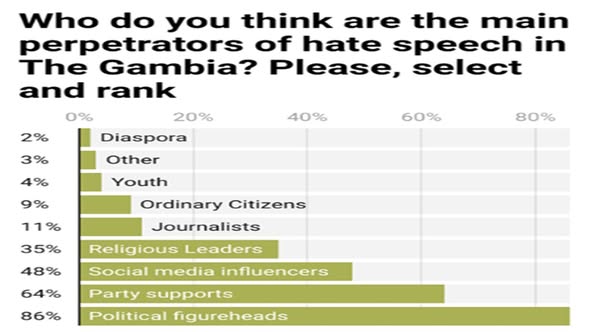
The NHRC’s research has highlighted the connection between politics and hate speech. Its 2024 study found that 86% of respondents identified political figureheads or their supporters as perpetrators of hate speech. Political rallies, public gatherings and social media were also identified as important spaces through which such rhetoric spreads.
This creates particular risks during an election. Political disagreements can become framed through ethnicity, turning criticism of a candidate or party into hostility towards the wider community perceived to support them. Social media can accelerate that process, creating a cycle in which ethnic stereotypes feed political mobilisation, political competition reinforces ethnic divisions, and digital platforms amplify both.
This is not unique to The Gambia. Elections around the world have shown how ethnic, religious and political identities can be exploited to mobilise voters and discredit opponents. International experience also shows that repeated inflammatory rhetoric can deepen existing divisions, particularly when amplified online.
That does not mean The Gambia is destined for conflict. The country has a strong history of peaceful coexistence among its diverse communities.
But peace cannot be taken for granted.
The danger is not necessarily that one comment will trigger violence. It is that repeated ethnic stereotyping can gradually normalise the language of division and make it easier for political actors or supporters to exploit identity during moments of heightened tension.
The Responsibility Behind the Rhetoric
The responsibility extends beyond Imam Leigh. Politicians, religious leaders, activists, journalists, civil society organisations and social-media users all have a role in preventing ethnic rhetoric from becoming a tool of division.
But those with significant public platforms have a greater responsibility because their words can shape how communities perceive one another. For an imam and human rights commissioner, that responsibility is particularly significant.
Conclusion
The issue surrounding Imam Baba Leigh’s remark is bigger than one audio clip.
As The Gambia approaches the 5 December 2026 presidential election, the country faces a choice about the kind of political discourse it wants to normalise.
There must be room for robust criticism and political disagreement. But that debate should focus on ideas, policies, conduct and individuals—not negative characteristics assigned to entire ethnic communities. Tribal rhetoric rarely becomes dangerous because of one sentence alone. Its risk lies in what repeated language can normalise, legitimise and mobilise.
As the election approaches, influential voices have a responsibility to lower tensions, not deepen existing fault lines. The test will not simply be who wins the election. It will be whether, after the ballots are counted, Gambians of every ethnic background still see one another first as fellow citizens.
