
Fact Check: Does Gambia’s Opposition Have Policies and Programmes?
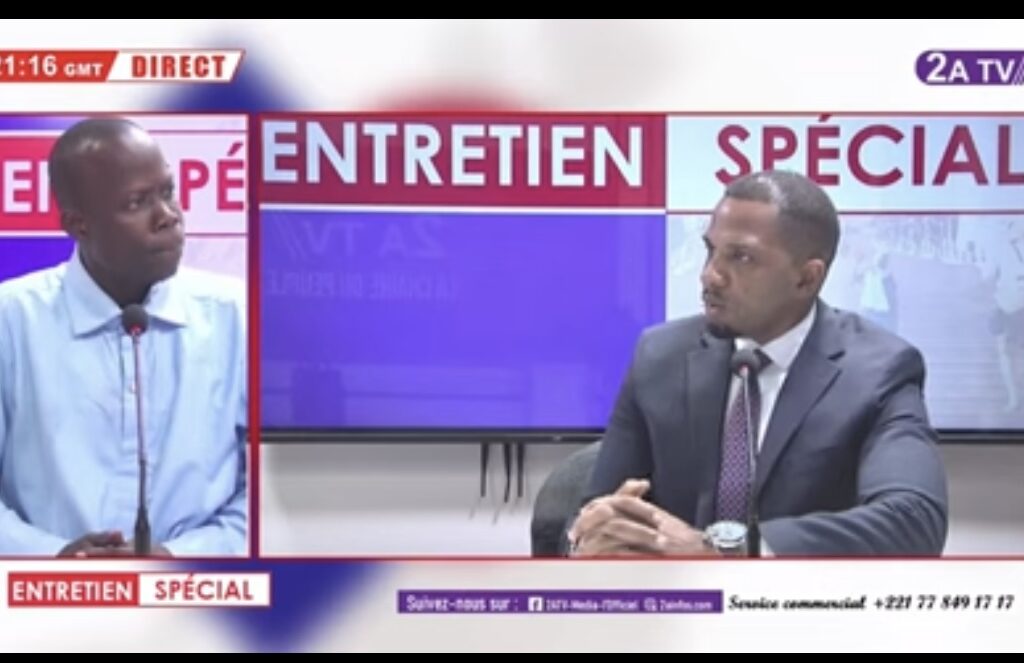
Malagen’s fact-check found that contrary to Information Minister Dr. Ismaila Ceesay’s claim, several Gambian opposition parties — including the UDP, PDOIS, GDC, GEP, and APP-Sobeyaa — have published detailed policy documents such as the Five-Point Agenda and Turn Around Blueprint. The minister’s additional claim that The Gambia is ranked 47th in the RSF World Press Freedom Index is also misleading, as the 2025 ranking places the country 58th globally and 10th in Africa.
Claim: Gambian opposition parties are not credible; they have no policies and programmes.
Source: Dr. Ismaila Ceesay, Minister of Information
Verdict: False
During an interview on Senegalese television channel 2A TV, Gambia’s Minister of Information, Dr. Ismaila Ceesay, claimed that opposition parties in The Gambia “have no policy and programme.”
Malagen’s media monitoring reviewed and translated the Wolof-language interview into English. Dr. Ceesay made two key assertions found to be false or misleading:
- The Gambian opposition parties have no policies or programmes.
- The Gambia is ranked 47th in the Reporters Without Borders (RSF) World Press Freedom Index.
Claim 1: Opposition Parties Have No Policies or Programmes
Verdict: False
Malagen reviewed the manifestos, official statements, and policy documents of all major opposition parties – UDP, GEP, PDOIS, GDC and APP-Sobeya – registered with the Independent Electoral Commission (IEC).
Evidence shows that multiple opposition parties have developed and publicly shared policy programmes outlining their visions of governance and development.
1. United Democratic Party (UDP)
The UDP, one of The Gambia’s largest opposition parties, has developed a governance blueprint called the Five-Point Agenda. This policy framework focuses on key areas of national development, including:
- Youth employment and empowerment
- Education, skills and training
- Agriculture, food security and nutrition
- Good governance and economic development, among others
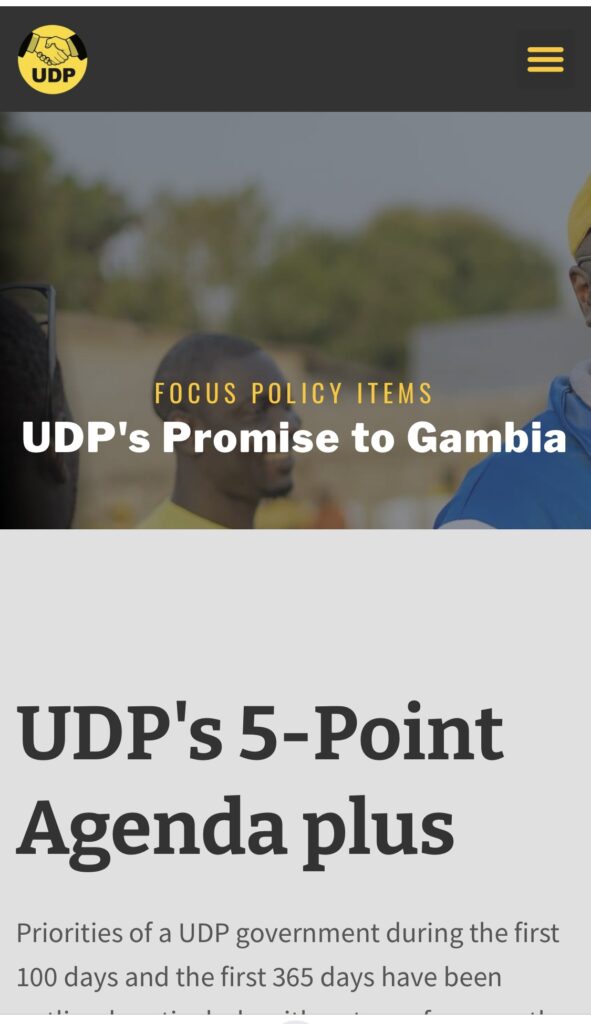
The Five-Point Agenda outlines the UDP’s vision for a more inclusive and transparent government that prioritises youth and economic empowerment.
2. Golden Era Party (GEP)
The Golden Era Party’s policy framework, known as the Golden 9 Agenda, sets out nine key priorities for national transformation. It emphasises:
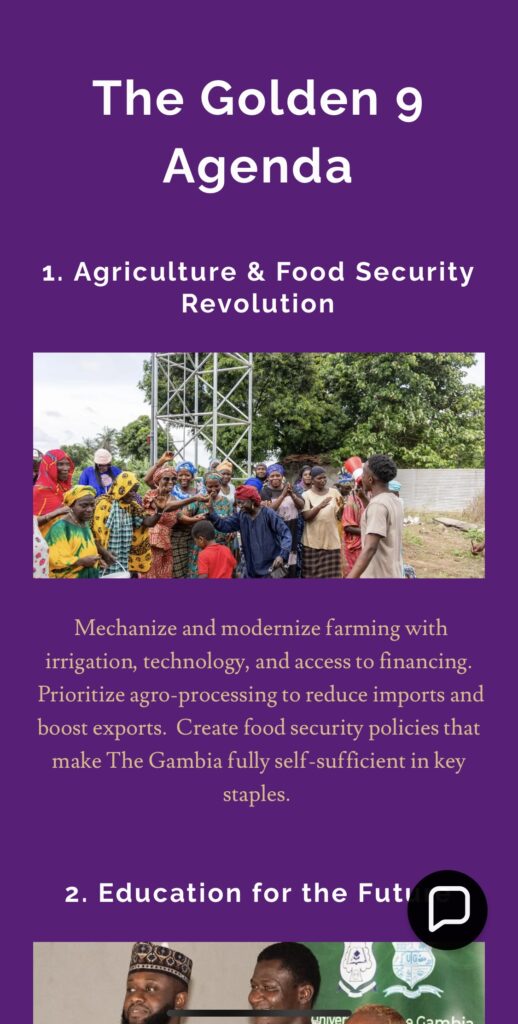
- Modernising agriculture
- Reforming education to include STEM (Science, Technology, Engineering and Mathematics)
- Developing infrastructure and expanding digital connectivity, among others
3. Gambia Democratic Congress (GDC)
The GDC’s manifesto presents a detailed roadmap for governance reforms and service delivery. It includes commitments to:
- Digitalise government transactions to improve transparency
- Strengthen anti-corruption mechanisms
- Enhance economic efficiency and public service delivery, among others
- The GDC’s policy direction is anchored on accountability, technology-driven governance, and efficient public administration.
4. People’s Democratic Organisation for Independence and Socialism (PDOIS)
PDOIS has a long-standing policy framework that reflects its ideological foundation. Its programme is built around three key pillars:
- Economic Base: Building a self-reliant economy through agriculture, processing, mining, and public enterprises.
- Youth and Migration: Addressing unemployment and irregular migration by linking youth empowerment to national production.
- Governance and Sovereignty: Promoting constitutional reform, electoral integrity, and equality of citizens.
The PDOIS framework positions economic independence and citizen participation as the basis of sustainable national development.
5. Alliance for Patriotic Progress (APP–Sobeyaa)
The Alliance for Patriotic Progress and Sobeyaa Alliance (APP–Sobeyaa) introduced the ‘Turn Around Blueprint — a policy document outlining strategies to revive the Gambian economy and improve governance. Its priorities include:
- Youth investment and employment
- Anti-corruption and governance reform
- Economic revival and business growth, among others
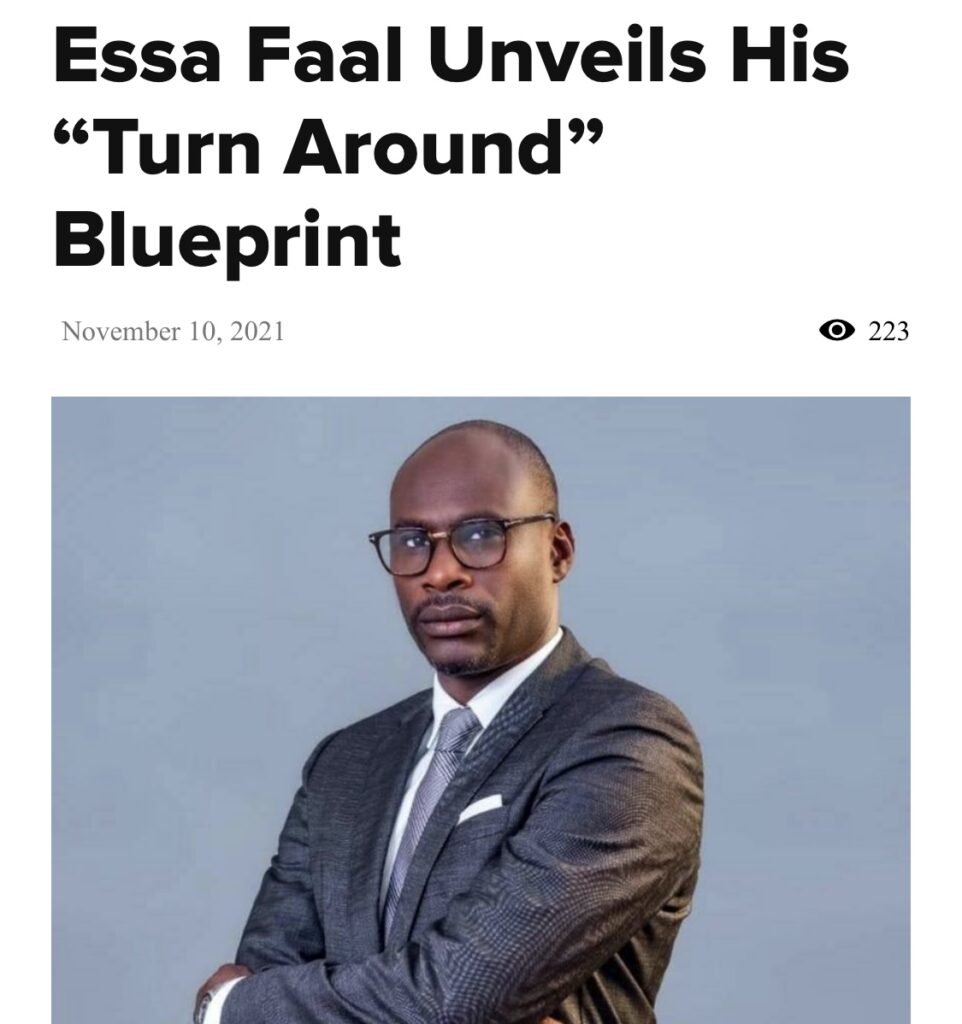
The Turn Around Blueprint seeks to position The Gambia as a competitive and corruption-free economy that empowers its youth and entrepreneurs.
These examples demonstrate that opposition parties in The Gambia have developed distinct policy frameworks and programmes addressing national issues such as governance, employment, agriculture, and education.
All political parties registered by the IEC have legal standing and have published political or election manifestos — meeting the formal requirements of credibility in a democratic system.
The claim that opposition parties “have no policy and programme” is false.
Claim 2: Gambia Ranked 47th in Media Freedom Index
Verdict: Misleading
In the same interview (around the 4:36 mark), Dr. Ceesay stated that The Gambia was ranked 47th in the Reporters Without Borders (RSF) World Press Freedom Index.
However, RSF’s 2025 report ranks The Gambia 58th out of 180 countries with a score of 65.49 — placing it 10th in Africa, not 47th as the minister claimed
A review of previous RSF reports shows the following trend:
- 2023: 46th globally
- 2024: 58th globally (score 65.53)
- 2025: 58th globally (score 65.49, 10th in Africa)
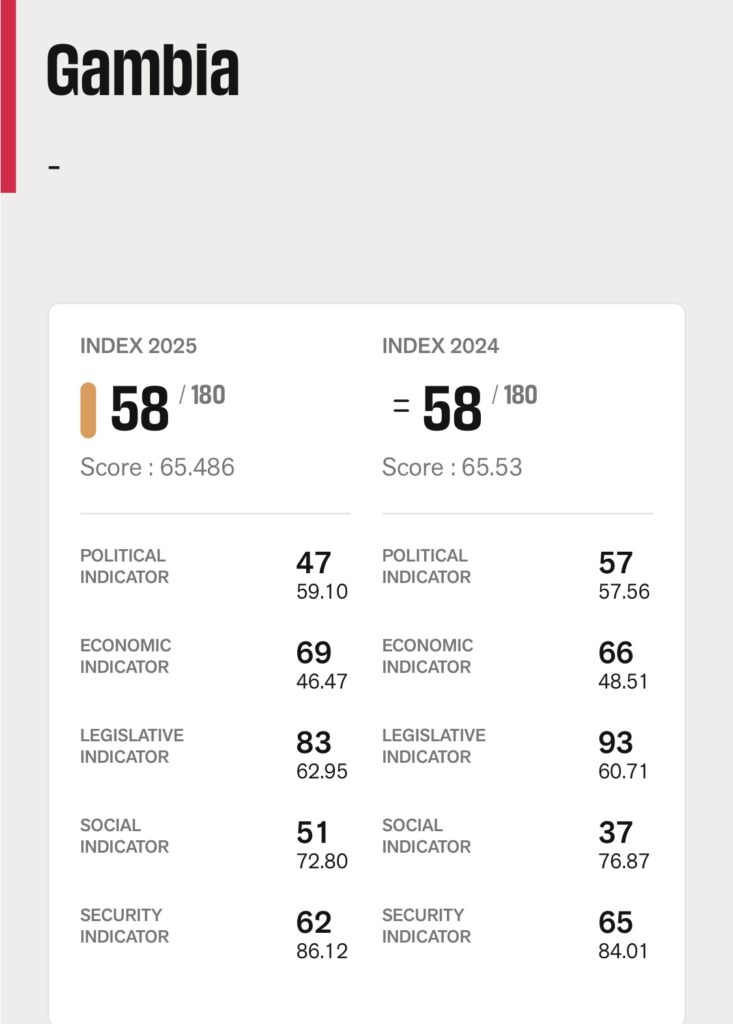
While The Gambia has maintained notable progress in press freedom compared to the Jammeh era, it was never ranked 47th in RSF’s World Press Freedom Index
As Minister of Information, Dr. Ceesay bears a heightened responsibility to ensure the accuracy of his public statements. Disseminating false or misleading claims, especially about opposition parties or media freedom, risks eroding public trust and undermining democratic accountability.
Conclusion
Public officials, particularly those entrusted with information dissemination, have a duty to communicate verified facts. Accuracy in public communication is essential to maintain trust, promote informed debate, and safeguard democracy.
Both claims made by Dr. Ismaila Ceesay are factually inaccurate.
