
Malagen flags dehumanizing speech by President Adama Barrow against political opponents
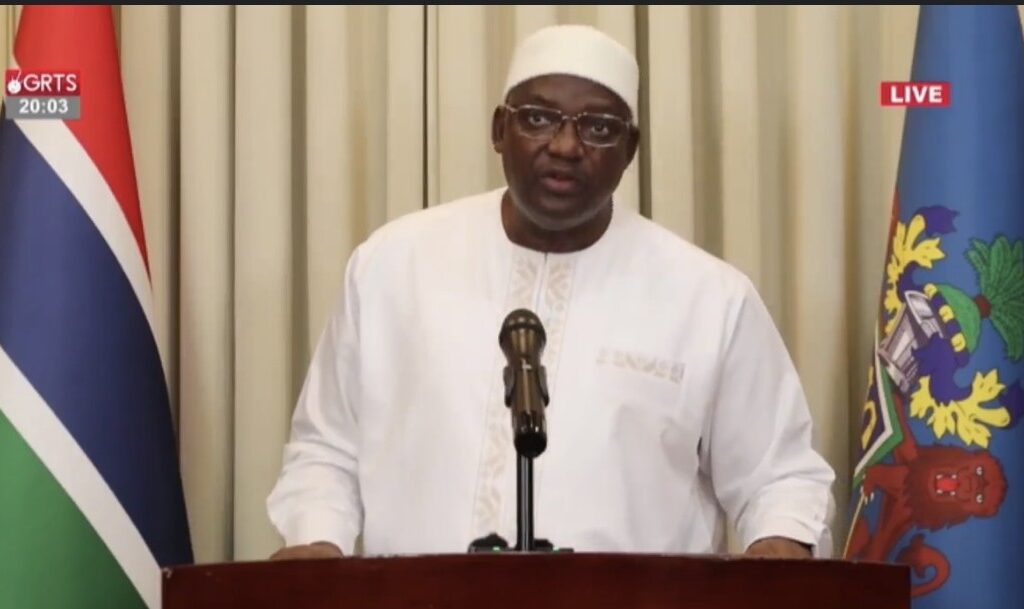
Malagen has flagged President Adama Barrow for dehumanizing speech after he referred to his political opponents as “vultures” during a public address in Mankamang Kunda.
A one minute and 36-second video has surfaced online showing President Adama Barrow addressing a gathering in his hometown of Mankamang Kunda, in the Upper River Region of The Gambia.
In the video, the president, speaking in Mandinka, recalled how during former President Yahya Jammeh’s rule, politicians were afraid to challenge Jammeh . But he went further to describe his political opponents using demeaning language.
What exactly did the president say?
Speaking in Mandinka, and translated by Malagen’s Media Monitoring Desk, President Barrow said
“Others came and did the jihad for them, and today they want to take over the country. Those ones are vultures and you know vultures, when the meat is ready, that is when they arrive.”
Why this matters
This statement is concerning because it contains dehumanizing and stereotyping language reducing political opponents to scavengers and portraying them as opportunistic and less than human. Such rhetoric is classified under dangerous speech, which, according to international standards, can fuel polarization and potential violence, especially in politically tense contexts.
Context
The statement comes at a time when The Gambia is heading toward the 2026 presidential elections, expected to be one of the most hotly contested in the country’s recent political history. Political rhetoric has increasingly become charged, with insults and personal attacks shaping the public discourse. In this context, words – good or bad – from the head of state carry immense weight.
As president, Barrow’s language sets the tone for public engagement and political debate. When a sitting president uses demeaning terms, it risks normalizing hate speech, emboldening supporters to mirror that language, and deepening divisions across the political spectrum.
Conclusion
The president’s description of his opponents as “vultures” goes beyond political banter; it fits a pattern of dehumanizing speech that can escalate tensions ahead of elections.
Public figures, especially presidents, must exercise restraint and responsibility in their communication.
About Malagen Media Monitoring
Malagen’s media monitoring project tracks and counters misinformation, disinformation, hate speech, and dangerous speech to ensure that political discourse remains respectful, inclusive, and fact-based.
For more information, read our report on Hate Speech in The Gambia (2021–2023), produced with the support of UNESCO, which provides an in-depth analysis of hate and dangerous speech during past electoral cycles.
Report to Us:
If you come across hate speech, misinformation, or disinformation, please contact us at editor.malagen@gmail.com or call/WhatsApp 6061301.
