
Factcheck: Barrow Says His Gov’t Respects Protest Rights. Frequent and Violent Crackdowns Tell A Different Story.
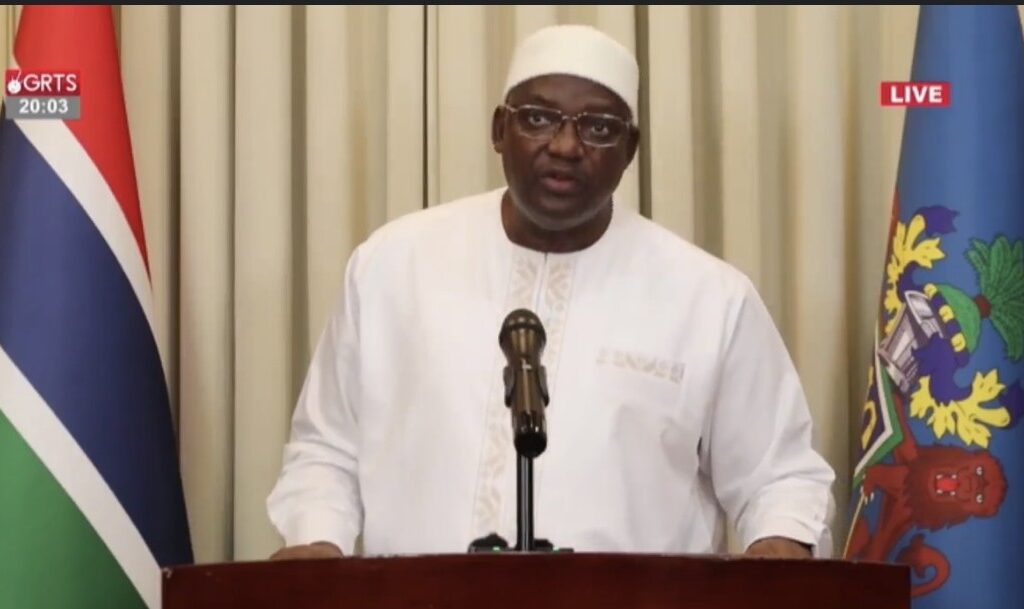
Despite constitutional rights, peaceful protests in The Gambia are repeatedly met with police crackdowns, contradicting President Barrow’s claims.
On 29 September 2025, President Adama Barrow addressed the nation on state television following the death of Omar Badjie, allegedly beaten by police officers while on patrol in Mandinary, West Coast Region. In his speech, the president claimed: “The right to protest peacefully is a cornerstone of our democracy, protected by our constitution and respected by this government.”
This statement, however, is misleading when it comes to his claim that protests are “…respected by this government”. Records show his government frequently cracks down on peaceful protests, often in a violent manner.
What the Constitution Actually Says
The 1997 Constitution of The Gambia, in Section 25(1)(d), guarantees that:
“Every person shall have the right to freedom to assemble and demonstrate peaceably and without arms.”
Furthermore, the Public Order Act only requires a police permit for a public assembly where the activity involves a procession (Section 5) or the use of a loudspeaker (Section 6) or both. This means Gambians are constitutionally permitted to organise and take part in peaceful protests, so long as they are nonviolent and unarmed. They do not need a police permit when the protest is to merely assemble at a particular public place without moving or using a loudspeaker.
Promise vs. Practice
Barrow’s speech comes after yet another case of police aggression. There have been several prominent instances where protests began peacefully only to be met with strong police action turning them into , violence leading to arrests . Malagen reviewed all major protest incidents since his administration came to power in 2017 and confirmed the following:
- Occupy Westfield (2017, organized by Team Gom Sa Bopa): Protestors gathered peacefully in front of the NAWEC head office at Westfield to demand better electricity and water supply. The event was dispersed by Police Intervention Units (PIU).
- Faraba Banta (June 2018): Environmental protest over sand mining. It began peacefully, but law enforcement used live ammunition, resulting in three deaths.
- Serrekunda Market (24 July 2019): After a perceived police brutality leading to the death of a vendor Ousman Darboe, demonstrators threw stones, and PIU responded with tear gas leading to the burning of the house of former Anti-Crime Unit commander Gorgui Mboob. Thirty-seven protestors were arrested.
- OccupyBAC (July 2019): Youths in Brikama stage a peaceful protest against poor services and corruption in the Brikama Area Council. The protest was forcefully
- dispersed leading to several arrests.
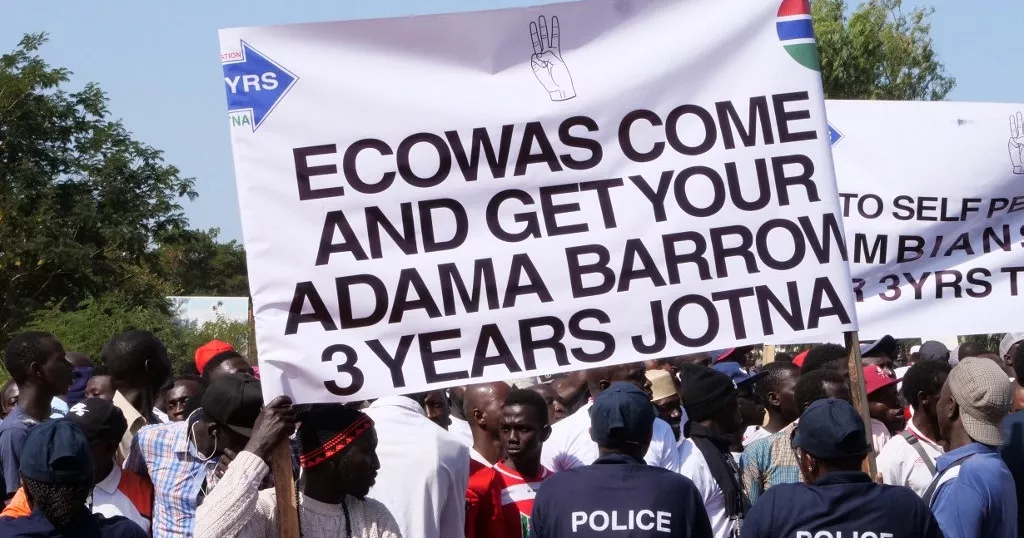
- Three Years Jotna (January 2020): Protesters demanded President Barrow honour his pledge to step down after three years. The peaceful march was force-met after deviating from the authorized route; tear gas was used, 137 people arrested.
- GALA’s protest over Jammeh’s assets (July 2025): Activists assembled at the Memorial Arch planning to submit a petition to the Minister of Justice demanding transparency and accountability following the Republic’s investigative report on Jammeh assets. Even before they could move, police clamped down on them, arresting and detaining 23 people. They were later released on bail.
- PURA data tariffs protest (August 2025): A demonstration over sharp data increases was peacefully held at PURA’s car park; police dispersed the crowd forcefully and arrested over 43 individuals.
- Mandinary protest (September 2025): Citizens protested Omar Badjie’s death; more than 18 young people were arrested and later released.
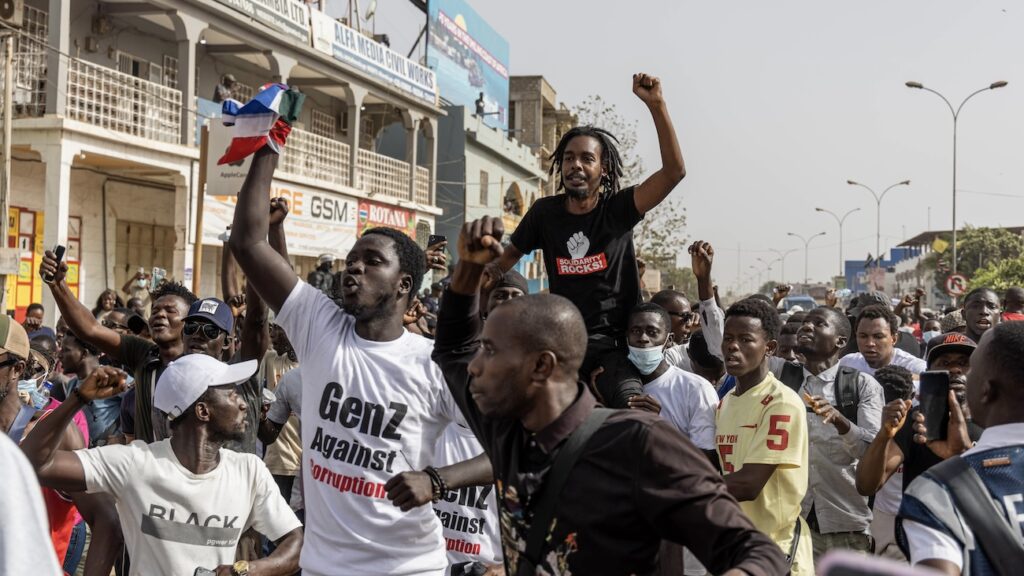
These are among the most visible cases where the right to peaceful assembly encountered serious state pushback.
The Gambia is party to:
- The 1966 International Covenant on Civil and Political Rights (ICCPR), whose Article 21 protects peaceful assembly, subject only to lawful restrictions necessary in a democratic society.
- The 1981 African Charter on Human and Peoples’ Rights, whose Article 11 likewise guarantees free assembly, with only necessary restrictions for public safety, health, or the rights of others.
Conclusion
Based on constitutional guarantees and international obligations, the right to peaceful protest is firmly established. However, the repeated instances since 2017 of peaceful assemblies turning violent—whether through force from law enforcement or arrests undermine President Barrow’s claim that such rights are fully “respected by this government.”
His statement, therefore, does not align with the documented record.
